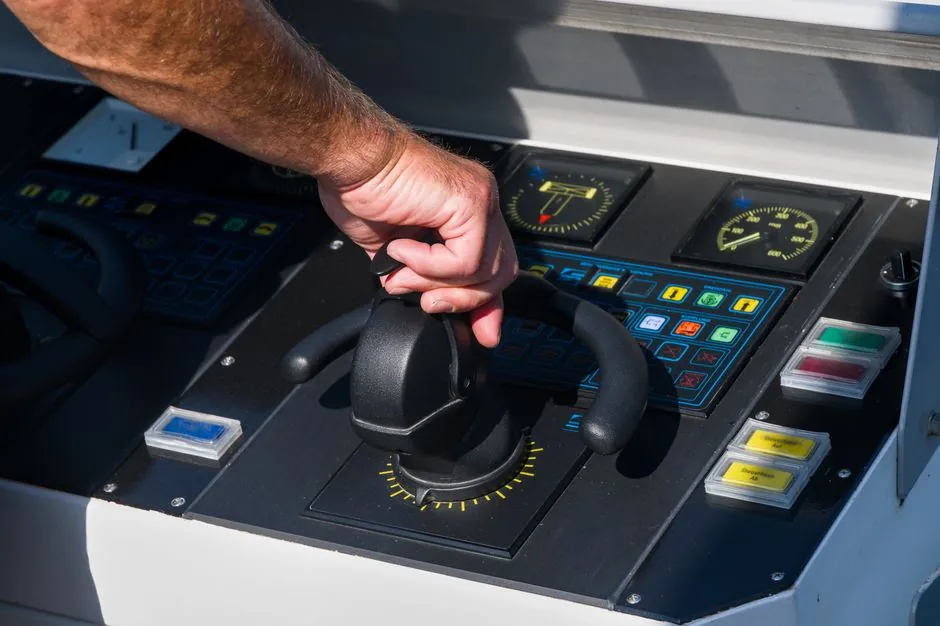
Select radio remote control for mobile ground-level operation with coverage up to 100 m, or specify an operator cabin for continuous operation and sustained sightlines across long travel distances [S4].
The decision is driven by the lifting cycle, operator walking distance, sightlines, duty class, hazardous-area exposure, and maintenance access, not by rated capacity or crane configuration alone [S2].
Decision criteria for gantry crane control selection
Radio remote control is the stronger option when the operator must change viewing angles, inspect both ends of a load, or move between pickup and placement points without following a pendant cable. A safe ground-level route must connect those viewpoints without crossing vehicle lanes or suspended-load paths [S2].
A cabin is the stronger option when handling is continuous, the crane travels long distances, and the operator needs sustained sightlines, while radio remotes free the operator from a cable and suit higher duty classes [S4].
The control system should suit where the operator can safely stand and see during pickup, travel, and placement, as well as the demands of sustained operation [S2].
Radio remote and cab comparison by operating performance
Radio remote control offers the best operator mobility, with no trailing cable and freedom to move within the specified radio coverage. The documented range reaches up to 100 m, but range alone does not establish safe operation because the operator must retain visibility of the hook, both load ends, travel path, landing area, supports, and nearby personnel [S2][S4].
Cab control offers the best continuity and sightline stability. The operator travels with the bridge, can use joystick or lever-console inputs, and does not walk between work points. It is the more practical arrangement for long travel distances and continuous handling, although the cabin adds access, structural, cleaning, lighting, seating, and climate-control requirements [S2][S4].
Remote systems carry environmental and ergonomic costs: operators stand or walk, may use a handheld transmitter for a full shift, and face rain, dust, heat, cold, noise, battery charging, and spare-battery arrangements. A cabin reduces exposure through shelter and seating, but vibration, noise, and visual strain can still produce fatigue during extended operation [S2][S3][S6].
Best applications for each operator position

Use radio remote control for steel-component yards with intermittent truck loading, changing pickup points, restricted aisles, and safe pedestrian routes. It also fits operations where one person needs to change position while guiding the load or performing rigging tasks without maintaining a physical cable connection to the crane [S1][S2].
Use cabin control for continuous process work, 24/7 multi-shift operations, long bridge travel, and sites where elevated vision provides a better view of the complete load path. The cabin is also appropriate where frequent movement between viewpoints would create excessive walking or would require the operator to enter vehicle and load routes [S1][S2][S4].
Do not use a ground-level radio system where the only useful viewing position lies inside a traffic lane, beneath a suspended load, or behind an obstruction that prevents continuous observation. In that case, provide an approved observation arrangement or reconsider cabin control rather than extending radio range and treating it as a visibility solution [S2].
Integration, maintenance, and retrofit constraints
Cabin control must be specified with a fixed operator station, sustained sightlines, and an appropriate location, access arrangement, and operator environment [S2][S4].
Pendant controls are hardwired, always-on, and best for lower duty cycles in controlled environments [S4].
The gantry crane architecture also affects integration. A fixed cab needs adequate clearance and safe access, while a radio operator needs verified coverage across the working envelope rather than only across the crane travel length [S2][S4].
Radio coverage, fail-safe behavior, and hazardous areas
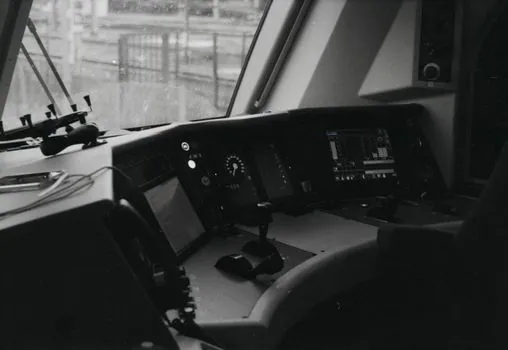
Specify radio coverage through a site survey that includes the full pickup, travel, and placement cycle, plus obstructions, electromagnetic interference, weather exposure, rail crossings, and muddy or icy walking surfaces. The system must define the response to signal loss, and the operating procedure must require movement to stop when the operator cannot maintain the required view [S2][S3].
Radio remote controls free the operator from the cable and suit hazardous bays, while cabin controls provide a fixed operator station with sustained sightlines for continuous operation [S4].
A hardwired pendant offers physical continuity between operator and crane, but radio control removes that tether. Neither interface determines lifting capacity or adds crane movements. Buttons, levers, or joysticks generate commands; control circuitry and drives determine permitted motion and speed [S5].
Dual-mode control for mixed operating patterns
Dual-mode control is a valid option when the same crane performs both intermittent yard handling and sustained continuous work. The handover must be defined so that only one control station has control, the active station is unmistakable, and radio or cab authority cannot be activated simultaneously without a deliberate transfer procedure [S2].
For mixed service, specify how the selected station commands hoisting, travel, speed, emergency stop, and warning functions. If a radio-linked single-girder crane must switch between remote and cab operation, add an interlock or equivalent authority-control arrangement rather than relying on operator convention alone.
Final recommendation by work-cycle profile

Specify radio remote control when safe ground-level viewpoints and walking routes are available, and specify a cabin when operation is continuous, cabin sightlines suit the task, and travel or handling would otherwise create a significant walking burden [S2][S4].
Before releasing the order, record the operating route, hourly and daily lift cycle, required visibility, radio coverage, battery or cab-support arrangements, hazardous-area classification, control handover procedure, and maintenance responsibilities. These six items produce a defensible choice and expose whether the selected arrangement supports the actual work rather than only the crane specification [S2][S4].