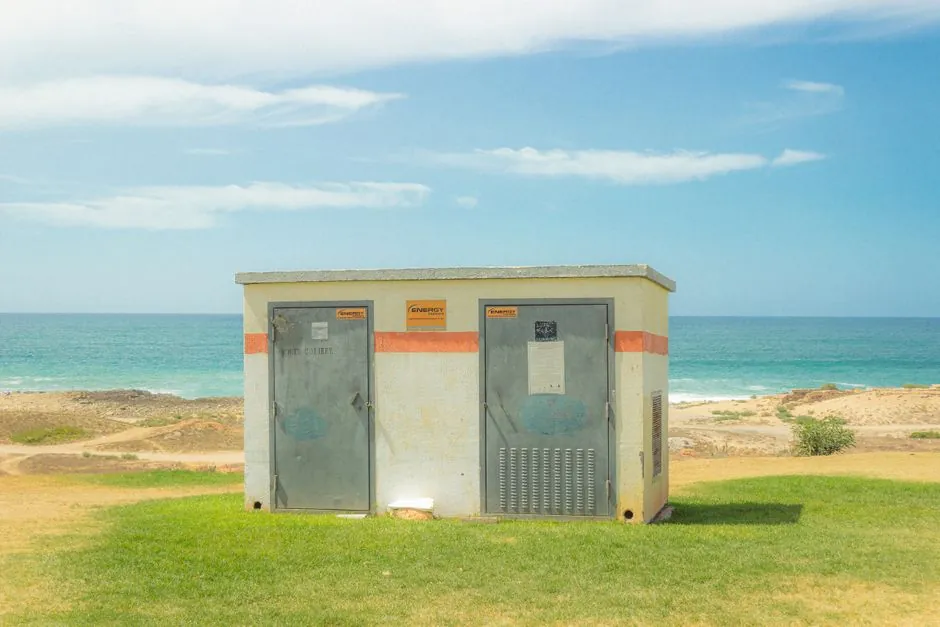
A turnover box on a remote pump station RFQ is a rigid, reusable PP or HDPE container sized 30 to 60 L, rated for 15 to 50 kg payload, and engineered to survive 200 to 500 return cycles over 3 to 5 years of unmanned-site logistics [S3][S6].
For an unmanned booster station or wellhead, the box is the unit load that ferries spare mechanical seals, lubricants, filter cartridges, and small remote I/O module spares to a site that is reachable only by light truck or ATV, so dimensional consistency, stack height, and pallet interface matter more than cosmetic finish [S3].
What the procurement line has to lock in
Five parameters drive 80 percent of the price and quote turnaround on a turnover box RFQ: material grade, payload rating, external footprint, lid type, and operating temperature window [S3][S5].
PP copolymer is the default shell material for general-purpose outdoor use, and the spec line should read "PP copolymer, food-contact grade optional, UV-stabilised, impact strength at -20 degrees C greater than 30 kJ per square meter"; HDPE is the alternative for chemical-exposure sites where acids or sodium hypochlorite contact is possible, and it is generally rated to roughly 80 degrees C continuous [S3][S6].
Static load rating on the box bottom is typically 100 to 250 kg for a 60 L footprint, dynamic load 30 to 60 kg per handled unit, and stack height 4 to 6 high, with a hinged or detachable lid that still interlocks when the box is inverted [S3][S6].
External footprint has to match the existing pallet or shelf, and the most common 600 by 400 mm or 400 by 300 mm footprints cover over 70 percent of European and Asian DC and remote-site handling fleets, while 555 by 360 by 340 mm is a documented cold-chain size with a 45 L internal volume of 505 by 310 by 290 mm [S3].
For a remote pump station that also handles total station spares or pipe-fitting kits, the lid must accept a tamper-evident seal or padlock eye, otherwise seal inspectors will reject the returnable at the receiving gate [S3].
Material and load options compared
PP copolymer boxes weigh 1.2 to 3.0 kg empty for a 30 to 60 L size, run 50 to 200 return cycles before visible hinge wear, and are rated roughly -20 to 80 degrees C; HDPE is slightly heavier, more chemical-resistant, and tolerates a wider -30 to 90 degrees C window with lower cycle life and higher unit cost [S3][S6].
PP honeycomb-sheet or corrugated-board "sandwich" constructions, common among Shenzhen and Taizhou mould suppliers, drop weight by 15 to 25 percent and are usable for cold-chain turnover where the box doubles as an outer shell for VIP insulation, but the wall must still be specified as injection-moulded PP, not blow-moulded, to keep the forklift pocket geometry repeatable [S3][S8].
For the cold-chain sub-case on a pump station handling reagents, the PU/PU-VIP insulated container variant holds the 2 to 8 degrees C band for over 72 hours per documented spec, with an external range of -30 to 20 degrees C, but it costs 3 to 5 times a plain PP box and is only worth it when the payload is genuinely temperature-sensitive [S3].
Stainless steel turnover cages appear in some oil-and-gas specifications, but they are 6 to 10 times the unit price of PP and only justified on classed hazardous-area sites where a spark risk excludes plastic; the spec line for that case should also gate on ATEX 2014/34/EU for the surrounding enclosure, not the box itself [S3].
Footprint, lid, and forklift-pocket gates
A turnover box that misses the forklift pocket or the lid interlock on the RFQ line forces a requote in 9 out of 10 cases, because mould modifications on a new tool cost more than the first 200 boxes [S3][S4].
Standard pocket dimensions are 220 by 100 mm (Euro) or 240 by 80 mm (Asian DC), and the pocket should be on the 600 mm face for the Euro pallet grid; for 400 by 300 mm boxes, the pocket is on the 400 mm face and serves a hand-truck or pallet-jack, not a forklift [S3][S6].
Lid options are snap-on, hinged, drop-on, or roll-lid with a strap; for unmanned sites the safest spec is a hinged lid with two toggle latches and a slot for a tamper-evident pull-tight seal, because the alternative of a snap-on lid will pop open in 60 degree C sun if the box is over-stuffed [S3][S5].
Drainage holes, usually 8 to 10 mm diameter on the bottom, are mandatory if the box will hold lubricants, glycol, or any liquid container, and they should be specified as "four corners, with moulded-in stainless mesh if chemical residue is expected" to stop dust ingress while still letting water escape [S3][S6].
For sites where the box rides in an open truck bed, a moulded-in tie-down slot at the upper rim is the cheapest way to meet transport safety rules; it is a 1-line addition to the RFQ but is forgotten often enough that 20 to 30 percent of generic quotes come back without it [S4][S6].
Use cases: spares, PPE, and weather-exposed layouts
On a remote pump station the box typically carries three payload families: rotating spares (mechanical seals, impellers, gaskets), consumables (oil, grease, carton box of spare fuses), and PPE/emergency gear (eyewash refill bottles, respirator cartridges), and each family has a different spec emphasis [S3][S5].
For rotating spares, anti-static or conductive PP (surface resistivity below 10 to the 9 ohms) is sometimes specified on hazardous-area sites, but for most pump stations a standard insulating PP is acceptable; the key gate is internal foam or divider inserts, which are easy to forget and double the packing labour on site [S3][S8].
For PPE, an eye wash station refill kit often needs a sealed bottle tray; the box should be specified as "fits a 4 by 250 mL sterile saline bottle tray" or the receiving station will reject the load because bottles arrive broken [S3].
For consumables, the lid must accept a label pocket A5 size for the bill of materials, otherwise the on-site technician will pry the lid to find the right spare, which destroys the returnable cycle; this is a free option on most Chinese moulds and should always be on the line [S3][S7].
For long outdoor exposure, a UV-stabilised PP shell with a 2-year colour-fastness warranty is the practical minimum, and a metal hinge pin (stainless 304) instead of a plastic one is the cheapest upgrade to extend service life from 3 to 5 years [S3][S6].
Common RFQ mistakes that force requote cycles
The five most expensive omissions on a turnover box RFQ are missing the lid interlock, missing the forklift pocket size, omitting the operating temperature range, leaving out the static stack height, and skipping the drop-test class [S3][S4][S6].
Drop test: a 1.0 to 1.5 m free-fall drop onto concrete at -10 degrees C is the de facto industry acceptance, and a box that has not been tested at low temperature tends to crack at the hinge within 50 cycles on a winter site [S3][S6].
Static stack height: under-filled quote lines cause the supplier to assume 2-high (the cheapest mould), but unmanned sites routinely stack 4 to 6 high, so a 4-high static rating should be on the line by default and the cost adder is usually under 5 percent [S3][S6].
Operating temperature range: a generic "indoor/outdoor" line on the RFQ is the single most ambiguous field; the spec should read "continuous service -20 to 60 degrees C, with -30 degrees C storage acceptable" so the supplier can pick the right copolymer grade [S3].
Wall thickness: not specifying minimum 2.5 to 3.5 mm wall at the corner rib is a common path to a weak box; this should be called out on the technical drawing, not just on the line item, because moulders will quote to the minimum they can hold without warpage [S3][S4].
Lead time: most Chinese turnover-box moulders quote 15 to 30 days for a standard size with 50 to 200 piece MOQ, and 30 to 60 days for a custom mould; the RFQ should always carry a "delivery to site" target, not a "factory dispatch" target, because 1 to 2 weeks of inland transport is the norm [S3][S6][S7].
Standards, sourcing, and verification checklist
There is no single ISO standard that "covers" a turnover box, but the practical conformity set is ISO 6780 for interstackable freight containers, ISO 11683 for drop-test methodology, and EN 840 for mobile waste-container dimensional compatibility when the box is used as a returnable for site waste streams [S3][S6].
For a Chinese supplier, the working cert is GB/T 29493 (safety of plastic turnover containers for industrial use), and the moulding tolerance should be quoted to plus/minus 0.5 mm on critical dimensions and plus/minus 1.5 mm on non-critical faces, which is the default on reputable Taizhou and Shenzhen moulders [S3][S4][S8].
Material traceability is checked by MFI (melt flow index), and a 10 to 14 g per 10 min at 230 degrees C, 2.16 kg reading is typical for an injection-grade PP copolymer; this is a 1-line addition to the supplier questionnaire and prevents regrind substitution [S3][S8].
For the lid, the cycle test should be specified at 5000 open-close cycles minimum on a non-load-bearing box, and 3000 on a 50 kg-rated heavy box; moulders who do not have this test report in their standard pack will requote to add it, so calling it out up front saves a round trip [S3][S6].
A credible remote-site RFQ closes with a 2-piece pre-production sample acceptance: one box is drop-tested, one is UV-aged to 200 hours; only after both pass should the bulk order be released, and a 5 percent retain of the lot for audit is normal practice on orders above 500 pieces [S3][S7].
The next node worth tracking is the box's RFID or NFC tag embed; some moulders now mould in a cavity for a passive UHF tag so the turnover box itself becomes a traceable asset on the weather station spares inventory, and the spec line for that is a 1 mm-thick epoxy pocket on the upper rim.
Related analysis: Roller bearing selection for packaging lines: 2026 type-station spec map.