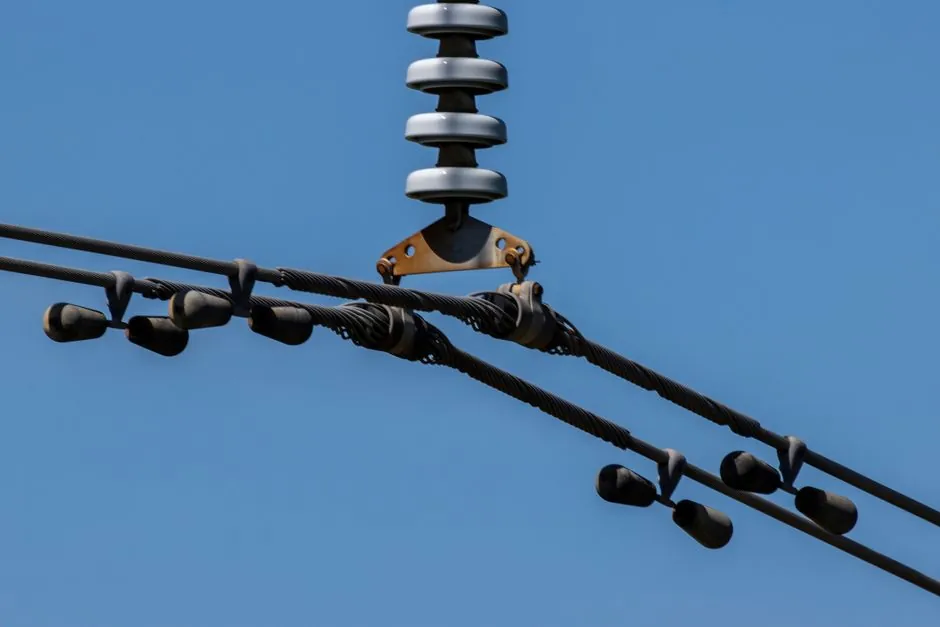
In an electrical-installation context, rebar couplers serve as the mechanical splices inside concrete foundations for switchgear pads, transformer bases, duct bank encasements, and grounding electrode cages, with bar sizes most commonly ranging from #4 (13 mm) up to #18 (57 mm) [S3].
The three categories that recur in supplier catalogs are threaded couplers (rolling-end and upset-end parallel thread), cold-pressed (sleeve) couplers, and positional or transition couplers, with raw materials listed as 20# or 16Mn for pressed sleeves and 40Cr or 45# carbon steel for threaded bodies [S3].
How couplers interact with the electrical scope
Concrete pads for MV/LV switchgear and pad-mount transformers are designed as reinforced cages; the coupler selection governs whether the rebar cage behaves as continuous steel across construction joints, which directly affects the concrete's structural capacity and the integrity of the embedded electrical grounding electrode conductor path [S1].
Where the rebar itself doubles as a grounding electrode (a common practice for Ufer grounds cast into the foundation), the splice must carry fault current without separation; threaded parallel-thread couplers made from 40Cr or 45# carbon steel are the dominant catalog offering for this duty, with 100-300 mm thread lengths available on the rolling machines used to prepare the bar end [S3].
Three coupler types compared on the criteria that matter
Cold-pressed sleeve couplers (Cangzhou Bartech, base steel 20# or 16Mn) suit high-grade rebar where the bar end is not pre-cut to a thread; installation uses a manual or powered pressing machine and no special operator training is required for the manual press, which lowers site labor cost [S3].
Upset-end parallel-thread couplers add an upset forging step before thread rolling, increasing the effective bar cross-section at the joint and giving higher tensile capacity for high-grade rebar (500 MPa and above); the rolling-end variant skips the upset step and is the lower-cost option for standard-grade bars in the same 13-57 mm range [S3].
Positional and transition couplers cover bars of different diameters or bars that cannot be rotated, which is the common case in congested foundation rebar where the bars are already fixed on both sides of the splice; transition couplers are explicitly listed as a catalog family in the Bartech range alongside full-size standard couplers [S3].
Selection criteria tied to the electrical installation
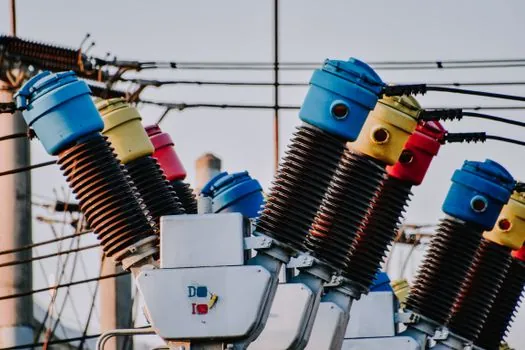
Bar grade and code class are the first filter: ASTM A615 Grade 60 (420 MPa) and Grade 80 (550 MPa) rebar in U.S. switchgear pads typically maps to the rolling-end threaded family, while seismic or high-moment foundations with Grade 100 or higher push the spec toward upset-end couplers to keep the joint tensile capacity above the bar's own capacity [S1][S3].
Congestion dictates the second filter. Duct bank encasements and transformer bases carry dense rebar at the equipment anchor bolt locations, often with the bars already tied on both sides; only positional or transition couplers can be installed without rotating either bar, which is why the Bartech catalog splits its threaded family into "Full Size of Standard" and "Positional" sub-lines [S3].
Site conditions drive the third filter. The reference specification notes that manual coupler pressing machines "need no special worker training" and are commonly used in construction repair systems, which is the practical fit for retrofit splicing of an existing pad during an electrical upgrade, while the auto upsetting and rolling machines target new-build high-volume yards [S3].
Failure modes and what to inspect
Thread galling on parallel-thread couplers shows up as incomplete engagement or a coupler that backs off under load; the corrective step is re-cut the thread with a 100-300 mm rolling machine and replace the coupler body, since field repair of a gall-threaded bar end is not reliable [S3].
Cold-pressed sleeve couplers fail by bar slip inside the sleeve when the press force is below the rated value or the die wears; the acceptance check is a calibrated pressing machine plus a pull-test sample per lot, and a sleeve that has been pressed off-center should be cut out and re-spliced with a new sleeve rather than re-pressed [S3].
Where the splice sits inside a foundation that is also a grounding electrode, separation of the coupler under fault current breaks the ground path; the spec response is to use threaded couplers on 40Cr / 45# bodies (higher fault-current capacity than 20# pressed sleeves) and to keep the splice away from the anchor bolt zone where mechanical stress concentrates [S3].
Standards, sourcing, and the IEC reference for the wider install
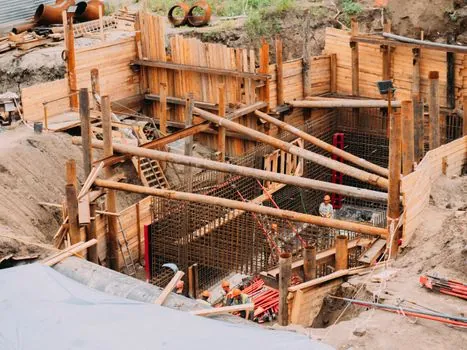
The IEC 60364 standard series governs the design of the wider prosumer and commercial electrical installation the rebar pad is part of, including the grounding electrode arrangement, and any coupler selection sits underneath that scope [S2].
For the building-side wiring that runs out of the pad, EIB/KNX bus systems are designed around a four-core shielded twisted pair carrying 24 VDC power plus signal, and the cable layout (line, tree, or star topology) is independent of the rebar splice above it, but the rebar cage must be closed and continuous before the bus cabling is laid in [S4].
Source-side: Bartech (Cangzhou, Hebei) lists contact mob +86-13785685215 and email [email protected] as the active sales channel for rebar couplers, threading machines, upsetting machines, and pressing machines, with rebar coupler plastic covers and a dedicated wrench as standard accessories [S3].
When not to use a mechanical coupler
Lap splices remain acceptable where code allows and bar congestion is low; they are cheaper than any mechanical splice and avoid the threading/pressing equipment on site, so a coupler spec is over-engineering for a simple LV switchgear pad on Grade 60 rebar with adequate development length [S1].
Welding is the other alternative and is widely used on highway and bridge rebar, but is generally restricted on the high-strength quenched-and-tempered rebar grades now common in pad-mount transformer bases because welding heat alters the bar metallurgy; threaded or pressed couplers are the controlled-substitute path in that case [S1][S3].
Replacement vs. repair rule: a coupler that has been pressed off-center, a thread that shows galling, or a sleeve that has slipped in a pull test should be cut out and replaced with a new coupler rather than reworked, because the joint's tensile and electrical continuity both depend on a single controlled deformation event [S3].
For the wider grounding-electrode and measurement side of the same electrical installation, the cross-reference to LV electrical design and the electrical measurement encyclopedia pages carries the loop-continuity and test values; on the automation side, the electrical automation entry covers the bus and control wiring that the concrete pad is built to host.
See also our earlier report, Tapered Roller Bearing Selection for Steel Mills: 2026 Spec Map.