
Chinese spiral duct OEMs, led by Yangtze River Delta manufacturers like SBKJ GROUP, now export spiral tube forming equipment and finished ducts to more than 60 countries, with SBKJ alone operating 10+ production lines across a 1000 m²+ facility and holding CE plus ISO 9001:2008 certification [S1].
On the buy-side, the global spiral duct market remains split three ways: low-pressure galvanized HVAC, high-pressure galvanized industrial dust collection, and PVC underground. US mill-direct suppliers such as Spiral Manufacturing still carry the full high-pressure catalog (single-wall and dual-wall insulated spiral pipe, blast gates, angle rings, dust collection components), while Chinese trading-platform suppliers like SuperAir focus on galvanized spiral ducts plus HVAC installation accessories for air-conditioning projects [S2][S3].
What a "spiral duct" actually is, and where it fits
A spiral duct is a helically wound, lockseamed round tube formed from one continuous strip of coated steel, which gives it a higher stiffness-to-weight ratio than equivalent longitudinal-seam pipe at the same gauge [S3]. Standard HVAC diameters commonly run 80–1,500 mm (3–60 in), with industrial dust-collection lines often pushing to 1,800 mm and dual-wall insulated builds adding an inner liner plus fiberglass or foam core for noise and condensation control [S3]. Material options in current catalogs include hot-dip galvanized steel (G60/G90), aluminized steel, 304/316 stainless for food/pharma exhaust, and PVC-coated steel for underground or corrosive airstreams [S3].
The lockseam construction is the reason spiral duct wins on pressure class: it handles typical positive static pressures of 2,500–6,000 Pa on high-pressure galvanized product lines, well above the 250–500 Pa ceiling of standard low-pressure rectangular duct [S3]. For a broader reference on round versus rectangular selection logic, see the encyclopedia entry on spiral duct systems.
Supplier landscape: China volume vs. North American mill-direct
SBKJ GROUP sits in the equipment-OEM camp: it makes the spiral tube formers (SBTF-2020 series, fix-mold type) plus auto duct production lines for rectangular HVAC duct, and reports 60+ patents on the forming machines themselves, with customers in 80+ export countries and a 1-year machine warranty backed by 24-hour online spares support [S1]. SuperAir, a Ningbo-based trading-platform supplier, focuses downstream of those machines: finished galvanized spiral ducts, fittings, and HVAC installation accessories, with a stated value proposition built around "high level automation" to keep unit costs low and shorten lead time [S2].
Spiral Manufacturing (NMLS, USA) represents the mill-direct North American model: in-house roll-forming of high-pressure and low-pressure galvanized pipe, full fittings families (elbows, tees 90°, laterals 30°/45°, pant wyes, reducers, pickup/weather hoods, angle rings, flanges), plus dual-wall insulated spiral pipe and a separate PVC underground product line for residential register runs [S3]. Their product selection diagram explicitly separates "HIGH PRESSURE GALVANIZED PIPE" from "LOW PRESSURE GALVANIZED PIPE," which is a useful shorthand for buyers deciding which catalog page to start from [S3].
Selection criteria: diameter, gauge, seam, pressure class

Four decisions drive every spiral duct RFQ, and they cascade: (1) diameter range based on air volume and target velocity (typically 8–12 m/s in supply mains, 12–18 m/s in industrial exhaust); (2) wall gauge, normally 24–26 ga for low-pressure HVAC and 20–22 ga for high-pressure dust collection; (3) seam type, with the standard 4-ply Pittsburgh lockseam dominating but double-seam variants used above 4,000 Pa; (4) pressure class, which dictates whether you can stay in the low-pressure galvanized catalog or must move to high-pressure galvanized [S3].
A practical 2026 comparison frame for buyers: low-pressure galvanized suits comfort HVAC at 250–1,000 Pa and undercut pricing, high-pressure galvanized handles industrial dust at 1,000–6,000 Pa with heavier gauge and tighter seam tolerances, dual-wall insulated adds 25–50 mm of fiberglass for noise-sensitive or condensation-prone runs, and PVC underground is the right call only for buried register/return runs in residential slab construction [S3]. For a deeper walkthrough of sizing math and pressure drop, the Spiral Duct Sizing and Selection Guide maps these same decision points against SMACNA-style pressure classes.
Equipment-side specs that matter to fabricators
If you are buying forming machinery rather than finished duct, the machine-side spec sheet is what to read: SBKJ's SBTF-2020 spiral tube former is a fix-mold type aimed at round/flat-oval production, paired with separate ovalizer machines for flat-oval tube making and snap-lock forming machines for rectangular branch takeoffs [S1]. Their auto duct production line 5 covers uncoiling, leveling, shearing, and bending in a single controlled sequence, with PLC integration allowing overseas engineer commissioning or buyer-side operator training at the Yangtze River Delta factory [S1].
Real lead-time and cost levers for fabricators evaluating equipment OEMs: CE-marked machines with documented CE and ISO 9001:2008 paperwork clear European customs faster, an in-stock spare-parts catalog eliminates production-line idle time, and a published 1-year warranty plus 24-hour online support is now table stakes for export-oriented Chinese machinery [S1]. Buyers should also confirm whether the forming line is fixed-diameter (cheaper, faster changeover for repeat runs) or adjustable (higher capex, justified only for job-shop or contract-manufacturing operations serving mixed diameters).
Real use cases by industry
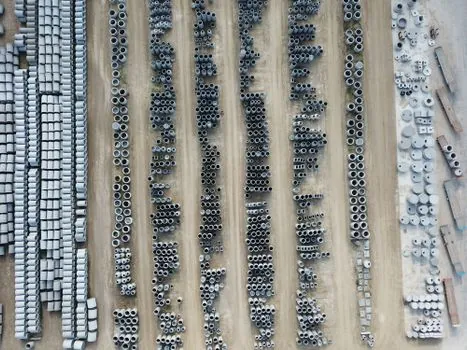
SBKJ lists HVAC, air conditioning, ventilation, dust removal, coal mine, and grain handling as primary downstream end-uses for its duct-making machinery, which mirrors the demand pattern seen across Chinese duct suppliers: roughly half of the volume goes into commercial HVAC and cleanroom ventilation, the other half into industrial dust collection and process exhaust [S1]. SuperAir explicitly markets to air-conditioning installation contractors, with a stated emphasis on competitive price and fast delivery for project-based procurement [S2].
Spiral Manufacturing's catalog adds two segments the Chinese generalists underplay: aerospace ducting (light-gauge aluminum and stainless for cabin air distribution, listed as a dedicated "Aerospace Ducting Manufacturer" category) and residential PVC underground pipe (vinyl-coated, with elbows, reducers, register saddles, and stack boots sized for slab-on-grade register runs) [S3]. That North American mix of aerospace, dust collection, and underground residential is a useful signal that one supplier rarely covers all three, and that segment fit matters more than catalog breadth when shortlisting.
Limitations, failure modes, and what to watch in QA
Spiral duct's biggest field failure is seam cracking under cyclic pressure, which traces back to under-gauge strip, poor lockseam compression, or galvanizing flaking at the bend line, so incoming inspection should always pull a gauge reading on the strip edge and a visual on the seam tightness [S3]. Low-pressure galvanized product used outside its class (above ~1,000 Pa) is the single most common spec error, and it shows up as seam whistle and duct "breathing" within weeks of startup [S3].
PVC underground pipe is incompatible with high-temperature airstreams and any solvent-based cleaning regime, so specifying it for commercial kitchen or industrial exhaust is a known mismatch [S3]. For procurement teams working through compliance on related HVAC accessories, see building mechanical systems and equipment guidance.
Where the supply base is heading
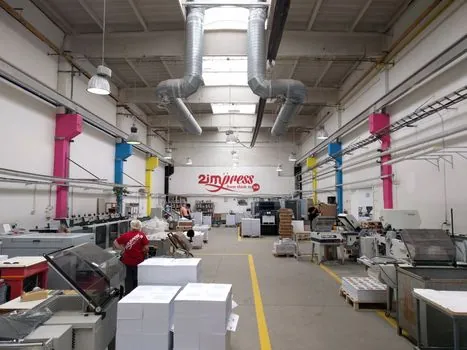
Two trackable signals to watch through the rest of 2026: first, Chinese equipment OEMs are pushing automation deeper into the forming line (PLC-controlled auto duct line 5 with integrated uncoiling/leveling/shearing), which compresses labor content per meter of duct and keeps export pricing competitive against North American mill-direct shops [S1]. Second, North American suppliers are doubling down on dual-wall insulated and PVC underground as differentiated, specification-heavy product lines that Chinese generalists still under-serve [S3].
For sourcing managers, the practical split is now: send high-volume galvanized HVAC and dust-collection duct to Chinese OEMs (SBKJ-class equipment or SuperAir-class finished-duct suppliers) for cost, and source dual-wall insulated, aerospace, and PVC underground from North American mill-direct shops (Spiral Manufacturing-class) for spec fit and shorter inland freight [S1][S2][S3]. A third signal worth tracking is the CBAM/EU carbon-border adjustment rollout, which from 2026 begins taxing embedded carbon in imported galvanized steel and will favor suppliers with disclosed mill-source EPDs over those who cannot trace strip origin.
The underlying component specifications are covered under lighting equipment and electric lamps, and wiring duct.