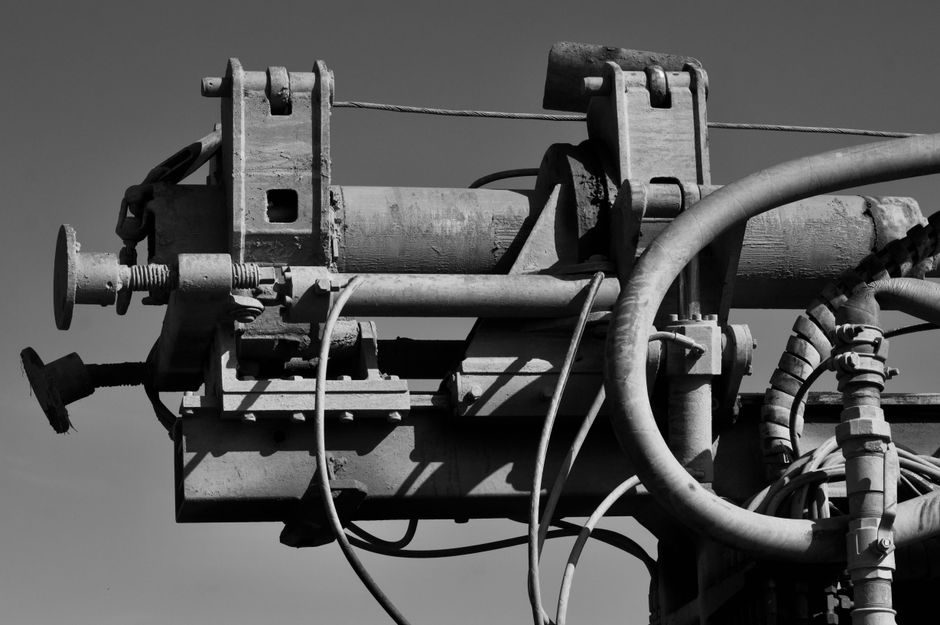
Squeeze casting machines combine a controlled liquid-metal pour with direct hydraulic pressure on the melt during solidification, typically applying 50–150 MPa through the upper die to feed shrinkage and refine grain structure [S5]. Compared with gravity die casting, squeeze-cast components routinely show 20–30% higher ultimate tensile strength and markedly lower porosity on alloys such as AZ91 magnesium and A356 aluminium [S6].
The process occupies a deliberate middle ground between high-pressure die casting and conventional forging: it is slower than die casting but far cheaper per part than closed-die forging on geometries under ~5 kg. For buyers, the squeeze casting machine is the right tool when the part demands forged-grade mechanical properties but the production volume cannot justify forging tooling.
Process Definition and Operating Window
Squeeze casting is a hybrid forming method in which a measured volume of liquid metal is poured into a lower die, then a hydraulic upper die closes and applies sustained pressure throughout solidification, with the upper die remaining in contact until the casting cools below the alloy solidus [S5]. Applied pressures in published research and OEM datasheets cluster between 50 MPa and 150 MPa; the 100 MPa point is a common baseline, as in the AZ91 magnesium study where squeezing at 100 MPa was directly compared against gravity-cast equivalents [S6].
Typical cycle times run 3–8 minutes per shot on machines in the 1,000–5,000 kN clamp range, driven by pour, die close, hold-under-pressure, cooling and ejection. By contrast, a vacuum die casting machine running a similar shot weight completes in 30–90 seconds, so any squeeze casting specification must reconcile mechanical quality against throughput.
Where Squeeze Casting Wins
Mechanical-property uplift is the headline benefit. Squeeze-cast AZ91 magnesium produced weaker texture and finer grains than gravity-cast equivalents, with measurable improvements in yield and ultimate tensile strength [S6].
Beyond properties, the process delivers near-net-shape geometry with draft angles as low as 0.5°, machining allowances of 1–2 mm, and grain refinement driven by the pressure-induced heat extraction. Because the metal is poured rather than injected at high velocity, gas entrainment is far lower than in conventional die casting, which is why magnesium die casting shops have adopted squeeze casting for thin-wall structural EV components where porosity would be a fatigue liability.
Where Squeeze Casting Loses
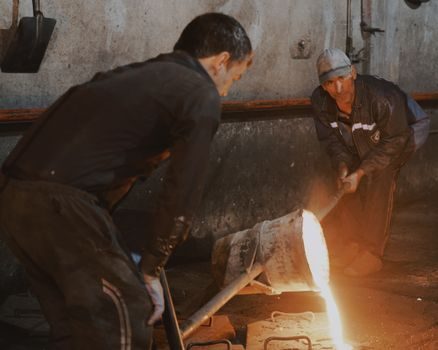
Cycle time is the dominant cost driver. For a procurement spec, this means squeeze casting is uneconomic below roughly 5,000–10,000 parts per year for a given geometry. [S1]
Die and machine cost are the second hit. A squeeze casting die costs 2–4× the equivalent gravity die because of higher fatigue loading on the die insert, intensified cooling-channel requirements, and tighter flatness tolerances. The machine itself — a four-post or tie-bar press with a heated lower die, shot sleeve, and PLC-controlled pressure profiling — typically lists at 1.5–2.5× the price of a comparable cold-chamber die casting machine of the same clamp tonnage. Buyers should also factor in the alloy restriction: squeeze casting is overwhelmingly used on aluminium, magnesium and limited copper alloys, and is rarely viable for high-melting-point ferrous alloys above ~700 °C pouring temperature.
Selection Criteria and Comparison
Four criteria reliably separate squeeze casting from its alternatives for a buyer. The table below lines up the four main options against the same decision gates: [S2]
1) Mechanical requirement: forged-grade strength and ductility favour squeeze casting; cosmetic thin-wall favour high-pressure die casting; simple non-critical shapes favour gravity die casting. 2) Production volume: above ~10,000 parts/year, squeeze casting is competitive; below that, gravity or sand casting wins on tooling amortisation. 3) Tolerances: ±0.05 mm is achievable on squeeze castings with light machining, comparable to die cast but with superior density. 4) Alloy: aluminium and magnesium dominate; zinc and copper are viable; ferrous is largely out of scope.
Installation, Limits and Failure Modes

A squeeze casting machine installation demands a reinforced foundation that can absorb 100–200 tonnes of static load per machine and tolerate vibration from the 50–150 MPa hydraulic ram; pit depth of 1.5–2.5 m is common. Die-temperature control is non-negotiable: lower-die heating to 200–300 °C for aluminium and 250–350 °C for magnesium, with coolant channel spacing under 15 mm, is needed to avoid cold shuts and to maintain grain-refinement gains documented in peer-reviewed work [S6].
Common failure modes to spec against: die insert fatigue cracking at the parting line, hydraulic seal failure from sustained high-pressure cycles, and cold-shut or misrun defects when pour temperature drops below ~680 °C for A356. Buyers should also flag thermal-fatigue life of the die steel (H11 or H13) at 50,000–100,000 shots as a tracked KPI, not a footnote.
Standards, Sourcing and Verifiable Signals
There is no single squeeze-casting-specific ISO or ASTM standard; most OEM QA programmes reference ASTM E8/E8M for tensile testing, ASTM E505 for radiographic inspection of castings, and ISO 8062 for dimensional tolerance grades, layered over a customer-specific PPAP or IATF 16949 programme. Buyers should require test coupons per lot with density measured by Archimedes method (target ≥ 2.70 g/cm³ for A356) and tensile specimens per ASTM E8. [S3]
Two trackable procurement signals to monitor: 1) hydraulic pressure profiling capability — confirm the machine can hold ±5% of setpoint throughout the solidification window, not just peak; 2) vacuum-assist option — several modern squeeze presses add a vacuum chamber to cut dissolved gas further, but they command 15–25% price premium. The AZ91 study explicitly tied property gains to the combination of 100 MPa squeeze pressure and Ca+Sr addition [S6], which is a useful template for buyer-side process windows on magnesium parts.