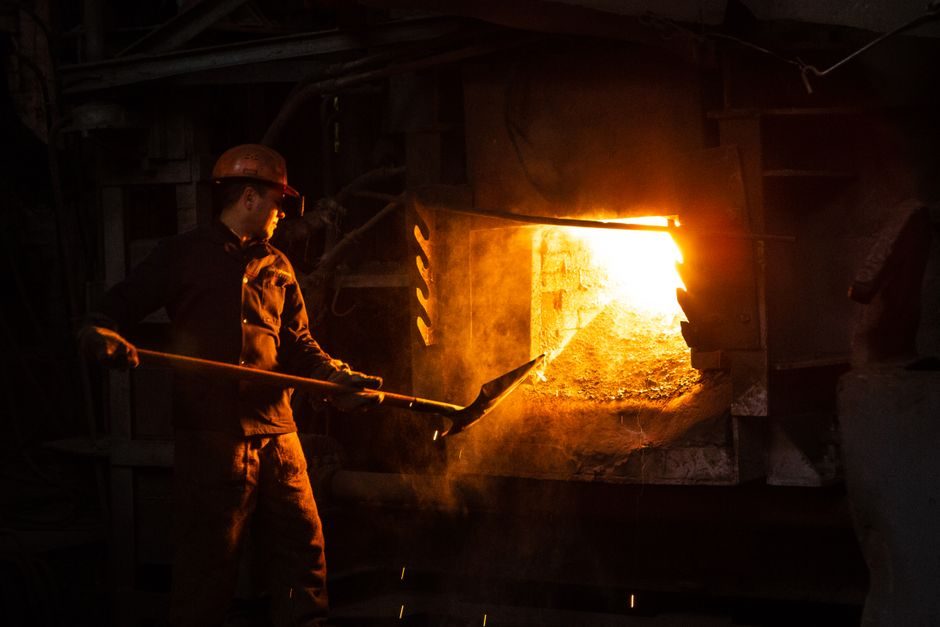
Squeeze casting machines are classified first by how the applied pressure reaches the solidifying melt: a direct-acting vertical press drives the punch straight into the die cavity, while an indirect type feeds melt through a shot sleeve and a controlled gate [S1][S3].
That single split — direct versus indirect — is the entry point for every specifier, because it sets the pressure range, the gate geometry, the alloy menu, and the size of the castings the machine can produce [S1][S3].
Direct vs. Indirect Squeeze Casting: Pressure Path
A direct squeeze casting machine uses a hydraulic ram and a punch that pressurises the melt in the die itself, with applied pressures commonly reported in the 50–150 MPa range for aluminum and copper alloys and at lower set points for zinc [S1].
An indirect squeeze casting machine uses a shot sleeve, a plunger and a gate, closer in architecture to a die casting machine but with a slower shot profile and a higher final intensification pressure than a conventional high-pressure die cast cell [S1][S3].
Direct cells fit thick-walled, high-integrity parts such as automotive suspension arms, knuckles and bimetallic bushing bodies, while indirect cells suit thinner-wall, higher-volume components where the gate acts as a pressure-loss element [S1][S3].
Vertical vs. Horizontal Frame Architecture
Vertical squeeze casting machines stack the die, shot sleeve and intensifier on the same vertical axis, which shortens the melt path and supports symmetric pressure on both halves of the die; horizontal machines lay the shot sleeve and die opening on a horizontal plane, which suits long, shallow castings and easier automated part extraction [S1].
The vertical layout is the dominant frame for aluminum squeeze casting machine cells feeding chassis and body-structure parts, where T6 heat-treated 6061, 6082 and A356 grades are typical material inputs [S1].
Horizontal squeeze casting frames are common in copper and brass plumbing-component production, where the longer die plane helps with multi-cavity layouts and gravity-assisted feeding of high-density melts [S2].
Material-Specific Machine Variants

Aluminum squeeze casting cells are paired with T6 or T7 heat treatment, melt degassing at 720–760 °C, and die preheat in the 200–300 °C band; ASTM B969 covers aluminum-alloy castings produced by the squeeze, thixocast and rheocast semi-solid routes [S1][S6].
Brass squeeze casting machines — including the vertical direct-press model listed on CENS for brass hardware — operate at higher melt temperatures (roughly 880–950 °C for CuZn alloys) and use die steels rated for sustained contact with copper-rich melts [S2].
Magnesium squeeze casting cells operate under a shielding gas cover, typically SF6/N2 or a newer fluoroether blend, because magnesium melt ignites in air; a magnesium die casting machine platform adapted to direct-squeeze mode is the usual starting point [S1].
Metal-matrix composite (MMC) squeeze casting — including Al-SiCp, Al-Al2O3 and Al-TiB2p systems — uses a preform placed in the die, melt infiltration at 700–800 °C, and pressures in the 50–100 MPa band to suppress porosity in the reinforced zone [S1].
Vacuum-Assisted and Semi-Solid Squeeze Cells
Vacuum-assisted squeeze casting draws the die cavity down to a partial vacuum before metal entry, reducing gas porosity and improving pressure-tightness; a vacuum die casting machine platform provides the sealing, pump train and leak-rate targets that this variant inherits. [S1]
Thixocast and rheocast semi-solid squeeze casting — covered by ASTM B969 alongside the fully liquid route — feed a slurry in the 50–65% solid fraction band, which lowers shrinkage and lets the machine run with shorter cycle times on near-net-shape parts [S6].
Gravity-assisted squeeze casting, sometimes called a gravity die casting machine with a pressurised head, is the lighter-pressure option: the die is filled by gravity, then a top punch applies a lower pressure (often under 10 MPa) to feed shrinkage during solidification.
Process Parameters That Set Machine Class
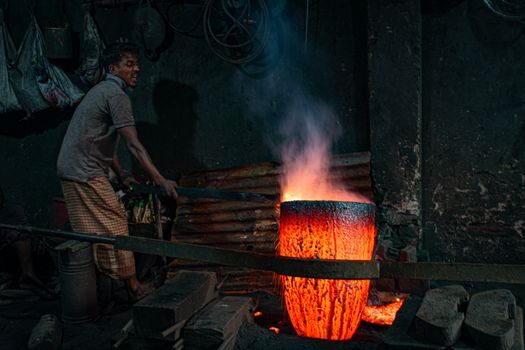
The published squeeze-casting literature identifies die temperature, pouring temperature and filling velocity as the three dominant inputs to solidification time, secondary dendrite spacing and porosity; specific pressure and dwell time are the two inputs the machine itself controls, not the operator [S1][S3].
On a B737-class aluminum control arm, applied pressure near 100 MPa, a die preheat around 250 °C, and a 10–30 s dwell time routinely drop porosity to under 1% and bring ultimate tensile strength above 320 MPa on A356-T6 [S1][S3].
The Box–Behnken + NSGA-II optimisation route documented in the 2022 systematic study uses a squeeze casting machine to verify multi-objective optima in trial runs, then locks the parameter set into the production recipe [S3].
Comparison: Direct vs. Indirect vs. Gravity-Assisted
Compared on the four specifier decision axes — applied pressure capability, gate/feed system complexity, typical part thickness, alloy coverage — direct vertical machines deliver the highest pressure (up to ~150 MPa) and the cleanest bimetallic interfaces, indirect machines add a gating network that allows thinner walls and multi-cavity dies, and gravity-assisted machines stay under ~10 MPa but keep the die simpler and cheaper to maintain [S1][S2][S3].
Direct vertical cells are the right pick for thick-section structural aluminum, MMC bimetallic and Cu/Al interfaces; indirect horizontal cells are the right pick for thin-wall, high-volume production runs where a die casting machine cycle is acceptable; gravity-assisted cells fit non-critical brass, copper and zinc hardware where pressure-tightness is not on the spec [S1][S2].
Limitations, Failure Modes and Sourcing Signals
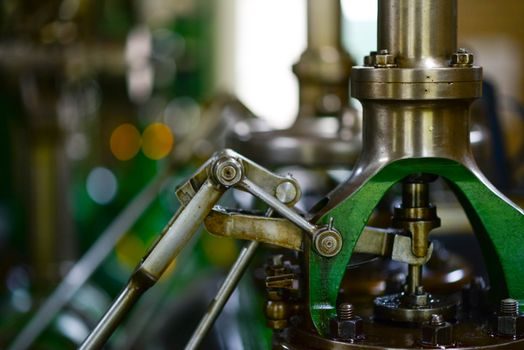
Squeeze castings are sensitive to die wear at the punch tip, melt oxidation at the pouring stage, and inadequate dwell time that leaves centreline shrinkage; machine builders address these with closed-loop pressure control, real-time die-temperature thermocouples, and shot profile logging that the specifier should require on a FAT [S1][S3].
For 2026 sourcing, the live product listing on CENS shows that Taiwanese and mainland builders continue to publish brass-dedicated vertical direct-press squeeze casting machines at capacities from roughly 200 kN to 3,000 kN clamping force, which is the visible band the specifier can match to part projected area and required specific pressure [S2].
For related cast-iron and steel classification work that often runs alongside a squeeze casting spec, the specifier can cross-reference the cast iron types reference for 2026 and the carbon steel types reference to keep alloy naming consistent across the drawing set.