
For a vacuum die casting machine, the vacuum pump train, the leak-rate target and the chamber's mean-time-between-services move the five-year total cost of ownership (TCO) far more than the machine's sticker price, and plant engineers who ignore that ordering routinely overpay by 20–35% on lifecycle cost [S2][S3].
Vacuum-assisted die casting is selected when porosity on safety-critical aluminium or magnesium parts is unacceptable; the value of the technology is set by the vacuum level the system can hold under transient leakage, not by the chamber's nominal volume [S2].
What TCO Components Actually Move the Number
A vacuum die casting cell's TCO has six buckets: capital, energy (vacuum pump + heater + hydraulics), consumables (sealant, die spray, lubricant, vacuum pump oil), maintenance (pump rebuilds, valve seats, O-rings), downtime (chamber pump-down cycle, leak-hunt, die change), and scrap/rework (porosity, misrun, cold-shut) [S1][S3].
On a typical 800–1,200 kN cold-chamber aluminium cell, the vacuum pump train alone can draw 15–40 kW continuous, and the chamber pump-down cycle from atmospheric to working vacuum dominates per-shot cycle time when leakage is poorly controlled [S2].
For context on chamber geometry and pressure bands that govern those numbers, see the vacuum die casting machine types reference.
Vacuum Level Targets and Why They Matter
Published research on vacuum-assisted moulding reports working vacuum of 0.080–0.025 MPa for general work, with thin-wall castings under 100 kg controlled in 0.050–0.025 MPa and thick-wall/medium castings in 0.060–0.045 MPa; tighter vacuum raises casting quality but increases the risk of mould-material cracking and metal-spray burn-through if the compactness is excessive [S2].
That same body of work identifies the root failure mode during fill: when molten metal advances, the air gap at the flow front collapses the local vacuum, and if the external vacuum drops too far the dry sand flows into the gap and the casting collapses — a mechanical balance that the pump train must hold throughout fill [S2].
The practical consequence for TCO is that buying a deeper-vacuum pump than the process needs wastes energy and rebuild budget without lifting yield, while under-sizing the pump creates the exact porosity the cell was bought to eliminate [S2][S3].
Vacuum Pump Train Sizing and Energy Cost
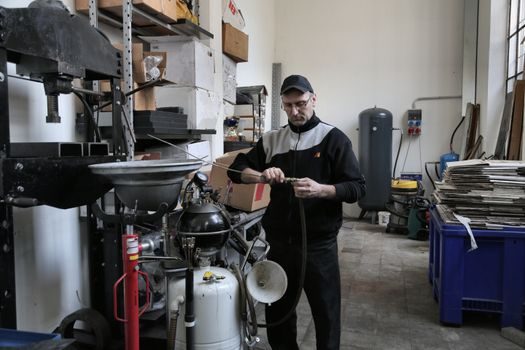
Water-ring and rotary-vane pumps dominate die-casting vacuum trains because they tolerate dust and moisture from die spray better than dry pumps; published process guidance points to water-ring vacuum pumps as the typical choice for the 0.025–0.080 MPa band, with swept volume set by the largest cavity volume multiplied by the cycles-per-hour target [S2].
Energy cost on the pump train scales roughly linearly with the product of chamber volume × cycles-per-hour × absolute pressure reduction; halving the leak rate of the chamber therefore cuts pump kilowatt-hours by the same factor, which is the largest single TCO lever the operator controls [S2].
Modern vacuum gauge choices — convection-enhanced Pirani, hot-cathode Bayard-Alpert, cold-cathode inverted magnetron and capacitance diaphragm — are cited as offering measurable TCO reduction through longer calibration intervals and broader measurement range (2.00E-11 Torr to 1,000 Torr in one product family), so the instrumentation side of the cell is also a TCO line item, not a sunk cost [S3].
Leak Rate, Seal Discipline and the Real Downtime Number
Leak rate is the hidden multiplier on TCO: a poorly sealed chamber forces longer pump-down, fights the process during fill, and pushes the operator toward deeper-vacuum pumps that cost more to buy and more to run [S2][S3].
Standard leak-hunting gates include a pressure-rise test on an isolated chamber (target typically expressed in mbar·L/s for production cells), a soap-bubble or helium-snoop pass on every flange after die change, and a documented pump-down-time-per-shot that the cell should not exceed [S2].
For a deeper dive on foundation, pump train layout and the leak-rate gates that should be passed at installation, the vacuum die casting installation reference is the next node.
Comparison: Vacuum vs Cold-Chamber vs Gravity Die Casting on TCO Levers
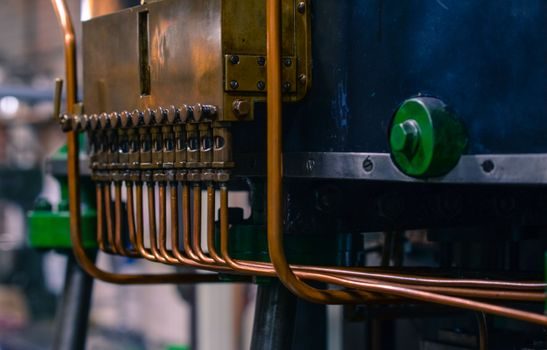
Compared against a cold-chamber die casting machine without vacuum assist, a vacuum cell adds the pump train, the chamber seals and the gauge stack, but recovers the cost through lower porosity-related scrap on safety-critical aluminium structural parts and thinner-wall magnesium housings; against gravity die casting, the vacuum cell's value is speed and pressure tightness, while gravity's value is capital simplicity and lower infrastructure demand. [S1]
On four TCO decision criteria: (1) capital cost — gravity < cold-chamber < vacuum-assisted; (2) energy per shot — vacuum is highest because of the pump train, cold-chamber is mid, gravity is lowest; (3) scrap rate on thin-wall/structural parts — vacuum is lowest, cold-chamber is mid, gravity is highest for complex geometry; (4) maintenance skill required — vacuum is highest (seal, pump, gauge stack), gravity is lowest [S2][S3].
That ordering holds for most automotive structural and 3C electronics magnesium work; it does not hold for simple, thick-wall non-safety parts, where the vacuum premium is not recovered.
Five-Year Spend Buckets and the Downtime Multiplier
A rule-of-thumb split for a vacuum die casting cell's five-year TCO: capital amortisation 30–40%, energy 20–30%, consumables 10–15%, maintenance and pump rebuilds 10–15%, downtime and lost yield 15–25% — with the downtime bucket the most underestimated because unplanned leak-hunts and pump rebuilds are charged to production, not maintenance [S1][S3].
The same envelope applies to the shot sleeve and the wider cold-chamber cell, where lube, cooling water and sleeve life also drive the spend profile — see the shot sleeve TCO breakdown for the parallel analysis.
Two trackable signals over the next planning cycle: a published industry benchmark for chamber leak rate in mbar·L/s on production aluminium cells, and an OEM-published mean-time-between-overhaul for water-ring vacuum pumps in die-casting duty (currently the published data is limited to general vacuum-pump literature) [S2][S3].
For component-level specifications, see vacuum die casting machine, and die casting machine.