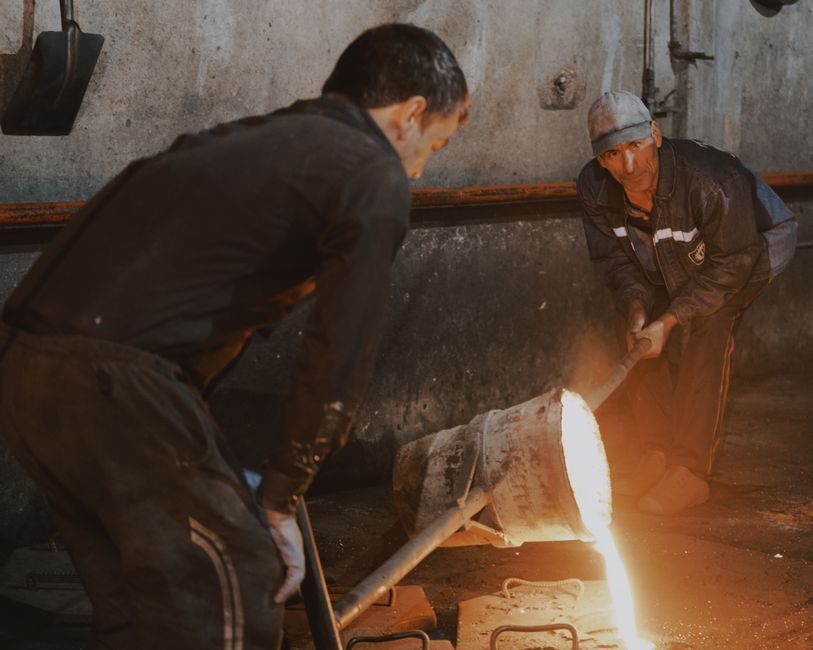
Three families dominate vacuum die casting: vertical vacuum-assisted, horizontal high-vacuum, and vacuum-squeeze casting (VSC), each defined by chamber orientation, evacuation path, and the pressure band the cell holds during injection [S3][S6].
The process emerged in the late 1970s as a refinement of vacuum-sealed moulding and was commercialised for metal casting by 1980, when foundries adopted negative-pressure die cavities to suppress gas porosity and shrinkage in thin-wall aluminium and magnesium parts [S3]. Die-casting cell architecture overall is covered in the die casting machine reference; the vacuum subclass behaves differently because the evacuation branch sits between the shot sleeve and the die, not on the clamp alone.
Definition and Scope: What "Vacuum Die Casting" Actually Encloses
Vacuum die casting (VDC) describes a high-pressure die-casting cycle in which the die cavity is evacuated to a sub-atmospheric absolute pressure immediately before and during the injection stroke, so that entrained air and lubricant pyrolysis gases are pulled out of the cavity rather than compressed into the casting [S3][S6]. The published academic case at SEDI Enugu defines the principle as the evacuation of the die before molten aluminium fills the cavity, applied there to single-cylinder engine pistons where porosity would otherwise nucleate fatigue cracks under the crown [S2]. The aluminium-flavoured cell is treated in detail under aluminum die casting machine, and the magnesium variant with its stricter melt-handling envelope under magnesium die casting machine.
Scope boundaries matter: VDC is a sub-class of high-pressure die casting, not a separate process. Gravity-fed cells that simply pour under atmospheric pressure fall into the gravity die casting machine category, while resin-prototyping cells that operate below 0.1 MPa absolute with polyurethane melts — such as the 3-axis VCM 04 prototyping unit producing 30-50 parts in 2-3 days with mould life of 15-30 castings [S1] — belong to vacuum casting for prototyping, not metal VDC. The Total Materia technical note confirms VDC's commercial weight sits in the automotive and structural-aluminium sectors, with benefits of higher surface finish, improved mechanical properties, and better finished-product stability versus conventional atmospheric die casting [S6].
Type-by-Type Breakdown: Vertical, Horizontal High-Vacuum, and VSC
Vertical vacuum-assisted cells evacuate the cavity through a vertical downstroke shot sleeve and pull vacuum on the fixed half; horizontal high-vacuum cells evacuate the parting line and the runner through a horizontal cold-chamber sleeve, with the vacuum line branched off the shot end; vacuum-squeeze casting (VSC) combines vacuum evacuation with a controlled squeeze-pressure intensification step after fill, lifting local pressure back above atmospheric during solidification [S3][S6]. The German term "Vakuumdruckgießmaschine" maps directly to vacuum pressure die casting machine and is used interchangeably in EU technical documentation [S4].
Pressure bands differ markedly. EVP's published research reports the operating window for water-ring-pump evacuation at 0.080-0.025 MPa absolute, with thin-wall castings under 100 kg held at 0.050-0.025 MPa and thicker medium castings held at 0.060-0.045 MPa, because excess vacuum increases mould compactness and promotes surface cracks while insufficient vacuum leaves exhaust efficiency low and re-introduces gas porosity [S3]. The structural difference between VDC and the gravity-fed alternative is laid out in the vacuum die casting machine reference; zinc-cell buyers should also cross-check the zinc die casting machine entry because the vacuum envelope is rarely used on hot-chamber zinc but is sometimes specified on cold-chamber zinc for safety-critical hardware.
Selection Criteria: When Vacuum Is Worth the Cycle-Time Penalty
VDC is specified when the casting must pass radiographic inspection, must be heat-treated (T5/T6/T7), or must survive leak-tightness testing at >1 bar differential, because all three failure modes trace back to internal gas or shrinkage porosity that atmospheric HPDC cannot suppress [S2][S6]. The SEDI Enugu piston work explicitly chose VDC over atmospheric die casting because the crown and ring-band zones of a single-cylinder piston crack under cyclic combustion loading if porosity exceeds roughly 1-2% by area, a threshold that atmospheric cells routinely exceed on thin rib sections [S2].
Specifiers should also weigh cell footprint, seal maintenance, and pump duty. The reference research shows water-ring pumps dominate the VDC evacuation branch, with rotary-vane pumps used where the absolute target sits in the lower 0.025-0.050 MPa band [S3]. Buyers evaluating total cost of ownership beyond the purchase price can cross-read the cold chamber die casting machine TCO analysis, since the vacuum branch adds pump, seal, valve, and sensor lines that atmospheric HPDC cells do not carry. The companion foundation-to-first-shot field guide also documents the utility-side requirements — compressed air, cooling water, and three-phase power — that VDC cells raise versus a baseline cold-chamber line. Shot-sleeve concentricity, interference fit, and pre-heat gates — covered in the shot sleeve installation reference — matter more on VDC than on atmospheric cells because any sleeve leakage inlets air directly into the evacuated cavity.
Process Parameters: Temperature, Vacuum Level, and the Porosity Trade-off
Aluminium melt for VDC is typically held at 660-720°C at the nozzle, with die surface temperatures held at 180-250°C on the cavity side to keep the alloy liquid long enough to evacuate residual gas before skin formation seals the surface [S3]. The published finding that "high vacuum and high compactness mould, casting quality is high" is paired with the caveat that excessive vacuum (>0.080 MPa abs pull, i.e. very low absolute pressure) drives mould-compaction stresses that crack the casting, while too little vacuum (<0.025 MPa abs) leaves exhaust efficiency low and re-introduces gas-related defects [S3].
The same research isolates the failure mode behind mould collapse: when molten iron fills the cavity, the flow-front air gap causes internal and external vacuum to fall sharply, and the resulting stress imbalance pulls dry sand toward the gap, which collapses the mould wall [S3]. For aluminium VDC the equivalent is oxide entrainment and lap-fold defects where the front loses skin integrity before the cavity is fully filled. These are the dominant limits of VDC — not a capability ceiling, but a process-window restriction that the cell design and operator discipline have to defend.
Who Vacuum Die Casting Is For — and Who Should Walk Away
VDC is for foundries producing safety-critical aluminium or magnesium structural castings — automotive knuckles, subframes, suspension links, EV battery housings, aerospace brackets, and engine pistons — where the buyer can document a porosity, leak-tightness, or heat-treatment requirement that atmospheric HPDC cannot meet [S2][S6]. The SEDI Enugu case demonstrates the technology is also viable for low- and mid-volume replacement-part production in developing industrial economies, where local piston manufacture replaces imports [S2].
VDC is NOT for: cosmetic-only zinc castings where the cosmetic surface hides porosity (atmospheric hot-chamber zinc is faster and cheaper); short-run prototyping where the 30-50 parts in 2-3 days workflow of a vacuum casting prototyping machine such as the VCM 04 [S1] serves better; and very high-volume commodity castings where the 10-35% cycle-time penalty and additional pump/seal maintenance outweigh the quality premium [S3][S6]. Vacuum high-voltage bushing impregnation systems — exemplified by the vHVB series, which combines vacuum casting with pressure impregnation and curing for electrical-grade castings — sit in a separate application branch where the dielectric, not the structural, requirement drives the vacuum envelope.
Failure Modes, Limitations, and Trackable Sourcing Signals
The most common VDC failure modes are: (1) incomplete evacuation because seal leakage on the parting line or the shot sleeve let air in faster than the pump could remove it; (2) oxide entrainment at the flow front where vacuum pulled too aggressively thins the oxide skin prematurely; (3) mould collapse or surface sand burn-on in sand-mould vacuum variants when the internal/external pressure differential is not controlled through fill [S3]. Each mode has a corresponding sensor signature — a pressure-rise spike at fill start signals leakage, a steady climb in die-cavity absolute pressure during fill signals pump undersizing, and an abrupt differential collapse in the upper plenum signals sand-mould structural failure.
Trackable sourcing signals: suppliers that publish a measured chamber-pressure band per cell (rather than a single nominal "vacuum" claim) tend to deliver better process repeatability, and those that disclose pump type, evacuation time to target, and seal-change interval — see the EVP research's specification of water-ring pumps at 0.025-0.080 MPa with rotary-vane variants for the lower band [S3] — let the buyer audit the cell against the alloy and wall-thickness profile. The Apex Aluminium die casting operation profile — family-owned, in business since 1980, focused on flexible high-pressure aluminium and zinc die casting in high-mix, low-volume production — is the kind of supplier footprint where VDC capacity is most often retained as a value-add line rather than a commodity offering. The Chinese vacuum-clamp die-casting supply chain continues to publish MOQ-tiered offerings with production capacities in the 2,000,000-piece-per-year band, confirming that the vacuum sub-class remains a mainstream, not a niche, sub-segment of the global die-casting supply base [S5].
Next node: cross-reference the vacuum die casting machine entry against a specific alloy (Al-Si-Mg for structural, Mg-Al-Zn for lightweight) and a specific wall-thickness target before locking the pressure band; the operating window is narrow enough that mis-spec'ing 0.025 MPa versus 0.060 MPa absolute will determine whether the cells produce radiographically-clean parts or scrap.