
Wrought aluminum 6061 can be squeeze cast, with peer-reviewed work going back to Skolianos et al. (1997) on AA6061 solidified under 60-80 MPa of direct pressure [S1]. The 2023 follow-on by Mutar applied 90 MPa to AA6061 and reported tensile and ductility values that approached wrought-product levels in both as-cast and T6 conditions [S2].
6061 is an Al-Mg-Si wrought alloy with 0.80-1.20% Mg, 0.40-0.80% Si, 0.15-0.40% Cu, and a 0.04-0.35% Cr addition, balanced for solid-state deformation rather than liquid fill [S4]. That chemistry mismatch is exactly what governs how well the alloy behaves when forced into a squeeze casting machine cycle.
Why 6061 Responds to Pressure: Porosity and Dendrite Refinement
Skolianos et al. (1997) showed that applied pressure during solidification reduces both the volume fraction of porosity and the micropore size in 6061, while also shrinking dendrite arm spacing and the size of interdendritic constituent particles [S1]. The mechanism is straightforward: the externally applied load counteracts shrinkage-driven feeding stress and suppresses gas-pore nucleation, producing a denser and finer structure than gravity or low-pressure die casting [S1].
Ultimate tensile strength in the same study climbed as pressure was applied, but the gain plateaued: further pressure beyond the threshold needed to eliminate shrinkage did not raise UTS, indicating that UTS is gated by feeding completeness rather than raw load [S1]. Elongation behaved differently, peaking in the 60-80 MPa window for both as-cast and T6 temper conditions, and dropping off at both lower and higher pressure [S1]. The 2023 work extended the upper bound to 90 MPa and recovered wrought-comparable mechanical properties in AA6061 across aspect-ratio variants of the test casting [S2].
6061 vs A356: Why Chemistry Forces Different Casting Routes
6061 contains roughly 0.40-0.80% Si, while A356 carries 6.5-7.5% Si, about 10x more [S4]. That silicon step is the central reason 6061 is classed as a wrought alloy while A356 is the dominant Al-Si-Mg casting alloy, and it dictates melt fluidity, feeding behaviour, and hot-tearing susceptibility [S4]. A356's near-eutectic silicon level gives it the flow to fill thin walls and intricate die cavities; 6061's leaner silicon window demands much higher pressure to feed the same geometry, which is precisely what squeeze casting provides [S1][S4].
Magnesium is the other axis that flips: 6061 runs 0.80-1.20% Mg against A356's 0.25-0.45% [S4]. More Mg means more Mg2Si available for precipitation hardening during T6, which is why 6061-T6 is the structural-strength benchmark that A356-T6 is benchmarked against [S4]. The cost is melt handling: Mg losses through oxidation scale with temperature and turbulence, so 6061 squeeze castings need tighter melt-temperature control and cover-gas practice than A356 castings on the same aluminum die casting machine platform.
Selection Criteria: When 6061 Squeeze Casting Is the Right Call
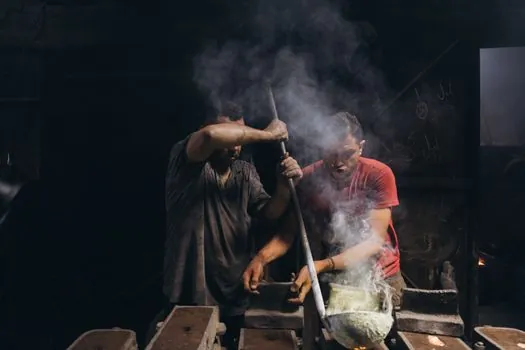
Squeeze-cast 6061 is the right call when the part needs wrought-class mechanical properties in a near-net shape that extrusion or forging cannot produce economically, and when the section thicknesses are moderate so feeding remains feasible [S1][S2]. The 1997 and 2023 datasets both confirm wrought-comparable tensile and ductility values are recoverable on simple coupon geometries under the right pressure and T6 cycle [S1][S2].
It is the wrong call for very thin-wall, large-area parts that exploit A356's fluidity, for parts where the design freedom of a dedicated casting alloy (A356, A357, A380) is needed, or for high-volume runs where a dedicated aluminum alloy casting cell is already amortised. Squeeze-cast 6061 is also a poor substitute for stock-bar 6061-T6 in general machining applications; the absence of thermo-mechanical working leaves an as-cast structure that machines gummy without proper T6 heat treatment, a recurring failure mode in hobby and small-shop melts [S5].
Failure Modes: Segregation, Hot Tearing, Heat Treatment
Meng et al. (2021) examined 6061 wheel spokes produced by squeeze casting and found segregation at the R-joint driven by three intermetallics: Mg2Si, beta-AlFeSi, and Al5Cu2Mg8Si6 [S3]. Their microprobe and JMatPro work traced the sequence: Mg2Si and alpha-AlFeSi precipitate first in the mushy zone, then alpha-AlFeSi transforms to beta-AlFeSi as temperature drops, and the quaternary Al-Cu-Mg-Si phase precipitates from solid-state aluminium after solidification completes [S3]. The practical conclusion is direct: insufficient local cooling is the root cause, so the fix is enhanced die cooling at the thick-section R-joint, not a chemistry change [S3].
Hot tearing risk in 6061 castings is higher than in A356 because 6061's wider freezing range and lower Si content give it a longer mushy zone with weaker feeding [S1]. Skolianos' group flagged that the pressure needed to eliminate shrinkage is alloy-specific and depends on the freezing range, growth morphology, and the flow stress of the near-solid casting [S1]. For 6061, that pressure floor sits in the tens of MPa, not the low single digits typical of high-silicon casting alloys, and falling below it produces porous, low-ductility parts [S1][S5].
The T6 cycle is non-negotiable for 6061 castings: solution treat just under the melting point (around 980 F / 527 C), hold for roughly one hour per cross-section, water-quench, then artificially age at lower temperature for several hours [S5]. As-cast 6061 is brash and machines poorly; without T6, the part will not hit wrought 6061-T6 properties regardless of how good the squeeze cycle was [S5].
Process Parameters That Drive the Outcome
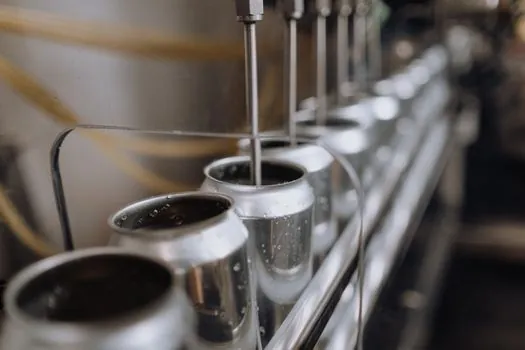
Five variables dominate squeeze-cast 6061 quality: melt superheat, die preheat, applied pressure, delay between pour and pressure application, and pressure hold time [S1]. Of these, applied pressure is the most studied for 6061 specifically, with the 60-80 MPa window being the elongation optimum in the 1997 dataset and 90 MPa used in the 2023 dataset to push properties toward wrought baseline [S1][S2].
Pouring temperature and the time delay between pour and pressure application govern how much skin has already solidified before the load is applied; if that delay is too long, the pressure cannot feed the solidifying shell and porosity returns [S1]. Die preheat temperature has to be high enough to prevent cold shuts but low enough to keep the dendrite structure fine; the published studies do not name a single universal value because it is geometry-dependent [S1]. For high-Mg alloys like 6061, melt handling under cover gas and short transfer times are the practical levers that keep Mg loss and oxide entrainment in check, which directly affect the Mg2Si volume fraction available for precipitation strengthening [S1][S3].
Comparison: Squeeze-Cast 6061 vs Wrought 6061-T6 vs A356-T6
Three options line up against four decision criteria. Wrought 6061-T6 is the benchmark, A356-T6 is the conventional casting choice, and squeeze-cast 6061-T6 is the hybrid. On tensile strength, wrought 6061-T6 sits at the top, A356-T6 trails, and squeeze-cast 6061-T6 closes the gap to wrought when pressure and T6 are both correctly applied [S1][S2][S4]. On ductility, wrought 6061-T6 reaches up to 17% elongation, A356-T6 is significantly lower, and squeeze-cast 6061-T6 is recoverable in the 60-90 MPa pressure window [S1][S4]. On castability and thin-wall fill, A356 wins by a wide margin thanks to its 6.5-7.5% Si; squeeze-cast 6061 fills adequately only under high pressure, and wrought 6061 is not castable in this sense at all [S4]. On cost and cycle time, A356-T6 is the cheapest per part on a dedicated casting line, wrought 6061-T6 bar requires machining from stock, and squeeze-cast 6061-T6 pays a premium for the press capacity and longer cycle but saves on machining [S1][S2][S4][S5].
The comparison to track is not 6061 vs A356 abstractly, but the geometry-property envelope each alloy can hit. For wheel-spoke-class parts with thick hubs and thin arms, squeeze-cast 6061 with R-joint cooling enhancement has been demonstrated; for thin-wall housings, A356 remains the safer bet [S3][S4].
Standards, Sourcing, and the Realistic Next Step

No single international standard governs "squeeze-cast 6061" as a material designation; the alloy itself is covered under the 6xxx series wrought designations, and the process falls under general casting and heat-treat specifications applied to the part's end use. Buyers should therefore specify the alloy by 6xxx-series composition, the temper by T6 condition and time-temperature parameters, and the process by minimum applied pressure and maximum acceptable porosity per ASTM E505 or equivalent radiographic/ultrasonic criteria on a part drawing [S1][S5].
The verifiable signals to track over the next 6-12 months are: additional peer-reviewed datasets on 6061 squeeze casting at pressures above 90 MPa, follow-on work on the Al5Cu2Mg8Si6 quaternary phase that forms post-solidification, and process-window data on thinner wall sections where 6061's lower fluidity is the binding constraint. For shops evaluating the technology, the practical first step is a 60-80 MPa direct-pressure trial on a representative coupon, followed by T6 and tensile/elongation testing against wrought 6061-T6 baseline, before committing to a production squeeze casting machine cell or downstream aluminum window door or aluminum ladder component runs.
Background reading: AI Capex 2026: Overbuild or Underbuild, Measured Against Power and Packaging Bottlenecks.