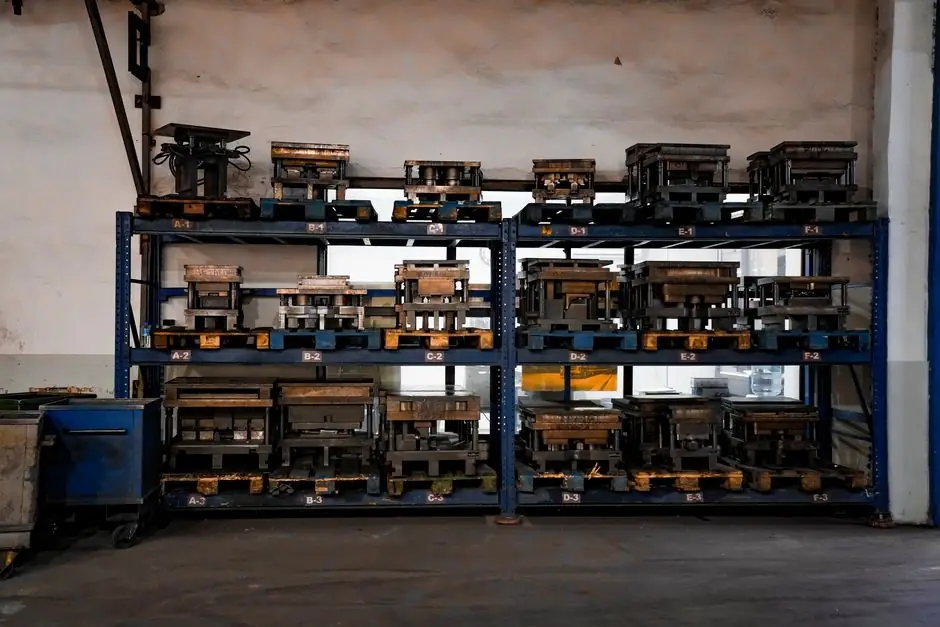
Squeeze casting applies hydraulic pressure during solidification of lead-free brass, producing near-net-shape faucet bodies with low porosity, while permanent-mold gravity die casting fills the cavity under metal head alone and is the established OEM baseline for brass plumbing components [S2][S3].
For a procurement engineer weighing the two, the deciding variables are wall thickness tolerance, leak-test burst pressure, lot volume, and the alloy's shrinkage behaviour, not the headline machine price. This article lines the two processes up against those criteria using only publicly published data through 2026-09-28.
Process Definition and Filling Mechanics
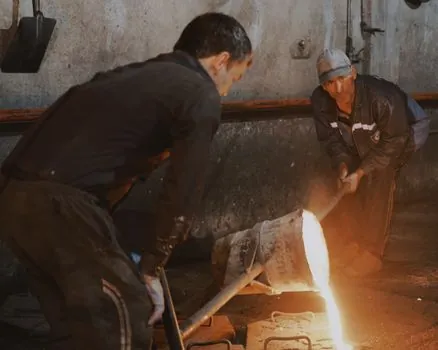
Gravity die casting, also called permanent-mold casting, fills a reusable steel die by pouring molten brass from a ladle under gravity, with tilting sometimes used to control fill velocity; the mold is preheated to roughly 300-400°F (150-205°C) and coated with a refractory wash before each cycle [S4][S5]. Because steel conducts heat far better than sand, the cycle time is short and the resulting microstructure is finer, but filling speeds stay low and the cavity fills the way the sprue and runner system routes it [S3][S4].
Squeeze casting is a single-step hybrid of casting and forging: the molten alloy is poured into the lower die, the upper die closes, and solidification proceeds under sustained hydraulic pressure, with the result described in the trade press as a pore-free, high-density component [S2]. Direct squeeze casting applies pressure over the whole cavity for better heat transfer, while indirect squeeze casting injects metal through a thicker gate at lower velocity than high-pressure die casting, which keeps laminar flow and limits air entrapment [S2].
Why Lead-Free Brass Changes the Calculation
Lead-free brass alloys have lower melt fluidity and a different shrinkage curve than traditional leaded yellow brasses, and that single fact shifts the casting-process decision [S1]. Sand molds cool unevenly, which promotes micro-porosity and uneven wall thickness; permanent steel molds regulate thermal extraction so the alloy freezes under repeatable conditions, which is the metallurgical lever a process engineer actually controls [S1][S3]. Yellow brasses are flagged as a poor fit for permanent-mold gravity casting because of hot-shortness and die attack, which is one reason lead-free plumbing alloys (typically silicon- or bismuth-brass families) have displaced them in faucet bodies [S5].
For OEMs shipping into markets with tightened heavy-metal leach limits, the casting method also controls where any residual lead-like elements end up: a controlled thermal gradient in a steel die prevents the lead-pooling segregation that a sand mold allows, so compliance with drinking-water contact limits becomes a function of the mold, not just the alloy chemistry [S1].
Comparison: Squeeze vs Gravity on the Criteria That Matter
Lining the two processes up against the criteria that drive a faucet-body RFQ: density, porosity, dimensional repeatability, tooling cost, and minimum wall thickness. Squeeze casting wins on density and porosity because applied pressure suppresses shrinkage voids and grain coarsening, giving a longer-lifetime component with a better as-cast surface that downstream electroplating and PVD coating lines can finish without polishing putty [S2]. Gravity die casting wins on tooling cost and lead time because the die is simpler, the shot system is a ladle and sprue rather than a hydraulic press, and the same die routinely runs 100,000+ cycles of lead-free brass without the high clamping tonnages a squeeze press demands [S1][S3][S4].
On minimum wall thickness, gravity die casting is published as a roughly 4 mm practical floor, while squeeze casting can hold thinner sections because pressure feeds solidification shrinkage [S5]. On dimensional accuracy, both beat sand casting because the steel mold repeats; squeeze casting adds the forging-style grain refinement that improves burst-pressure performance on cartridge-seating bores [S1][S2]. For smart-faucet bodies that house solenoid valves and flow sensors, that extra density is what lets the cartridge seat survive hundreds of thousands of cycles without the seal-failure mode that ruins a warranty [S1].
Application Fit: Where Each Process Earns Its Place
Gravity die casting is the right process when the part is a complex exterior shape with internal waterways, when the order is 5,000-100,000 pieces per SKU, and when the buyer is willing to invest in CNC machining of the cartridge seat after casting; this is the dominant path for North American and European OEM faucet lines [S1][S3]. A reusable gravity die casting machine lets the foundry pour all day with a single ladle operator and a tilting table, which is the production rhythm faucet foundries are built around [S1].
Squeeze casting earns its place on higher-end bodies, on parts that need leak-test burst pressures above what gravity castings can routinely hold, and on thinner-wall geometries that gravity cannot feed; the trade-off is a squeeze casting machine with a hydraulic press, a controlled shot, and longer cycle time per part [S2]. For a working engineer, the heuristic is: if the body is the load-bearing pressure vessel of the faucet, specify squeeze; if the body is a complex shell with internal cast-in waterways and the pressure boundary is the cartridge, gravity is enough.
Selection Criteria and Process Limits

Use a four-criterion screen. First, leak-test pressure: if the body must hold above the typical residential faucet test pressure without a sleeve, squeeze casting's density is the safer bet [S2]. Second, lot size and tooling amortisation: for sub-5,000-piece runs, gravity wins on amortised die cost; for steady high-volume runs, the squeeze press's cycle time becomes less of a penalty [S3][S5]. Third, alloy behaviour: yellow brasses are explicitly flagged as a poor fit for permanent-mold gravity casting, while silicon- and bismuth-bearing lead-free brasses run cleanly in both processes when die temperature is controlled [S5]. Fourth, downstream finish: if the part is going to a PVD line or a high-gloss electroplate, the as-cast surface of squeeze casting reduces prep work [S1][S2].
Common failure modes to spec against: gravity castings can show micro-porosity if pouring temperature drops or the sprue is under-sized, and lead-free alloys amplify that risk because of their narrower solidification range; squeeze castings can show cold laps if the press closes before the cavity is fully filled [S1][S2][S3]. For both processes, casting ladle temperature and pour timing are the variables a foundry foreman actually tunes day to day, not the machine itself [S1].
Standards, Sourcing, and Tooling Notes
Faucet bodies in drinking-water service fall under the same family of national leach-rate regulations that have driven the global shift to lead-free alloys, and the practical effect is that the casting process has to be auditable for alloy chemistry and heat-history traceability [S1]. For the OEM, the foundry audit checklist should ask for: recorded die preheat temperature, recorded pour temperature, evidence of a controlled cooling curve, and porosity inspection method (X-ray or pressure-test) on the first-article batch [S1][S4]. For very small production volumes or prototype runs, the same engineering team may also evaluate a casting mold machined from graphite or tool steel, which gives the same gravity-fill behaviour at lower upfront cost [S3][S4].
For a working engineer mapping this back to a lead-free brass alloy selection for squeeze casting decision, the alloy and the process must be qualified together: a bismuth-brass that runs clean in a squeeze press can hot-short in a gravity die, and the inverse is also common. The same logic applies when comparing manual versus hydraulic die operation on a hydraulic vs pneumatic vs manual die operation on gravity die casting machines line, because the operator interface changes cycle time and shot consistency more than the underlying metallurgy does. Match the process to the pressure boundary, not to the brochure.