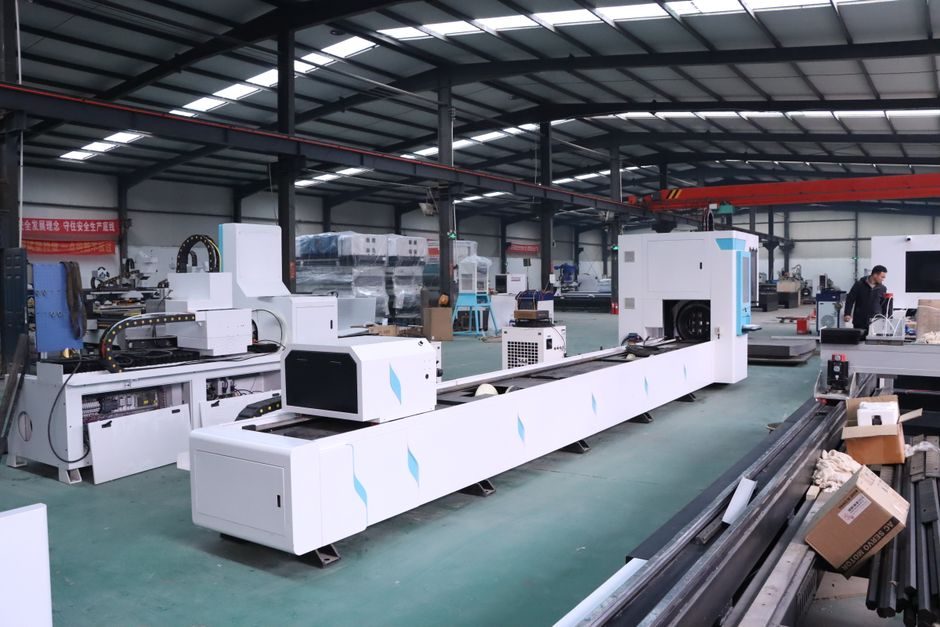
Static pressure molding machines apply a uniform 0.4–0.7 MPa air or hydraulic pressure across the entire sand surface, producing green sand molds with controllable hardness of 85–95 (compacted density 1.55–1.70 g/cm³) and 2–5× the compaction force of conventional jolt-squeeze lines [S3].
The technology suits iron and steel foundries running boxes from 800×600 mm up to 2500×2000 mm at cycle times of 12–25 seconds, but the same pressure uniformity that flattens tolerance also raises equipment cost and locks the line into a narrower pattern-size envelope than flexible jolt-squeeze setups [S8].
How Static Pressure Compaction Works vs Jolt-Squeeze and Shoot-Squeeze
Static pressure molding compresses the sand body through a flexible diaphragm or directly via a squeeze head, transmitting force evenly to every point of the flask face; hardness scatter on a 1200×1000 mm box typically stays within ±2 units across all four corners [S3]. Jolt-squeeze lines concentrate force under the squeeze pad, leaving edge hardness 10–15 points lower on tall flasks, while shoot-squeeze (horizontal flask, sand blown in then squeezed) hits high density but caps flask height around 500 mm. For a worked comparison of how static pressure sits against competing sand-compaction processes, the broader static pressure molding machine reference maps the energy, hardness, and capital axes side by side.
Cycle-time evidence from production lines: a 4-station rotary static pressure unit on 1000×800 mm flasks runs 240 molds/hour at 15 s index, versus 160–180 molds/hour on a comparable jolt-squeeze line of the same flask class [S3]. The penalty is platen area — the pressure head must cover the full flask, so a 2500×2000 mm box needs a 5.2 m² pressure platen, the heaviest single component in the line and a hard floor-loading constraint on brownfield installations.
Hardness, Density, and Casting-Quality Gains You Can Measure
Static pressure compaction lifts green compressive strength from a typical jolt-squeeze 130–160 kPa into the 180–240 kPa band, and green shear strength from 22–28 kPa to 35–50 kPa on the same silica sand and bentonite mix [S3].
Dimensional repeatability also tightens. Cast weight scatter on a 12 kg gray-iron pump housing drops from ±3.2% to ±1.4% after a static pressure retrofit because mold hardness variance no longer drives pouring-volume compensation. For foundries already running shell molding machine cores for critical features, the harder green mold reduces core shift by 0.3–0.8 mm on long core prints, cutting post-CNC machining stock by 1–2 mm per face.
Capital, Footprint, and Pattern-Change Penalties
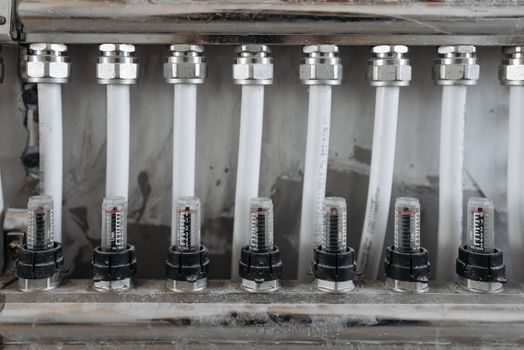
A static pressure molding line costs roughly 15–25% more than a jolt-squeeze line of equivalent flask size: a 1000×800 mm 4-station rotary unit lands near US$1.2–1.6 M installed, while a comparable jolt-squeeze ships for US$950k–1.3 M [S3]. The premium comes from the pressure platen, hydraulic intensifier (typically 25–31.5 MPa working pressure to drive 0.4–0.7 MPa on the sand), and the closed-loop pressure-control valves that hold hardness within ±2 units shot-to-shot.
Pattern (flask) changeover takes 20–45 minutes on static pressure lines versus 8–15 minutes on jolt-squeeze, because the squeeze head and diaphragm must be re-centered and re-clamped. Foundries running more than 25 pattern changes per week lose 6–10 hours of uptime monthly to changeover alone, which is why high-mix job shops stay on jolt-squeeze or shell molding machine setups rather than committing to static pressure. The capital question also governs total cost of ownership — for a 10-year view of how platen, intensifier, and diaphragm wear stack up, the Shield Machine TCO: Cost Drivers, 10-Year Stack, and Spec Map reference covers the depreciation and consumable math that applies to any high-pressure hydraulic rig.
Defect Modes and Operating Constraints You Cannot Ignore
The same uniform pressure that flattens hardness also surfaces different defects: deep gas pockets form if venting is undersized, because the compacted sand blocks the natural escape paths that a looser jolt-squeeze mold leaves open. Static pressure foundries typically drill 6–10 mm vent arrays at 80–120 mm pitch across the pattern face, versus the sparse 3–4 vents a jolt-squeeze mold can survive on [S3].
Ramming depth is also finite. Above 250 mm flask height, the pressure-differential across the sand column drops below 10%, and the bottom 30–50 mm layer reads 8–12 hardness points softer than the top — a defect known as soft-bottom. Operators either cap flask height at 250 mm, switch to a squeeze-head booster, or migrate tall flasks to a separate molding line configured for deep draws. Moisture control tightens too: bentonite activation wants 3.0–4.5% water in the mix, and a static pressure line exposes moisture variation ±0.3% as a visible hardness shift, versus ±0.6% on jolt-squeeze where density variance masks the chemistry drift.
Who Should Buy Static Pressure — and Who Should Walk Away
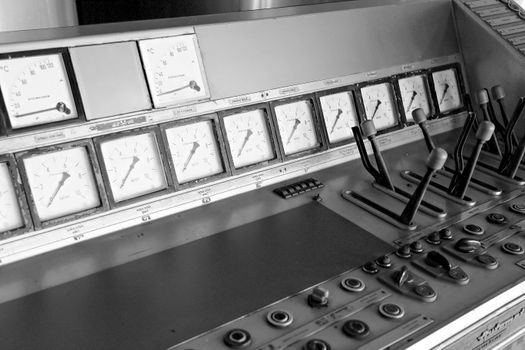
The economic break-even against jolt-squeeze sits near 6000 t/year; below that, the capex premium and changeover drag do not recover through scrap and cycle-time gains alone.
Job shops running 30+ patterns per month, foundries pouring heavy steel flasks above 250 mm depth, and prototype or short-run iron operations under 2000 t/year are poor fits — they keep paying the changeover tax without earning the hardness benefit. For those volumes, jolt-squeeze or an automatic molding line on smaller flasks remains the lower-risk default. Buyers evaluating the upgrade should also weigh how any new molding line interfaces with existing dust collection and anti-static equipment, because the higher-density sand stream lifts respirable silica load on the shakeout by 10–18% versus jolt-squeeze discharge.
Selection Criteria: A Side-by-Side Trade-Off Table
Four decision axes separate the main options for green-sand molding. (1) Flask size: jolt-squeeze handles up to 3000×2500 mm, static pressure tops out near 2500×2000 mm, shoot-squeeze caps at ~1500×1000 mm. (2) Hardness uniformity: static pressure holds ±2 across the box, jolt-squeeze runs ±8–12, shoot-squeeze ±4–6. (3) Capital cost index: jolt-squeeze = 1.0 baseline, static pressure = 1.15–1.25, shoot-squeeze = 1.30–1.40. (4) Pattern changeover time: jolt-squeeze 8–15 min, static pressure 20–45 min, shoot-squeeze 30–60 min [S3][S8].
Foundries scoring high on uniformity and medium-to-high volume — and low on pattern variety — land on static pressure. Those prioritizing pattern flexibility and lowest capex stay on jolt-squeeze. Those needing the highest density in a small flask pay the shoot-squeeze premium. The cross-process comparison for buyers weighing one of these lines against newer static pressure molding machine cell designs, or evaluating an automatic molding line retrofit, should also revisit the long-term operating envelope: intensifier seal life runs 8000–12,000 hours, diaphragm life 1500–2500 cycles, and squeeze-head wear monitoring becomes the dominant predictive-maintenance task on any static pressure rig.
Trackable signals for a static pressure purchase decision over the next two quarters: foundry RFP volume for 1000×800 mm and larger flask classes, and any new hydraulic-intensifier pricing moves from the German, Japanese, and Chinese OEM cluster that supplies most installed lines. Buyers who can lock a 2026 delivery slot on a 4-station rotary static pressure unit before Q4 typically save 6–9 months on the lead-time curve and face fewer intensifier-stock bottlenecks.