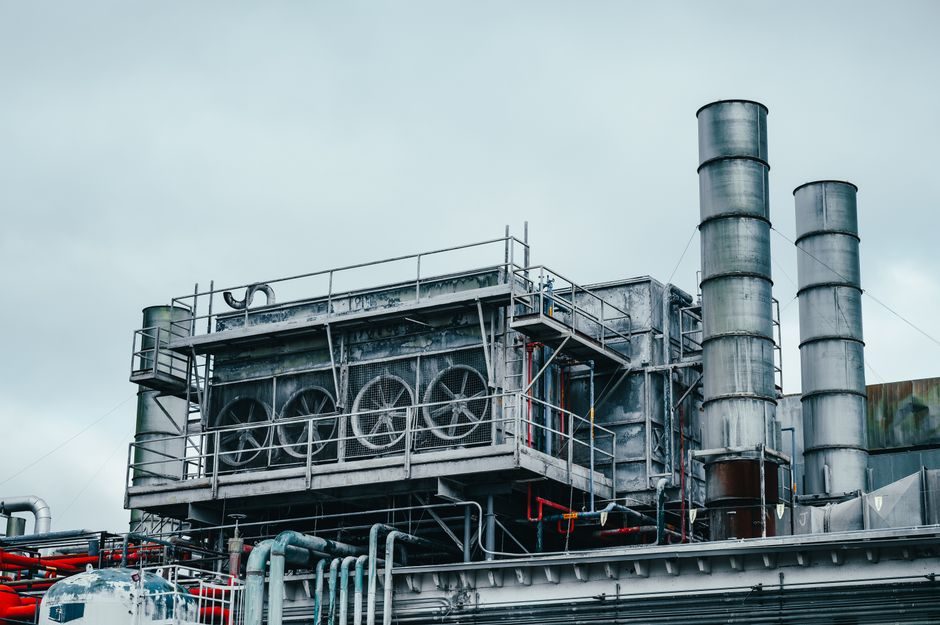
An automatic molding line is an integrated foundry system that combines sand mixing, mold compaction, mold handling, pouring, and shake-out into a continuous production flow, with part-weight capability from 0.1 kg to 25,000 kg and annual output exceeding 10,000 tons at tier-1 foundries [S2].
Five main types dominate 2026 procurement — green-sand, resin-sand, shell, static-pressure, and PU-foam molding lines — and each maps cleanly to specific part geometries, alloys, and tolerance bands rather than competing on price alone [S1][S2].
Green-Sand Molding Line: High-Volume Iron and Steel
Green-sand molding lines use clay-bonded silica sand conditioned to 3–5% moisture and compacted at 0.3–0.6 MPa, with flask sizes from 600×500 mm up to 2000×1500 mm on the largest high-pressure models [S1].
Cycle times fall between 12 and 30 seconds per mold on horizontal flaskless configurations, which is why the format dominates automotive engine blocks, brake drums, and pipe fittings where annual volumes exceed 100,000 castings per part number [S1].
Resin-Sand and DISA Molding Line: Heavy Castings and OEM Machined Parts
Resin-sand (furan, phenolic-urethane) molding lines pair a continuous mixer with a flask conveyor and produce castings from 0.1 kg to 25,000 kg on lines such as those operated by Shijiazhuang Qinye Casting, where a 5-ton electric furnace and a DISA line run side by side [S2].
Why DISA dominates heavy-OEM work: vertical parting lets the line cast complex pump, valve, and electric-motor housings with machined tolerances on 1600 mm rotating diameter without the draft limitations of horizontal flasks [S2].
Tensile strength of cured resin-sand cores sits between 1.5 and 3.5 N/mm² depending on resin dosage (0.8–1.5% of sand weight), and shake-out is typically complete within 30 minutes for steel parts under 500 kg [S2].
Foundries specifying resin-sand for pump and valve components should also cross-check bearing-class selection downstream — heavy rotor housings almost always mate to angular-contact or cylindrical-roller bearings with defined load ratings.
Shell Molding Line: Thin-Wall Precision
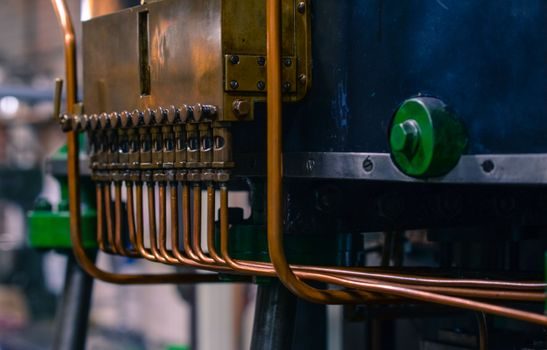
Shell molding lines use a resin-coated sand dumped onto a heated pattern (220–280 °C) for 15–30 seconds, producing a 6–12 mm crust that yields surface roughness Ra 6.3–12.5 µm and dimensional tolerance ±0.3 mm per 100 mm [S1].
Where shell wins: thin-wall valve bodies, gear-shift forks, and small hardware where iron or steel castings need to compete with investment-cast tolerances without the per-piece cost of lost-wax tooling [S1].
The shell molding machine segment is therefore the correct spec target for buyers evaluating 5–50 kg components with section thickness under 8 mm, rather than for general foundry work.
Static-Pressure Molding Line: Large Flask, High Compaction
Static-pressure (squeeze) molding lines apply 0.8–1.5 MPa of air-driven or hydraulic pressure through a multi-rod squeeze head, achieving mold hardness above 90 (Brinell-equivalent compactness scale) across flasks up to 1500×1200 mm [S1].
Hard-mold benefits in service: less gas evolution, fewer sand inclusions, and cleaner machined surfaces on cast iron housings — at the cost of higher pattern wear and a sand mix tolerance that must stay within ±0.3% moisture [S1].
The dedicated static-pressure molding machine reference page outlines the pressure-ramp, squeeze-head geometry, and venting pattern that buyers should confirm before signing a PO.
PU Foam and Special-Medium Molding Lines
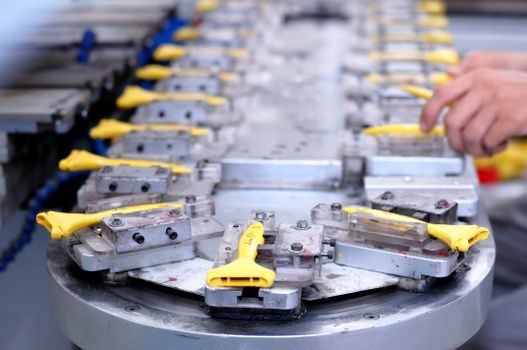
PU (polyurethane) foam molding lines inject a two-component resin into a closed mold where the foaming reaction simultaneously shapes and bonds a sand core or backing, with mold close times under 60 seconds for shoe sole and automotive seat applications [S1].
Where PU-foam molding diverges from sand-based lines: the output is a finished polymer part, not a metal casting, and the same control architecture — PLC + servo hydraulics + closed-loop shot — is shared with automatic molding line integrators serving non-foundry markets [S1].
For a direct read on how a fully integrated automatic molding line is configured — flask handling, pouring car, cooling tunnel, and shake-out drum — the dedicated spec page covers throughput per shift and the auxiliary-equipment list.
Selection Criteria: Matching Line Type to Foundry Profile
Decision matrix: green-sand for cast-iron volumes above 5,000 tons/year with part weight 1–200 kg; resin-sand / DISA for steel or alloy castings 0.1–25,000 kg with machined surfaces; shell molding for 5–50 kg thin-wall precision; static-pressure for 200–2,000 kg large-flask iron castings; PU-foam for non-metallic molded products [S1][S2].
Cross-criteria in the same comparison: capex ranking from highest (DISA vertical) to lowest (green-sand horizontal flaskless), pattern life from longest (shell, 50,000+ shots) to shortest (green-sand high-pressure, 5,000–10,000), and skill-of-operator required from lowest (fully automatic static-pressure) to highest (resin-sand bench setup) [S1][S2].
Limitations and Failure Modes Buyers Should Plan Around
Green-sand lines fail economically below 2,000 tons/year because mixer, hopper, and reclamation capex is amortized over tonnage; resin-sand lines fail on cycle time above 20 minutes per mold when the same volume could move to DISA or static-pressure [S2].
Shell molding lines cap pattern size near 600×500 mm and become uneconomic when section thickness exceeds 15 mm, since cure time scales with crust thickness and gas-venting needs rise sharply [S1].
For tier-1 OEMs comparing the automatic level of flask handling, pouring-car accuracy, and shake-out integration, the trade-off is consistent: each step added to the line raises availability from 85% (manual batch) toward 93–95% (full automatic), but raises capex per ton of capacity linearly.
Standards, Sourcing, and Trackable Signals
No single ISO or ASTM standard governs automatic molding lines as a unit; instead, foundries cite ISO 9001 for the line integrator, ASTM A781 for general steel casting production, and customer-specific drawings for the part — these are the three reference points consistently named in 2026 supplier qualification packs [S2].
Trackable signals for the next 6 months: tier-1 foundries in Hebei and Shandong keep adding DISA capacity in the 5–10 ton pour-weight band, and the resin-sand segment continues absorbing orders from the pump, valve, and electric-motor OEM supply chain where machined tolerances drive the line choice [S2].