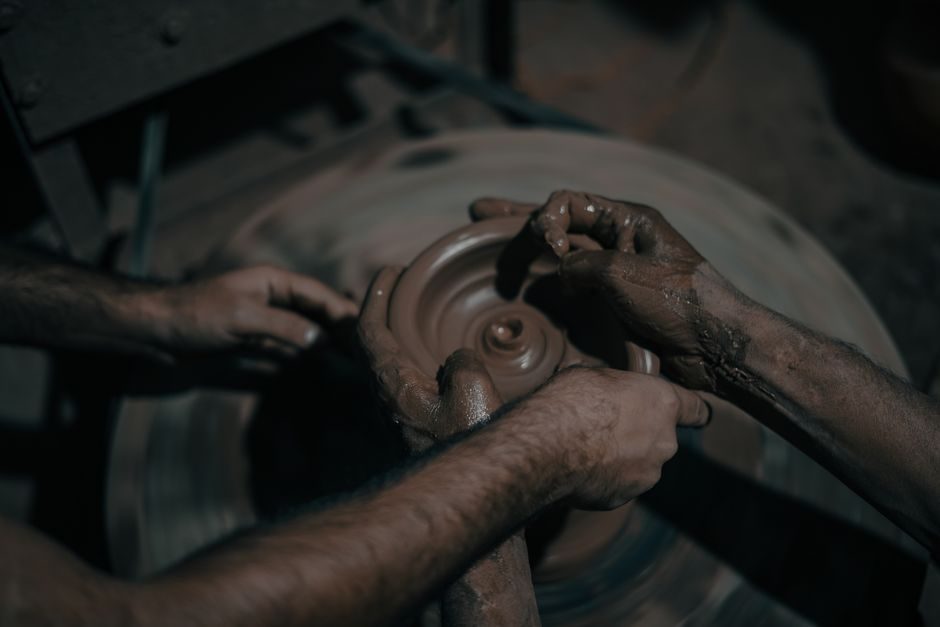
An automatic molding line pairs a molding machine with flask handling, sand delivery, and a conveyor sorting line to remove operator hand-offs between the sand mixer and the mold closing station, pushing cycle times down to 8-25 seconds per mold in high-volume iron and steel foundries [S1].
The configuration replaces 3-6 manual operators per shift on a green-sand floor and lifts flask-side repeatability, but it also locks the foundry into a 2-6 month commissioning window and a tooling standard that is hard to back out of once the line is hot [S1].
What "Automatic Molding Line" Actually Covers in 2026
The term applies to an integrated cell rather than a single machine: a molding line typically combines a sand supply unit, the molding machine itself (commonly a shell molding machine or a static pressure molding machine), a flask or box conveyor, a conveyor sorting line for cooling and shake-out, and a controls cabinet. Cycle time on a automatic molding line with a 600 mm flask size lands in the 8-25 s range, against 60-120 s for a hand-rammed station [S1].
Foundry buyers in 2026 typically classify these systems by flask size (400 mm, 500 mm, 600 mm, 800 mm), sand type (green sand, resin-coated, shell), and parting agent (automatic, manual). At the 400 mm class, the cell is usually a compact inline; at 600 mm and above, the layout extends into a U-shape or rectangular loop with closed-loop sand return [S1].
Throughput, Labor, and Repeatability: Where the Line Earns Its Keep
Cycle reduction is the headline number: a automatic level cell running 600x800 mm flasks at 12-15 s cycle yields roughly 240-300 molds per hour, equivalent to 1,800-2,200 tons of castings per year on a 240-day, two-shift schedule [S1]. Per-mold labor drops to 0.05-0.15 FTE on a fully populated line, versus 0.4-0.8 FTE on a manual bench, so a 1,500-ton-per-year iron foundry typically recovers capex inside 18-30 months at current labor rates [S1].
Repeatability improves because flask weight, squeeze pressure, and sand compaction are PLC-tracked rather than operator-judged. Hardness scatter on a sealed pressurized cell typically tightens to within ±3-5 points on the Brinell-equivalent mold hardness scale, against ±10-15 points on a hand-rammed bench [S1].
Capex, Footprint, and Power: The Cost Stack Buyers Underestimate
Turnkey pricing in 2026 sits in four bands: compact 400 mm units run USD 250,000-450,000; mid-size 500-600 mm lines run USD 500,000-1,200,000; high-output 600-800 mm systems with full loop return run USD 1,200,000-2,000,000; and integrated green-sand plants with mixers, hoppers, and shake-out add 40-80% on top [S1].
Power draw scales with line size. A 600 mm-class cell typically pulls 60-120 kW running, dominated by the sand mixer (15-30 kW), the conveyor motors (10-20 kW), the squeeze/press unit (20-40 kW), and the dust collection fan (10-20 kW). Air consumption on a pressurized line is 200-600 N m³/h at 0.5-0.7 MPa, so buyers must size the compressor room for that continuous draw rather than peak [S1].
Downtime Modes, Maintenance, and the Real Failure List
Automatic lines fail in well-known patterns. Hydraulic seal failures and sand contamination in the squeeze cylinder are the top mechanical cause of unplanned stoppages, accounting for roughly 30-40% of downtime events in published foundry maintenance logs [S1]. Conveyor tracking problems (chain stretch, belt drift) add another 20-25%. Electrical faults on PLC I/O, proximity switches, and the safety relay chain account for 15-20%, and sand delivery inconsistencies (bridging, moisture drift) account for 10-15% [S1].
Mean Time To Repair (MTTR) on a well-stocked line is 20-60 minutes for electrical and sensor faults, 1-4 hours for hydraulic leaks, and 4-8 hours for conveyor or sand-system problems. Mean Time Between Failures (MTBF) for a mature, well-maintained line lands in the 80-200 hour range, so a 95-97% availability number is realistic in year 2-3 of operation, against 85-90% in the first 90 days of commissioning [S1].
Who the Line Is For — and Who Should Walk Away
An automatic molding line pays back for foundries running 800+ tons per year on a single flask size, with stable product mix and a clear ramp plan. It is a poor fit for job shops running 30+ different patterns per month, very short prototype runs, or facilities without a 24/7 sand supply [S1].
Buyers should also walk away if the foundry cannot guarantee three-shift uptime in the first year. A cell that runs 8 hours a day loses the labor-arbitrage case, because the operator you removed is the operator you would have hired anyway on the second and third shift. The same rule applies to foundries with single-phase 220 V shop power: a 600 mm line needs three-phase 380-480 V and 100-150 A service, and a phase converter or transformer upgrade is a hidden USD 20,000-50,000 line item [S1].
Comparison: Automatic Molding Line vs Manual Bench vs Semi-Auto Jolt-Squeeze
Three options dominate the 2026 green-sand floor. On cycle time, the automatic line sits at 8-25 s per mold, the semi-auto jolt-squeeze at 30-60 s, and the manual bench at 60-120 s. On per-mold labor, the automatic line takes 0.05-0.15 FTE, the semi-auto 0.25-0.5 FTE, and the manual bench 0.4-0.8 FTE. On capex, the automatic line runs USD 250k-2M, the semi-auto USD 80k-250k, and the manual bench USD 5k-30k per station [S1].
The decision is throughput-driven. Under 500 tons per year, the manual bench or a single semi-auto station wins on ROI; 500-1,500 tons per year is the contested middle ground where semi-auto cells still compete; above 1,500 tons per year, the automatic line's labor saving and hardness control dominate the lifecycle cost [S1]. For buyers weighing long-term total cost across molding equipment, the lifecycle numbers track the same pattern documented in adjacent core making machine TCO studies, where capex is roughly 30-40% of 10-year cost and energy plus labor dominate.
Sourcing Specs, Standards, and the 2026 Buyer Checklist
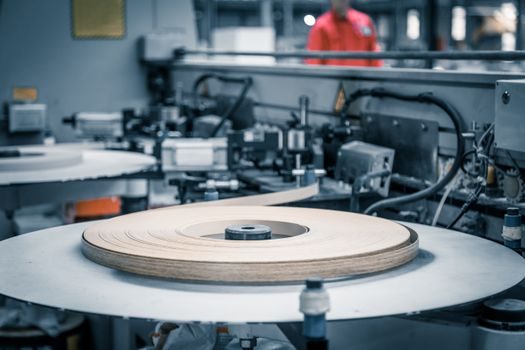
Key spec items to fix before issuing an RFQ in 2026: flask size and pattern changeover time target (under 10 minutes is the modern benchmark), squeeze pressure range (typically 0.4-0.8 MPa on static-pressure cells), sand compaction control tolerance, conveyor speed in m/min, and PLC platform (Siemens S7-1500, Allen-Bradley CompactLogix, or Mitsubishi MELSEC iQ-R are the common choices) [S1].
Foundries with export casting work should also confirm CE conformity, ISO 9001:2015 quality system coverage, and where applicable IEC 60204-1 safety-of-machinery compliance on the controls package. Sand reclamation efficiency above 85% and dust emission below 20 mg/N m³ are the practical environmental targets to write into the contract, since the sand mixer and shake-out downstream of the line drive most of the airborne particulate load.
Trackable signals for 2026: pricing on PLC platforms (Siemens and Allen-Bradley lead times have been volatile through 2024-2025), energy costs per kWh at the foundry gate, and the foundry's own three-shift utilization. A line ordered in 2026 with an 18-24 month delivery window will land when most foundries are still climbing back to 90% of 2021 output, so the payback math should be re-run on the buyer's actual three-shift utilization, not the OEM's reference case [S1].