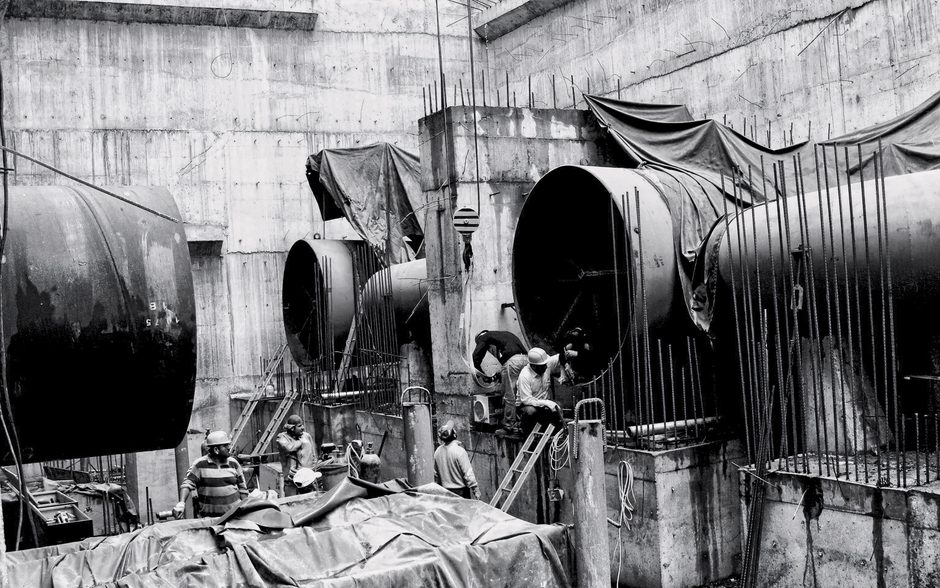
Steel pipe selection is a four-axis decision — nominal size (NPS or OD), schedule/wall thickness, material grade, and the manufacturing/inspection standard the line is built to — and the spec sheet stays valid for the next decade once the four are pinned [S5][S2].
The current Chinese export range covers 21.3 mm through 4220 mm OD across ERW, LSAW, SSAW and seamless product families, with API 5L, ASTM A53, ASTM A106 and ASTM A252 governing the hydrocarbon, structural and piling applications buyers actually order [S1][S3][S5]. Stocking suppliers such as Apex list surplus ERW up to 48" OD with 0.750" wall in fusion-bond-epoxy-coated, double-random-length form, illustrating the upper end of the inventory tier [S2].
OD and NPS — the two sizing languages buyers must reconcile
Pipe size is declared two ways: NPS (nominal pipe size, an inch-based identifier for the bore) and true OD in mm, and the conversion is the first spec error to lock in [S1]. Chinese mills catalogue their product by true OD — 21.3 mm, 60.3 mm, 114.3 mm, 219 mm, 4220 mm — because the EN/ISO audience buys in millimetres [S3][S5].
The SSAW (spiral submerged-arc-welded) range covers OD 219 mm to 4220 mm in the larger spiral product line, with a parallel 219–2020 mm spiral range for line-pipe service, both shipped in 5.8 m, 6 m or 12 m random lengths [S5]. LSAW (longitudinal) and ERW (electric-resistance-welded) stock from the same family covers the small-to-mid OD bracket where most process and structural line-pipe is cut [S1][S4].
Schedule and wall — where the pressure rating actually lives
Schedule (Sch 10, 20, 40, 80, 120, 160, XXS in inch-based pipe; or mm-specific wall in metric stock) is the second spec to lock, because the same NPS with a heavier schedule carries a higher allowable working pressure under ASME B31.3 / B31.4 process-piping rules [S2][S5]. A 24" OD × 0.353" wall ERW line, for example, weighs 89.15 lb/ft at DRL; the same 24" OD with heavier wall steps the pressure class up substantially [S2].
Thickness also drives cost directly because steel weight scales with wall, so the cheapest spec that still meets design pressure + corrosion allowance is the right spec — not the heaviest in the catalogue [S1][S5]. For piling and structural service, ASTM A252 governs wall selection independently of pressure, and mills publish Sch 20/40/80 charts for buyers who must keep to a single catalogue line [S5].
Grade and standard — the spec sheet that survives the QC audit
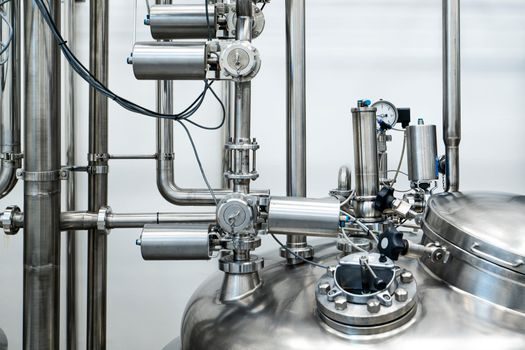
Grade is locked to the standard the line is built to: API 5L (PSL1/PSL2) for transmission and line pipe, ASTM A53 Type E/F/S for general service, ASTM A106 Grade B/C for high-temperature process, ASTM A252 for piling [S1][S5]. Each grade carries a defined yield, tensile and chemistry envelope, and the MTC (mill test certificate) is the document a buyer files for traceability.
For automotive chassis, exhaust and hydraulic lines, the spec band narrows again — small-OD ERW and DOM in AISI-grade carbon or low-alloy stock with tighter ID tolerances and drawn finishes, covered in Best Steel Pipe for Automotive Chassis, Exhaust and Hydraulic Lines [S1][S4]. Confirming the standard on the MTC before the PO is what separates a passing audit from a rejected shipment [S2][S3].
Manufacturing route — ERW vs seamless vs SSAW vs LSAW
Manufacturing route sets cost, length availability and pressure class. ERW is the cheapest and covers most small-to-mid OD line-pipe; seamless (SMLS) costs more per metre but removes the weld seam as a failure mode in high-temperature and high-pressure service [S1][S3]. LSAW competes in the 406–1420 mm OD band for transmission; SSAW extends from 219 mm all the way to 4220 mm OD for piling and large-diameter water/oil line-pipe [S5].
Length and end finish vary by route. Standard shipping lengths of 5.8 m, 6 m and 12 m dominate the export catalogue, and most mills offer beveled ends, plain ends, or couplings and API thread where the buyer requests them [S1][S3][S5]. The general-purpose steel pipe range ships with these finishes as standard and is the baseline to spec against.
End-use standard and inspection — A53 vs A106 vs API 5L vs A252
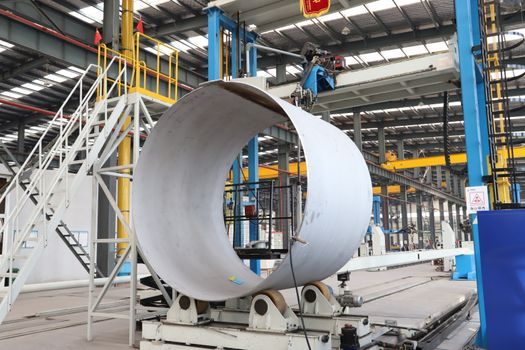
End-use standard is the cross-check that prevents over- or under-spec. ASTM A53 (Type E = ERW, Type S = seamless, Type F = furnace butt-weld) is the workhorse for low-pressure plumbing, air, steam and structural service [S1]. ASTM A106 Grade B/C is the pick for high-temperature refinery and process service because of its higher allowable stress at elevated temperature [S3]. API 5L PSL2 is mandatory for hydrocarbon transmission lines where sour-service NACE MR0175 may also apply, and PSL2 specifies CVN impact testing and tighter chemistry [S1][S5].
ASTM A252 governs welded and seamless steel pipe piles, with Grade 1/2/3 yield levels of 30, 35 and 45 ksi respectively — a different envelope again, sized for axial structural load, not internal pressure [S5]. Each standard carries its own hydrostatic test pressure and dimensional tolerance window, and the MTC is the document that proves which one was actually produced [S2][S3].
Coating, lining and corrosion allowance
For buried or submerged service, external coating and internal lining drive half the project cost. Apex's surplus ERW inventory is offered fusion-bond-epoxy (FBE) coated externally and FBE-lined internally, with PE end-caps for shipping protection [S2]. Black steel (uncoated) remains the baseline for indoor process and structural service where atmospheric corrosion is acceptable and the buyer plans to paint or galvanize in the field [S1].
For aggressive service — chemical, sour hydrocarbons, seawater, or geothermal — buyers move to 3LPE/3LPP external coating, internal epoxy or cement-mortar lining, or a seamless steel pipe base pipe where the weld seam is itself a corrosion initiation site [S1][S3][S5]. Galvanized ERW is the cost-effective pick for fire-protection and domestic water where the duty is moderate and the temperature is below the zinc threshold.
Comparison — ERW vs seamless vs SSAW vs LSAW vs galvanized
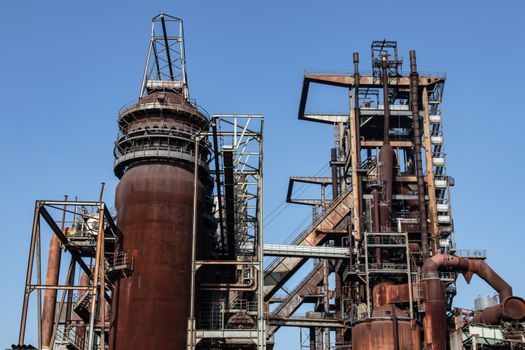
A 24" OD × 0.353" wall ERW line at 89.15 lb/ft is the cheap and long option, FBE-coated, for transmission water and oil at moderate pressure [S2]. SSAW at 219–4220 mm OD with Sch 20–80 walls is the choice for piling and large-diameter water/oil line-pipe where cost per metre matters more than seam quality [S5]. Seamless steel pipe at small-to-mid OD in ASTM A106 Grade B/C is the high-pressure/high-temperature pick, with no weld seam to inspect and higher allowable stress [S1][S3]. LSAW fits the 406–1420 mm transmission band for oil and gas where PSL2 longitudinal seam testing is required [S5]. Galvanized ERW is the indoor/water-service baseline, the lowest cost of the five and the right pick when the duty is mild [S1][S4].
Sourcing channels and lead-time levers
Direct mill sourcing from Chinese producers such as Wanlei, Hexin, Youfa and Tianyingtai gives the lowest unit cost at MOQ of one container to several hundred tonnes, with API 5L/A53/A106/A252 certificates [S1][S3][S4][S5][S6]. Surplus and used-pipe stockers such as Apex carry 24" and 48" OD × 0.750" wall ERW in 12,000–21,000 ft lots from cancelled projects, useful when the lead-time from a mill exceeds the project schedule [S2].
For smaller OD commodity pipe in ERW and galvanized ERW, regional stockists and B2B platforms cover the 21.3–114.3 mm range with no MOQ penalty, and the same channels handle PE pipe when the spec actually calls for non-metallic. Lead-time on mill-direct PSL2 is 30–60 days, on surplus stock 1–2 weeks, and on regional stockists 3–7 days — the spread is wide enough that the spec, not the calendar, should drive the channel choice [S2][S5][S6].
Next node: confirm on the MTC the standard (API 5L PSL2 / A53 / A106 / A252), the grade letter, the heat number and the hydrostatic test pressure before issuing the PO.