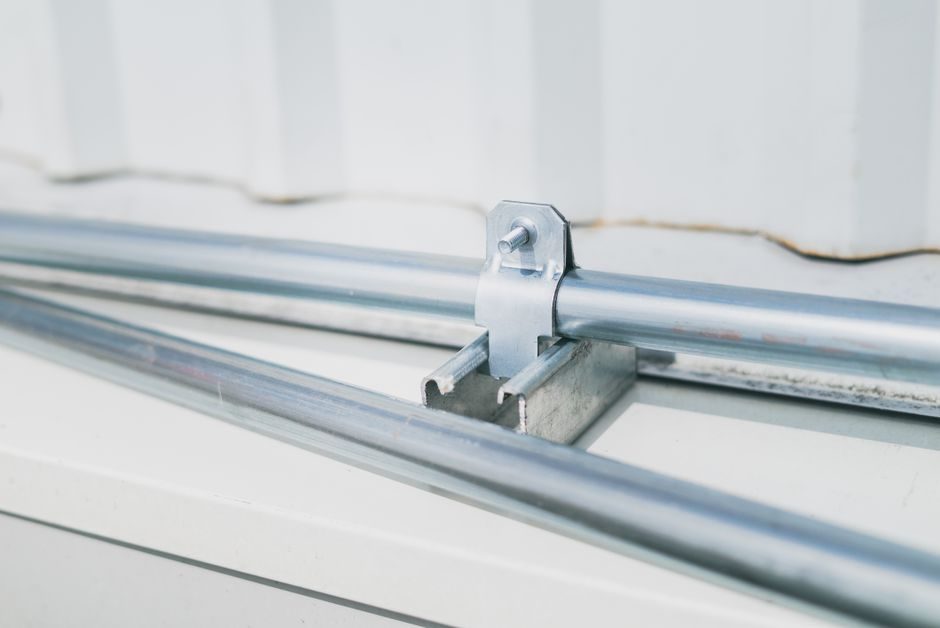
Steel-plastic composite pipe (SP) is not one product but a family of five distinct constructions, classified by the plastic component's role: inner liner, outer coating, or full bimetal-plastic wall, each addressing a different corrosion, temperature, and pressure window [S2][S4][S7].
Outer diameter spans 15–1200 mm with wall thickness 2.2–8.0 mm for civil-grade SKSP, while low-pressure liquid-delivery variants cover DN15–200 over Q235/Q235B base stock [S4][S7].
Classification Principle: Liner, Coating, and Wall Architecture
SP pipes are sorted first by where the polymer lives in the cross-section, and second by the polymer family — that single axis decides allowable media, temperature, and pressure [S2][S7]. A steel-plastic composite pipe uses the steel skeleton for mechanical strength (pressure, geometry) and the polymer for chemical isolation; the steel wall is therefore never in direct media contact in lined or coated variants [S6].
Three architectural classes dominate industrial catalogs: (1) internal-liner SP (plastic inside, steel outside, often called plastic-lined composite pipe), (2) external-coating SP (steel inside, polymer outside, the LESSO plastic-coated compound steel pipe family) [S6], and (3) through-wall bimetal-plastic structures where the polymer is fusion-bonded across the full wall section [S7]. Classification by polymer family (PE, PPR, PTFE, epoxy, PVC) is a parallel taxonomy commonly used in Chinese procurement standards GB/T 28897-2012 and CJ/T 120 [S7].
Class 1 — PE Steel-Plastic Composite Pipe (PESP)
PE-lined SP is the workhorse for buried municipal water and fire mains, with continuous service typically rated 0.6–2.5 MPa across ambient to roughly 60 °C depending on PE grade (PE80/PE100) and execution standard [S7]. Surface treatment per kitairu supplier data is listed as "PE coated, Epoxy resin coated, Galvanized," confirming PE is the most common outer-coating option for civil SKSP [S7].
Standard reference: GB/T 28897-2012 governs steel-plastic composite pipe for water supply, and the same supplier lists compatible codes API, ASTM, BS, DIN, GB, JIS — meaning PE-SP ships to multiple regional specs depending on the project country [S7]. The 15–1200 mm OD range and 2.2–8.0 mm wall thickness are the practical commercial envelope for PE-coated SKSP, with thin-wall SKSP (DN15–200, Q235 base) serving the low-pressure liquid-delivery and gas-distribution segment [S4][S7].
Class 2 — PPR Steel-Plastic Composite Pipe (PP-R SP)

Polypropylene-random (PPR) steel-plastic composite pipe combines a PPR inner liner with a steel outer shell, targeting hot-and-cold building water systems where plain PPR would creep or exceed allowable temperature spans [S1]. PPR SP is one of the listed entries on ChemicalBook's compound registry (CB31162380), confirming it is treated as a distinct catalog product rather than a PPR sub-grade [S1].
PPR raises the upper temperature ceiling over PE — PP-R homopolymer random copolymer is rated 0.6–2.0 MPa at 70 °C in plain form, and the steel skeleton of SP PPR prevents the thermal expansion that limits long-run PPR hot lines in building risers [S1]. For projects already speccing LESSO-type plastic-coated compound steel pipe for hot-water risers, PPR-SP is the closer match on polymer side because both materials share the random-copolymer PP base [S6].
Class 3 — Epoxy-Coated Steel-Plastic Composite Pipe
Epoxy resin-coated SP — also called epoxy-coated steel pipe or "plastic-coated compound steel pipe" in LESSO's catalog — is specified when the media is aggressive but the operating temperature stays below the epoxy cure-degradation window [S6][S7]. LESSO's product writeup highlights "strong adhesive force, excellent compactness and sound resistance to corrosion" of the inner plastic layer, with a stated application envelope of civil water supply, industrial water, fire fighting, sewage, communication conduit, optical fiber cable duct, coal gas, food processing, and pharmaceutical lines [S6].
Epoxy-SP applications cross the trenchless, plumbing, and process-utility boundaries, and the LESSO catalog frames it as "an ideal product for the urban water supply" specifically because the inner plastic layer fully isolates the conveyed water from the steel substrate [S6]. Where project specs call out GB/T 28897-2012 compliance and an epoxy inner surface, this is the variant to bid; PE outer coating with epoxy inner is the most common hybrid quoted in kitairu's data sheet [S7].
Class 4 — PTFE Steel-Plastic Composite Pipe (聚四氟乙烯钢塑复合管)
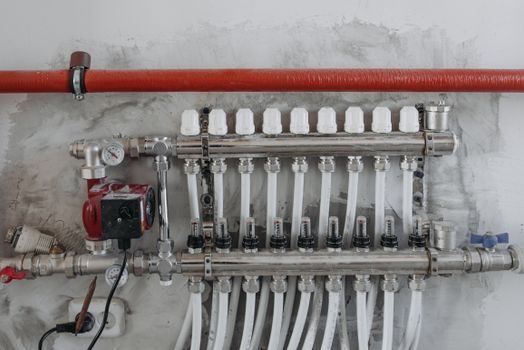
PTFE-lined SP is the high-end corrosion-resistant class, listed separately on ChemicalBook under supplier gateway CB91126232 with the Chinese designation 聚四氟乙烯钢塑复合管 [S5]. PTFE's continuous service temperature window (-200 °C to +260 °C) and near-universal chemical resistance make PTFE-SP the default where PE, PPR, and epoxy all fail — strong oxidizers, hot concentrated acids, and halogenated solvents [S5].
The ChemicalBook supplier entry confirms PTFE SP is a distinct product line with its own CAS-class identifier, separate from PE- and PPR-SP entries, which signals to procurement teams that it carries a price and lead-time premium over commodity SKSP [S1][S5]. For chemical, pharmaceutical, and semiconductor-process lines where LESSO-type epoxy SKSP is not chemically compatible, PTFE-SP is the fallback — but only when the project budget absorbs the higher per-meter cost typical of fluoropolymer linings [S5][S6].
Class 5 — Galvanized Low-Pressure Liquid-Delivery SP (Q235/Q235B Base)
The fifth class is technically a steel pipe with a galvanized or thin-polymer finish used for low-pressure gas and water — DN15–200, Q235/Q235B base, scope "mainly conveying gas, natural gas and other flammable gases and other general pressure fluids" [S4]. This category sits at the boundary between SP and plain steel pipe, and is often the procurement default for residential gas and HVAC condensate lines where full SP lining is over-specified [S4].
The Q195 welded-pipe variant referenced in Tianchuang's adjacent catalog (kitairu S2 supplier list) confirms the steel base options feeding the SP market: Q195 for the lightest duty, Q235/Q235B for general liquid/gas service, with Q195 DN15–200 HDG round pipe being the most-quoted commodity size [S2]. Selection rule: if the media is non-corrosive, the project does not justify PE/PPR/epoxy/PTFE lining cost, and a hot-dip galvanized finish plus the inherent strength of seamless steel pipe base stock is enough — this class wins on cost-per-meter [S2][S4].
Decision Matrix: Selecting the Right SP Class
Selection collapses to four inputs: medium chemistry, continuous operating temperature, working pressure, and DN size. PE-SP wins on cost for cold water, fire, and sewage up to ~60 °C and 2.5 MPa; PPR-SP wins for hot building water 60–95 °C where plain PPR creeps; epoxy-SP wins for aggressive but moderate-temperature process water; PTFE-SP wins for strong acids, solvents, and high-purity service; galvanized Q235/Q235B wins for low-pressure gas and general fluids where full SP is over-spec [S1][S4][S5][S6][S7].
DN envelope is the secondary gate: thin-wall SKSP stops around DN200 (Q235 base), while the PE-coated epoxy-lined family extends to DN1200 at 2.2–8.0 mm wall thickness — so any project over DN500 almost certainly routes to the LESSO-type plastic-coated compound family rather than the galvanized Q235 class [S4][S6][S7]. Execution standard is the tiebreaker: GB/T 28897-2012 for Chinese municipal water SP, CJ/T 120 for the plastic-lined variant, and the supplier-listed API/ASTM/BS/DIN/GB/JIS stack for export bids [S7]. A parallel decision lives on the plastic pipe side for non-pressurized drainage, and on FRP composite for fully non-metallic corrosive service — both are common alternates when SP is rejected on cost or on metallic-ion release concerns [S1].
Standards, Sourcing, and Failure Modes
Two Chinese standards govern the bulk of SP procurement: GB/T 28897-2012 (steel-plastic composite pipe for water supply) and CJ/T 120 (plastic-lined steel pipe); supplier data sheets reference API, ASTM, BS, DIN, GB, and JIS for export-tied bids [S7]. Working pressure for lined SP is a function of the steel substrate's schedule, not the polymer — so a project that downgauges the steel wall to save cost will see pressure ratings fall even if the PE or PTFE liner is upgraded [S7].
Most common failure mode is delamination at the steel-polymer interface under thermal cycling, particularly in PPR-SP and PE-SP hot-water service; LESSO's spec data sheet calls out "strong adhesive force" and "excellent compactness" as the engineering defense, and the GB/T 28897-2012 protocol includes a negative-pressure and thermal-cycle test to qualify that bond [S6][S7]. For project engineers comparing SP against a true steel-plastic composite reference, the practical tracking signals to watch are: (1) whether the supplier publishes a GB/T 28897-2012 test certificate per lot, (2) whether the inner-liner material is named to grade (PE80/PE100, PP-R type II, PTFE paste-extruded vs. isostatic), and (3) whether the steel base is Q195, Q235, Q235B, or 20# — a project that sees a baseline change from Q235 to Q195 without re-issue of the pressure calc has just had its safety margin quietly cut. Cross-reference for procurement teams weighing SP against fully non-metallic engineering plastic systems: SP wins on mechanical robustness and fire rating, loses on weight and installed cost per meter.
Related analysis: Quartz Material Types and Classifications: Spec Map for Engineers.