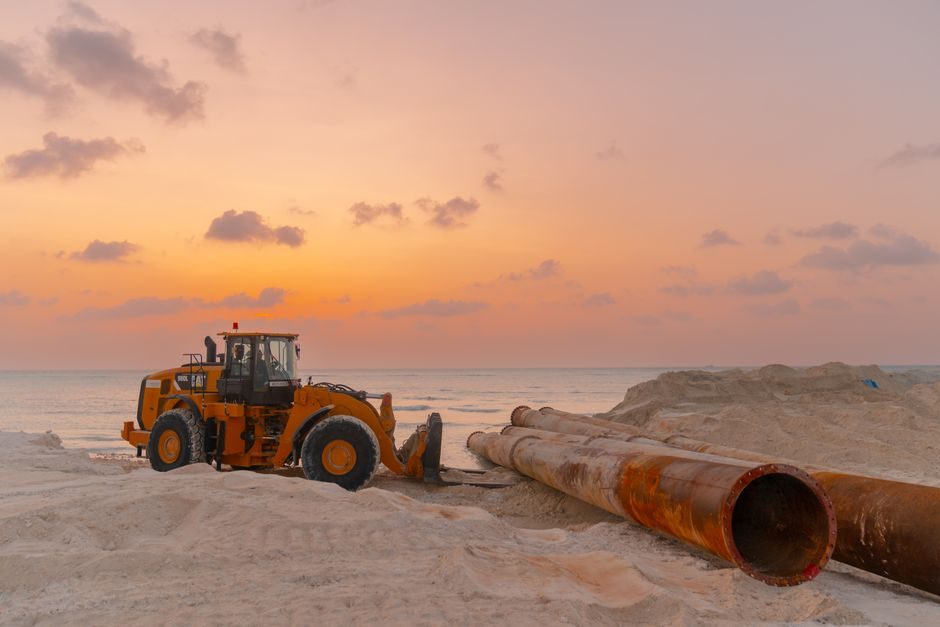
PE pipe (high-density polyethylene, HDPE) is joined almost exclusively by heat fusion rather than mechanical couplings, and ASTM F2620 remains the field reference for butt, socket, and electrofusion procedures used on PE4710/PE100 stock from DN20 through DN1200 [S1].
Current 2026 sourcing for HDPE water-supply pipe on the export market clusters around PE100 grade, with a minimum order quantity of 100 metres per diameter, DIN/ISO/ASTM compliance, and a working temperature window of -40°C to +60°C for the base resin before derating begins [S1].
Resin Grades and Pressure Ratings (PE80 vs PE100 vs PE4710)
PE100 is the default municipal-water grade in 2026 export catalogues, with hydrostatic design stress 8.0 MPa at 20°C and 50-year service life per ISO 4427, against PE80's 6.3 MPa for the same duty [S1]. UHMW-PE (ultra-high molecular weight polyethylene) sits one tier higher in impact and abrasion resistance and is used as a liner rather than a pressure pipe, with molecular weight typically 3-6 million g/mol versus HDPE's 0.2-0.5 million [S3].
For a PE100 pipe at PN16 (SDR 11), wall thickness on DN110 is 10.0 mm; PN10 (SDR 17) drops to 6.6 mm, and PN6 (SDR 26) to 4.2 mm — choosing the lower PN halves the wall mass and the material cost on the same trench run [S1]. Working pressure derating above 20°C follows ISO 4427 factors: 0.87 at 30°C, 0.74 at 40°C, ending at derated service around 60°C for non-pressure applications only.
Butt-Fusion Parameters: Temperature, Pressure, and Cool Time
Butt fusion per ASTM F2620 specifies a heater plate surface temperature of 204-232°C (400-450°F), with 0.4-0.6 MPa interface pressure during the melt-soak phase and a heat soak time of 8-12 s per mm of wall thickness [S1]. A DN110 SDR 11 joint therefore needs roughly 100-130 s of soak before the 30-60 s cool/hold under fusion pressure.
The bead height acceptance criterion is a uniform double bead, 1.5-2.5 mm high on each side, with bead width not less than 0.5× wall thickness; asymmetrical or porous beads fail visual inspection. The cold-bend radius for HDPE is 20× OD for butt-fused pipe without fittings, which lets long directional changes be made with no elbow and no fusion joints.
Socket and Electrofusion: When Each Method Wins
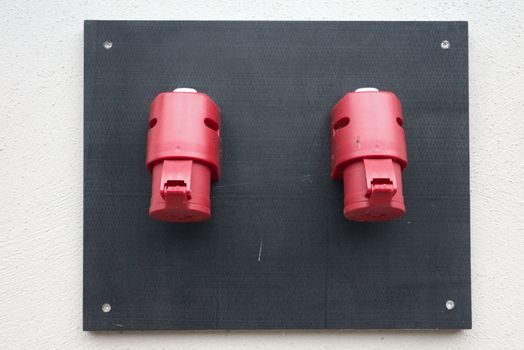
Electrofusion couplings (EF) per ASTM F1055 are used where the pipe cannot be rolled — repair clamps, tie-ins to live mains, and DN ≤ 315 work — with a 60-90 s fusion cycle and 0.5-1.0 MPa internal cool pressure held for 30 minutes minimum. Socket fusion (ASTM D2683) is limited to DN ≤ 110 because the socket depth physically caps joint strength and the cold-ring cools unevenly above that size. [S1]
Butt fusion wins on cost for DN ≥ 110, with a 2026-07 export FOB price around US$10-30 per metre for HDPE PE100 water-supply pipe and the only added consumable being the heater-plate energy [S1]. A typical municipal crew runs 18-22 butt-fused DN110 joints per 10-hour shift against 8-10 electrofusion couplings of the same diameter.
Trench Geometry, Bedding, and Backfill Acceptance
Minimum cover over a PE100 main is 0.9 m in non-traffic areas and 1.2 m under roadways per AWWA M55, with the trench width at least OD + 300 mm to allow compaction tools on both sides. Bedding must be Class I or II material (sand, gravel ≤ 20 mm, no sharp rock) to 150 mm below and 150 mm above the pipe crown; native clay is rejected because point loads exceed the pipe's 21-30 MPa tensile yield over a 50-year creep window [S1].
Compaction target is 90% Standard Proctor in the haunch zone and 95% above the pipe, and a 0.5% minimum grade is set for gravity lines to keep air pockets from forming at fusion beads. The first 24-hour pressure test at 1.5× working pressure (24-hour hold, ≤ 1% pressure drop after make-up) is the documented pass criterion; a leak past 2% drop requires re-fusion of the suspect joint, not a repair clamp.
Installation Faults That Fail the Pressure Test
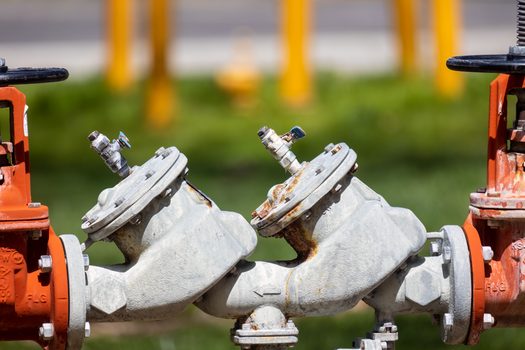
The most common first-test failure is mis-aligned pipe ends in the butt machine — a gap > 2 mm or an angular offset > 1° on DN110 SDR 11 will produce a cold-joint that holds shop air but leaks at test pressure. The second is contamination on the heater plate (oil, mud, PE residue from prior joints), which drops melt interface temperature and yields a porous bead that fails the visual bead-height check.
Third is under-soaked thick-wall pipe: PN16 SDR 11 on DN315 needs nearly 130 mm of wall × 10 s/mm = 21 minutes of soak, and crews used to PN10 will cut that short. If the heater plate falls outside 200-235°C (verified by surface pyrometer every 5 joints per ASTM F2620), the entire day's joints are suspect and a destructive bend-back test on a sample coupon is the proper gate, not a re-test.
HDPE vs PVC-U vs Steel: A Field Selection Matrix
HDPE wins on chemical resistance (no corrosion, no internal lining needed), joint integrity (100% fusion, no gaskets), and seismic performance (axial flexibility). For buried potable water at PN16, HDPE PE100 at US$10-30/m export FOB is broadly competitive with PVC-U at PN16 once the fused-joint labour is added, and substantially below steel DI on first-cost per metre [S1].
PVC-U remains the lower-cost choice above DN200 when operating pressure stays ≤ PN12.5 and the soil is non-aggressive; the trade-off is a gasketed bell-and-spigot joint that is testable in minutes but vulnerable to shear under differential settlement. A side-by-side on the four criteria spec engineers actually use: HDPE PE100 vs PVC-U vs lined carbon steel — cost per metre, joint leak path count, max continuous temperature, and field repair time — is laid out in our PVC-U pipe TCO and buyer stack, and the classification logic behind the two plastics is mapped in PVC-U pipe types and classifications.
Standards, Documentation, and When to Replace Not Repair
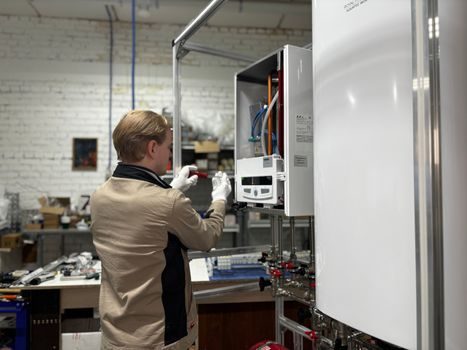
Project documentation should bundle the resin manufacturer's cell classification (PE100 / PE4710), the pipe's SDR and PN, the fusion machine calibration log (heater-plate temperature, hydraulic gauge), and the bead inspection record per ASTM F2620 §6. A 24-hour pressure test report at 1.5× working pressure, signed by the crew foreman and the owner's inspector, closes the package and is what the next excavation crew will look for if a leak appears five years out [S1].
Replace, do not repair, when: the pipe is more than 20% scratched in depth (beyond 10% wall is the cut-off for operating at full PN), when a joint shows bead rollback or a circumferential crack at the fusion line, or when the resin is older than the manufacturer's 50-year design window and operating temperature has averaged above 40°C. The cost-driven floor for replacement of a DN110 PN16 main is typically reached when more than 15% of joints on a 500 m run fail bead inspection — a sectional re-fuse costs less than a clamp-on repair in the long run on HDPE water-supply pipe where the failure mode is a slow split, not a single leak.
Spec-level background on the components involved: linear guide, and crossed roller guide.