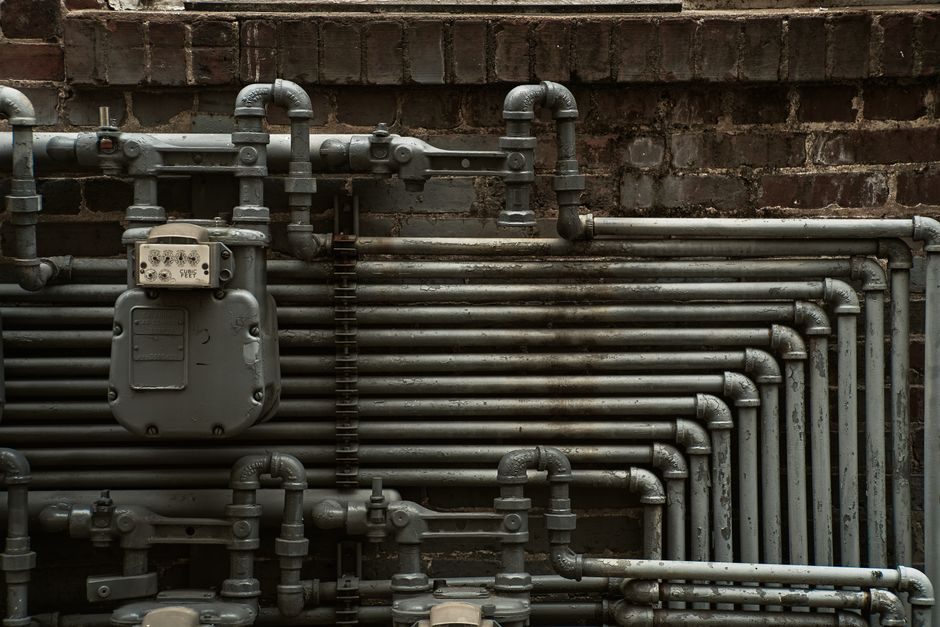
PE pipe — most commonly high-density polyethylene grades PE80 and PE100 — is the default for buried water, gas, and mining-slurry lines because it combines a density below 0.96 g/cm³ with a smooth, chemically inert bore [S4]. Compared with steel pipe and stainless alternatives, PE eliminates internal corrosion and the associated tuberculation losses that erode C-factor in metallic networks.
Its competitive position sits between PPR pipe, which dominates indoor hot-water risers, and plastic pipe families such as PVC-U and CPVC that lead in drainage and aggressive chemical service. The same engineering trade-off — flexibility vs temperature ceiling, fusion strength vs UV brittleness — keeps PE in the trench, not on the rooftop.
Material Grades and Pressure Ratings
PE pressure pipe is classified by Minimum Required Strength (MRS): PE80 carries an MRS of 8.0 MPa, while PE100 reaches 10.0 MPa, allowing roughly 25% higher operating pressure at the same SDR or thinner wall at the same pressure class [S4]. The standard dimension ratio (SDR 11, SDR 13.6, SDR 17, SDR 21) maps wall thickness to OD, and PN ratings (PN 10, PN 12.5, PN 16, PN 20) are derived directly from MRS divided by the design coefficient.
Modern PE100-RC (resistant to crack) grades extend slow-crack-growth performance beyond 5,000 hours under 80 °C, 4 MPa notch testing per ISO 13479, which is why they are specified for trenchless installation and sand-bedded pipelines where point loads concentrate. A natural comparison target is the PPR pipe family, which shares the fusion-joint philosophy but tops out at a different pressure/temperature window.
Advantages: Why Specifiers Keep Choosing PE
PE pipe's first advantage is chemical immunity: it resists acids, alkalis, and saline groundwater across the pH 2–12 range that destroys unprotected steel. Slurry abrasion testing referenced in Chinese UHMWPE datasheets shows wear rates averaging 0.58 mm/year — 4–7× better than mild steel and 27.3× better than stainless in comparable sliding service [S4].
Second is joint integrity. Butt-fusion and electrofusion of PE produce a homogeneous joint with tensile strength at the weld line reaching 90–95% of the parent pipe, which removes the leak path that flanged pipe fittings and threaded steel joints cannot eliminate. Third is seismic and ground-movement tolerance: PE's flexural modulus around 1,000 MPa lets a DN315 SDR 11 line tolerate bending strains up to 5% without wall buckling, absorbing the ground displacement that would crack a vitrified clay or PVC-U alternative. A common point of comparison is PVC-U pipe, which is stiffer but brittle under soil movement.
Fourth is installation speed and weight. A 12 m PE100 DN160 SDR 17 coil weighs roughly 50 kg — manageable by two crew — versus the 200+ kg of equivalent steel, which slashes lifting equipment and labour. The full PE pipe spec family also supports trenchless pulling, direct plough-in, and HDD methods that would shred a cement-lined ductile iron line.
Disadvantages: The Hard Limits That Decide Rejection
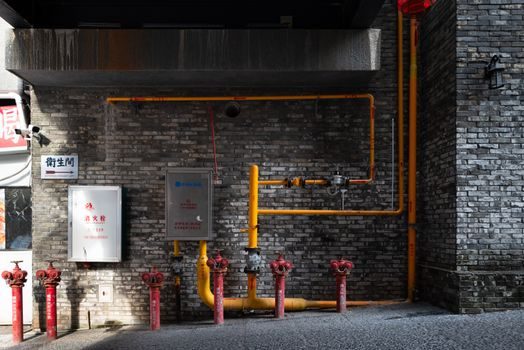
PE pipe fails three service tests that engineers must check before specifying: temperature, UV, and permeation. Continuous service temperature is capped near 60 °C for PE100 and 40 °C for PE80, which is why PE never replaces PPR on hot-water recirculation risers or stainless on steam condensate returns [S4].
UV exposure degrades unprotected PE within 12–24 months of direct sunlight; carbon-black-stabilized black pipe is the standard outdoor choice, and yellow or blue striped coils for gas/water must be buried or sleeved. Permeation is the third limit: PE allows measurable diffusion of low-molecular-weight hydrocarbons and certain solvents, which rules it out for fuel-station product lines and concentrated aromatic chemical service without a barrier liner.
Mechanical limitations matter in above-grade or high-load applications. PE's low modulus means it needs support spacers every 600–1,200 mm in horizontal above-ground runs to prevent sag, and it cannot carry the point loads that a pipe clamp on steel pipe can sustain. The same flexibility that helps in a trench becomes a problem on a bridge crossing.
Selection Criteria: PE vs PPR vs PVC-U vs Steel
A spec-driven comparison puts four decision axes on the table. (1) Continuous service temperature: PPR up to 95 °C, steel unlimited, PVC-U 60 °C, PE 40–60 °C depending on pressure derating. (2) UV/above-ground durability: steel first, PPR with UV shield second, PVC-U third, PE last unless black-stabilized. (3) Joint tightness over a 50-year design life: PE butt-fusion and PPR socket-fusion both outperform threaded steel and solvent-welded PVC at the joint, per typical ISO 4427 and EN 12201 test data [S4].
The decision rule that falls out: specify PE for buried water, gas, and slurry where temperature stays below 40 °C and the line is not exposed; specify PPR for indoor hot-water risers up to 70 °C; specify PVC-U for drainage, irrigation, and aggressive chemical service at lower pressure; specify steel or stainless where temperature, UV, or mechanical load rule out thermoplastics. The same gate logic is laid out in the PPR TCO piece and the [PVC-U TCO piece](/news/pvc-u-pipe-tco-cost-drivers-service-life-math-and-a-buyer's-stack.html) for those two competitors.
Failure Modes and Inspection Gates
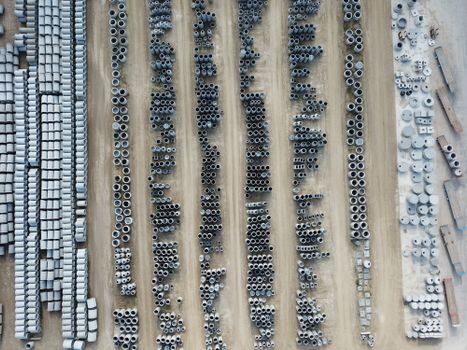
PE fails in three recognizable patterns. Slow crack growth (SCG) initiates at scratches or squeeze-off points and propagates over years — the reason PE100-RC exists and the reason squeeze-off tools must meet ASTM F2620 procedures. Rapid crack propagation (RCP) at high pressure and low temperature can split a pipe metres per second; modern PE100 grades are tested to ISO 13477 to arrest RCP above 0 °C. Third is chemical permeation, already noted, which swells the wall and reduces burst pressure.
Inspection gates are concrete: check the SDR marking on every coil against the PN on the datasheet; verify the resin brand and batch on the print line; pressure-test at 1.5× working pressure for 2 hours with no pressure drop per ISO 1167 cell test convention; and record the fusion bead geometry per DVS 2207 for every butt weld. A valve spec map usually walks through the same gate logic on the metal side of the line.
Standards and Sourcing Reality
Governing standards for PE pressure pipe include ISO 4427 (water), EN 12201 (gas and water), ISO 4437 (gas), and API 15LE (oilfield gathering). For PE100-RC, ISO 13479 and the PAS 1075 protocol define the slow-crack-growth qualification. Fittings must conform to the same pressure series; PE100 spigot fittings and electrofusion couplings are the two workhorse options in the pipe fitting family for PE service.
On the sourcing side, the bulk of PE100 resin capacity sits in the Middle East, North America, and China, with Chinese converters exporting finished pipe to Southeast Asia, Africa, and Latin America. Lead time for DN110–DN400 coils is typically 3–6 weeks ex-China factory; DN500+ runs are often made to order. Price has tracked ethylene monomer, not crude, so a swing in naphtha feedstock moves PE pipe quotes faster than steel coil moves the metal equivalent.
Spec one project at a time. For a DN200 PN 16 buried water main in a temperate climate, PE100 SDR 17 is the cleanest call. For a 70 °C hot-water riser, it is not. The selection gate — temperature, UV, jointing, lifetime TCO — is the same on every line, and skipping it is how PE ends up in a service where PPR or steel was the right answer all along.