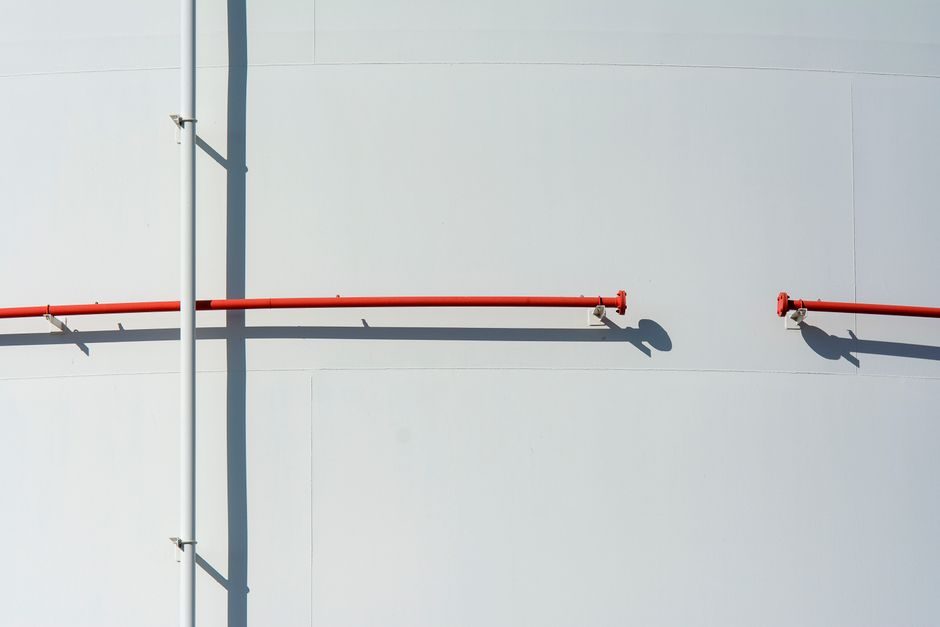
Steel-plastic composite pipe (commonly abbreviated PSP, or steel-plastic composite pipe) pairs a welded steel or steel-wire skeleton with a bonded PE, HDPE, or PPR plastic liner and outer sheath to carry water, fire-service flow, and aggressive fluids at temperatures well above what plain plastic can hold [S1]. An expansion anchor is a mechanical fastener — a bolt, sleeve, cone, or wedge that grips concrete, masonry, or stone by controlled radial expansion when torque is applied.
The two are routinely co-specified on the same site (PSP risers clipped to a concrete wall with expansion anchors), but they answer different engineering questions: pressure containment and fluid compatibility on the pipe side, load transfer and substrate grip on the fastener side. Confusing the two at procurement is a classic category error, and the price gap underlines it: building-plumbing-grade PSP was listed on Made-in-China at roughly US$ 490.00 – 740.00 per unit in mid-2026 [S2], while a single M12 × 100 wedge anchor sits in the low single-digit dollar range per piece.
What Each Product Actually Is — Definition and Scope
Steel-plastic composite pipe covers a family of lined and coated steel pipes. The dominant construction is a butt-welded thin-wall steel pipe as the pressure-bearing core, with an inner liner of PE, HDPE, crosslinked PE (PE-X), or PPR and an outer PE jacket [S1]. The steel skeleton carries pressure and resists mechanical damage; the plastic layer isolates the fluid from the metal and prevents external corrosion. The "steel-plastic polyethylene composite pipe" entry on ChemicalBook lists Wuxi Mastery Steel Equipment as one of the registered suppliers in the segment [S3], reflecting the broad supplier base that has built up around composite-pipe variants for water and chemical service.
Expansion anchors are a sub-family of concrete anchors, distinct from chemical anchor systems that rely on resin adhesion. Mechanical expansion anchor types include torque-controlled wedge anchors (the most common, sometimes called "expansion bolts"), sleeve anchors with a flared split sleeve, and drop-in anchors set with a setting tool. All three use the same principle: tightening the bolt draws a cone into an expansion sleeve, generating radial force against the bore wall of cured concrete.
Selection Criteria — The Spec Gates Are Not the Same
For PSP, the four gates that decide a purchase are: working pressure class (commonly 1.0 MPa, 1.6 MPa, and 2.0 MPa for civil water-supply variants [S1]), continuous service temperature (PE-lined versions cap near 60 °C, PE-X and PPR-liner composites push toward 95 °C in hot-water service), fluid compatibility (acid, alkali, chloride content, plus any oil or solvent fraction), and joining method (clamp-ring compression fittings, threaded adapters, or flanged connections). LESSO's product data lists PSP as covering civil water supply, industrial water supply, fire fighting, sewage transport, and cable/conduit protection, with both hot-dip-galvanized and epoxy-coated steel options in the catalog [S1].
For expansion anchors, the gates shift to substrate (cracked vs uncracked concrete, concrete grade C20/25 to C50/60), load class (non-structural vs structural per EN 1992-4 / Eurocode 2 Part 4 categories), embedment depth and effective anchorage depth hef, edge distance ccr, and spacing scr, plus the corrosion class of the bolt (zinc-plated, hot-dip galvanized, A2/A4 stainless, or HCR for high-corrosion-risk exposure). Embedment is typically 8d to 12d for wedge anchors in uncracked concrete; going below 8d sharply reduces published tension capacity, and published values must be derated by a factor of roughly 0.7 in cracked-concrete zones per ETA assessment documents.
Who PSP Is For, and Who It Is Not For
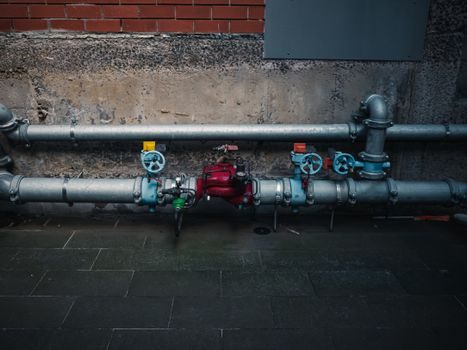
PSP is the right call when the line carries water or low-to-moderate-temperature process fluid and the route runs through aggressive soils, exposed outdoor risers, or wall chases where a bare steel pipe would corrode inside 5 to 10 years. Civil hot-water risers, building fire-service mains (where local code still permits non-metallic options), hospital and lab pure-water loops, and food-grade wash-down lines are core applications [S1]. PSP is the wrong call where the design temperature exceeds the liner's rated limit (verify against the manufacturer's datasheet — PE liners typically softens above 60 °C continuous), where the fluid is a strong organic solvent that swells PE, or where the operating pressure exceeds 2.5 MPa and ASME-rated steel is the only acceptable option.
The same logic inverts for expansion anchors: a wedge anchor is the right call for static, predominantly tensile or shear loads on sound concrete — sign fixings, cable-tray supports, pipe-rack brackets, and mechanical-equipment base plates. It is the wrong call for cracked-concrete zones under dynamic or seismic load (use a chemical anchor with ETA Option 1 for cracked concrete instead), for overhead pure-suspension loads at the edge of the rated capacity (use a through-bolt with plate), or for hollow masonry (use a sleeve anchor or a resin anchor designed for brick/block).
Comparison Table — Two Product Families, Different Decision Axes
Lining them up on the same axes exposes how little they actually overlap. The comparison below is structural, not a buying guide: the only place the two product families meet in a real BOM is when the expansion anchor fastens the pipe clip that holds the PSP. [S1]
Function: PSP is a pressure-bearing fluid conduit with corrosion resistance; an expansion anchor is a static load-transfer fastener into cured concrete. Pressure rating: PSP is rated by MPa class (1.0 / 1.6 / 2.0 MPa typical for civil variants [S1]); expansion anchors are not pressure vessels and carry no MPa rating. Temperature: PSP is limited by the plastic liner (≈ 60 °C PE, ≈ 95 °C PE-X or PPR); expansion anchors are limited by the bolt metallurgy (zinc-plated ≈ -30 to +80 °C, A4 stainless to ≈ 200 °C). Material: PSP is steel + bonded PE/HDPE/PE-X/PPR; expansion anchor is carbon or stainless steel + a hardened wedge/sleeve. Standards path: PSP follows GB/T 28897 (China), CJ/T 136, and ASTM F1281/F1282 for the PE-AL-PE crossover; expansion anchors carry ETA per EAD 330232 (mechanical anchors for concrete) or ICC-ES AC193 in North America. Price band: PSP on Made-in-China listed at US$ 490.00 – 740.00 per unit in mid-2026 for the building-plumbing system segment [S2]; M12 × 100 zinc wedge anchors trade under US$ 1.00 per piece in volume. The two products share almost no spec axis in common.
Real Use Cases and Co-Spec Examples
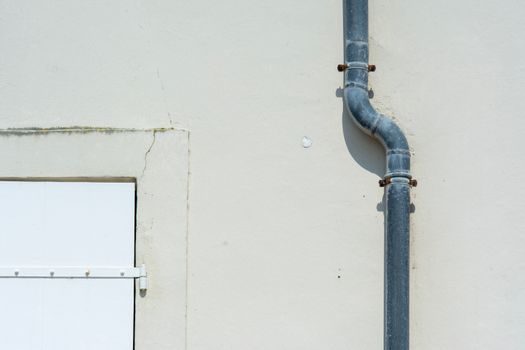
On a high-rise residential build, PSP is typically specified for the risers in the shaft, the cold-water mains, and the hot-water recirculation lines up to about 95 °C where the liner is PE-X or PPR [S1]. The pipe is then clipped to the wall with hot-dip-galvanized steel straps, and each strap is fixed with an M10 × 80 wedge anchor into the concrete wall. Fire-service risers and the plastic pipe family overlap here only at the cold-water header — the riser itself is still steel where the code demands it.
On an industrial plant, PSP is increasingly specified for chemical-dosing skids and RO permeate lines where the fluid is aggressive but the operating pressure sits inside the 1.6 MPa or 2.0 MPa class [S1]. Steel-plastic composite pipe also appears in cable-conduit form on the same plant, where it protects fiber and signal cables rather than carrying fluid.
Limitations, Failure Modes, and What the Datasheet Will Not Tell You
PSP's main failure modes are delamination at the steel-plastic interface (visible as a blister or a cold spot under IR thermography), liner collapse under sustained vacuum (a real risk on cold-water suction lines if the working pressure is allowed to go sub-atmospheric), and chemical attack on the outer PE jacket from solvents in soil or condensate. Joints are the most common leak point, not the pipe wall — the clamp-ring compression fitting on PSP is sensitive to under- and over-torque, and the published torque band should be followed within ±5 %. [S2]
Expansion anchor failure modes are concrete cone breakout (dominant at shallow embedment or low concrete strength), splitting failure (when edge distance ccr is too tight), pull-out (when torque is not applied and the wedge never seats), and steel rupture (at very high load, on small-diameter anchors). Published tension capacity assumes a minimum concrete compressive strength of C20/25, a specific installation torque, and edge distance ≥ 1.5 hef — relax any one of those, and capacity drops fast. ETA documents also derate the published value for cracked concrete by a factor that is anchor-specific but commonly 0.7 to 0.85.
Sourcing, Standards, and What to Verify in 2026
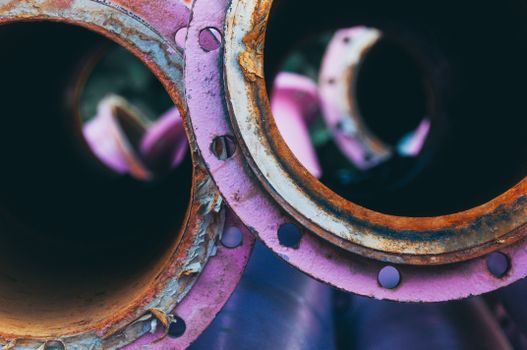
On PSP, the verified product data sheet for a LESSO composite pipe lists it as applicable to civil and industrial water supply, fire fighting, sewage transport, and cable protection, with both hot-dip-galvanized and epoxy-coated steel options [S1]. Mid-2026 sourcing on Made-in-China shows building-plumbing-grade PSP in the US$ 490.00 – 740.00 per unit band [S2], which sits well above the per-meter price of plain PE-AL-PE or PPR pipe and reflects the steel content. For the chemistry and supplier side, ChemicalBook lists the steel-plastic polyethylene composite pipe entry with Wuxi Mastery Steel Equipment as the named supplier [S3], a useful pointer for cross-checking the segment.
On expansion anchors, the practical 2026 sourcing rule is to buy a product that carries ETA per EAD 330232 (or ICC-ES AC193 for North American projects) and to read the ETA's Annex C for the published tension and shear capacities at each concrete grade. Avoid generic anchors with no assessment document — the cheap price reflects an unverified capacity. For an alternative resin-bonded system, see the FRP composite or chemical-anchor pages for a different load-transfer mechanism. A useful cross-reference for piping-system cost bands sits in the PVC-U pipe buying guide 2026, which lines up the spec gates for plain plastic pipe against the same project constraints.
Two trackable signals: first, the next update to the China GB/T 28897 PSP standard is the most likely 2026-2027 spec event to move product acceptance on municipal projects; second, the next round of EAD 330232 amendments typically refreshes the cracked-concrete derating tables, which is what most European structural engineers will be checking before the next concrete-anchor buy. Watch for the LESSO and Made-in-China catalog revises around those standard updates.