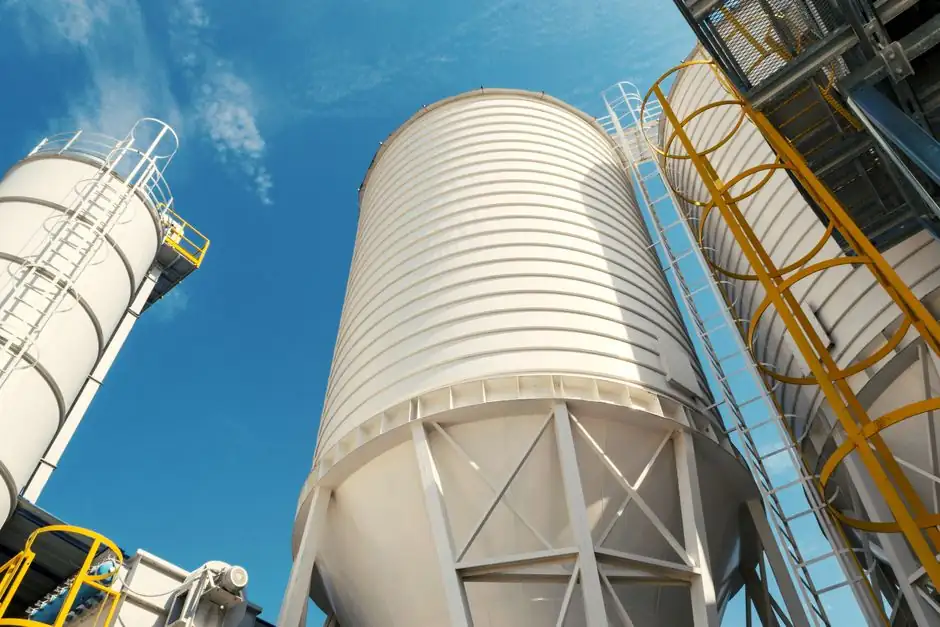
Specifying steel plate for a new tank, pressure vessel, or structural skid reduces to a small set of decisions: carbon vs stainless, hot-rolled vs normalized, plate thickness vs joint efficiency, and the fabrication route the shop can actually execute. Trade bodies such as STI/SPFA represent the fabricator side across petrochemical, power, food, pharmaceutical, fuels, and water transmission end markets [S1].
Stockholders in the UK alone carry mild, stainless, and high-yield plate with cutting, bending, and welding as value-added services, with plate supplied in standard thicknesses from roughly 3 mm up to 100 mm+ depending on grade [S4]. Wholesale channels list 450+ large-plate SKUs aimed at structural, industrial, and fabrication use, with thickness, grade, and finish selectable against project specs [S3]. For a baseline guide to the steel plate family, the material category reference is the right starting point.
Grade families: carbon, high-strength low-alloy, and stainless
ASTM A36 remains the default structural carbon plate with a 250 MPa (36 ksi) minimum yield up to 200 mm thickness, while ASTM A572 Grade 50 lifts yield to 345 MPa (50 ksi) for building and bridge framing. For pressure equipment, ASTM A516 Grade 70 is widely specified for low- and intermediate-temperature service down to -46 C, and ASTM A537 Class 1/Class 2 covers heat-treated carbon-manganese-silicon plate for higher strength pressure vessels. [S1]
On the stainless side, 304 covers general indoor and mildly corrosive service, and 316L (the low-carbon variant, 0.03% C max) is chosen for welded service in chloride-bearing or pharmaceutical environments because of its resistance to intergranular corrosion after welding. Plate-finish supply in stainless ranges from hot-rolled annealed and pickled (HRAP) to No. 4 brushed, with pattern plate (checker, diamond, lentil) specified for slip resistance on walkways and tank tops [S5].
Selection criteria by service environment
For atmospheric, non-corrosive structural duty inside a plant, A36 or A572-50 plate in 6-25 mm thickness is the baseline, welded with E7018 electrodes and typically blast-cleaned to SSPC-SP6 before coating. For sour hydrocarbon service, the governing concern is NACE MR0175 / ISO 15156 compliance on the plate, weld, and HAZ hardness, which pushes selection toward lower-carbon normalized grades and controlled-hardness welding procedures. [S2]
For cryogenic LNG or LPG tanks, 9% Ni plate (ASTM A553 Type I) is specified down to -196 C service, with impact-tested Charpy values typically required at -196 C. For boiler and high-temperature headers, ASTM A387 Grade 11 (1.25Cr-0.5Mo) and Grade 22 (2.25Cr-1Mo) cover creep-resistant service up to roughly 600 C. Plate selection for industrial adhesive bonded assemblies is uncommon compared with welded construction, but bonded stiffeners are increasingly used on stainless plate skids in food/pharma wash-down zones where weld heat-tint is rejected.
Fabrication route: cutting, forming, welding, and inspection
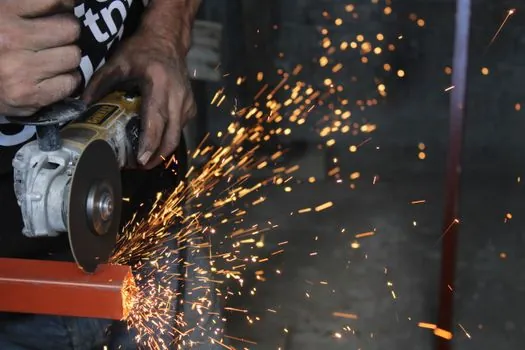
Plate thickness drives the cutting process: up to about 25 mm, plasma and laser give clean edges and tight kerf; above 25 mm, waterjet and oxy-fuel dominate, with high-definition plasma closing the gap on 40 mm+ plate. Cold forming is practical down to a bend radius of roughly 1.5-2x thickness for A36, but increases sharply for high-strength grades, and A516/A537 typically require hot forming above 900 C followed by re-normalizing to restore impact properties. [S4]
Welded plate assemblies are governed by ASME Section IX for procedure qualification and Section VIII for pressure-vessel rules, with radiographic or ultrasonic examination percentages set by joint efficiency. Storage tank shops follow API 650 for shop-fabricated carbon and stainless tanks, with STI/SPFA member fabricators certified to that scope and running API 653 inspector training through 2026 [S1]. For process piping, ASTM A106 Grade B and A333 Grade 6 (low-temp) cover seamless pipe that is cut, beveled, and welded from plate-rolled shells.
Comparison: carbon vs high-strength vs stainless plate on decision criteria
Specifying engineers usually lock the grade first, then plate thickness from a code calc, then the QA package: Charpy impact at a stated temperature, through-thickness ultrasonic (UT) to ASTM A578 Level B or C for critical joints, and PMI (positive material identification) on stainless plate to catch mixed-grade errors before fabrication. Plate stockholder QA typically includes mill test certificates to EN 10204 3.1, with 3.2 certificates available for higher-class service [S4].
Where plate specification commonly fails

Three failure modes recur. First, plate specified to A36 delivered as A572, or vice versa: both are fine for general structural use but mill cert chemistry and yield differ, so QA must include a PMI gun and a tensile check. Second, 304 ordered in error where 316L is required for chloride or pharmaceutical CIP fluids, leading to pitting and rouge staining within months. Third, plate ordered to A516 without impact testing at the design metal temperature; the code requirement is that the plate meets the impact energy at the lowest expected temperature, not just at room temperature. [S2]
A related pitfall is relying on nominal thickness without a corrosion or rolling tolerance allowance; ASTM A6 sets the standard tolerance as roughly +/-0.8 mm at 10 mm plate and +/-1.6 mm at 25 mm, and design margins should account for that. For fabricators working to ASME Section VIII, also note that welded-joint efficiency drops from 1.0 (full RT) to 0.85 (spot RT) to 0.70 (no RT) [S1].
Sourcing, standards, and trackable signals
Procurement is normally through a mill-direct contract (ArcelorMittal, SSAB, POSCO, Baosteel, Novolipetsk) or a service center that holds stock and runs cutting, bending, and welding. Trade-association membership in STI/SPFA is a useful proxy for shop-fabricated tank and pressure-vessel capability in North America, with member fabricators serving petrochemical, power, food, pharma, fuels, and water end markets [S1]. Regional fabricators in markets such as Western Australia focus on mining and industrial structural platework and stainless pipe/plate assemblies [S2].
Two verifiable signals to track: the 2026 STI/SPFA training calendar lists API 653 Tank Inspections on 2026-08-13 and SP001 Aboveground Tank System Inspector Training in Pittsburgh on 2026-08-17, both anchored to STI/SPFA member quality programs [S1]; and DHgate's bulk-plate index shows 450+ active SKUs in large steel plate last refreshed 2026-08-08, useful as a price-and-availability check on imported plate [S3]. For a comparative engineering read on adjacent process materials, see engineering plastic selection for oil and gas: 2026 spec gates.
For component-level specifications, see orifice plate flowmeter.