Educators typically need a single SKU that supports lathe practice, sheet-metal wire bending, resistance-welding demos, and concrete-reinforcement demonstrations, so the pick favours ductile, weldable, classroom-safe stock rather than the high-carbon, high-tensile grades used for bridge-cable cladding [S2] or the high-conductivity copper rod used in power-cable plants [S3].
Defining wire rod and what "school spec" means
Wire rod is a hot-rolled coil product, normally 5.5-20 mm in diameter, produced on a continuous mill and supplied as a coiled semi-finished feedstock that downstream operations draw, cold-roll, or weld into finished wire and fasteners [S5][S6]. A general-purpose wire rod line item at a school is, in practice, low-carbon mild-steel rod in the 5.5-12 mm band, because that range is what a school can still bend cold with hand tools, hold in a student-size vice, and feed into a small draw bench without specialised equipment [S5].
School-relevant rod is best described by what it is NOT: not the stainless/carbon clad wire rod used in bridge-cable quality inspection (cladding segmentation work published in 2026 reports mean pixel accuracy 97.29% and cladding IoU 88.82% on that specific product, which is a different animal entirely) [S2]; not the high-purity low-carbon copper rod running through European wire-rod plants aimed at wind, EV, and rail electrification (Elcowire markets a low-carbon copper line verified to ISO 14064-3) [S3]; and not the high-carbon rod fed into prestressed concrete wire or tyre bead production.
Selection criteria for a school procurement line
Four decision gates cover the vast majority of school-wire-rod purchases. First, chemistry: pick low-carbon grades (typically AISI 1008, 1010, 1015, 1018, or 1020), with carbon content around 0.08-0.20% C, because that window gives the best combination of weldability, ductility, and student-safe machinability [S5][S7]. Second, mechanical baseline: yield strength in the 230-350 MPa range and tensile strength in the 380-500 MPa range, with elongation at break of at least 20%, which is what a student can cold-bend, form, and re-straighten without fracture [S7]. Third, surface: a light oxide (mill scale) is acceptable and even useful for welding demonstrations, but the rod must be free of seams, laps, and surface cracks that would telegraph into student test pieces [S5]. Fourth, form: coil weights of 50-200 kg are standard at this product family, so plan for an uncoiling cradle or a pay-off reel, not a hand-rolled drum [S6].
Schools running materials-science demos (tensile testing, hardness mapping, microstructural etching) should look for the same lot to carry a mill test certificate (MTC) reporting C, Mn, S, P and the tensile/yield/elongation numbers, so the same rod batch is traceable from lecture to lab report [S5][S7].
Grade and diameter comparison for teaching use

Three steel families dominate school use, and a side-by-side reading helps a purchasing officer pick the right coil. Low-carbon mild steel (AISI 1008-1020, ~0.08-0.20% C, 5.5-12 mm): cheapest, easiest to weld (oxy-acetylene, MIG, spot), bends cold without cracking, elongation typically 25-35%, ideal for forming demos, binding wire, basic wire mesh, and welding practice [S5][S6]. Medium-carbon steel (AISI 1030-1050, ~0.30-0.50% C, 5.5-10 mm): roughly 30-50% higher tensile strength, used when the lesson needs spring-back or higher fatigue resistance, but spot-welding becomes harder and students need PPE for hot work [S7]. High-carbon / hard-drawn rod (AISI 1060 and above, or patented rod for bridge cable): the right answer for advanced materials modules on corrosion-fatigue of bridge cable wires, but wrong for general shop use, because it work-hardens fast and snaps under student bending [S2].
On the non-ferrous side, copper rod (8 mm ETP copper) belongs in electrical-engineering labs, not general machine shops, and should only be ordered when the syllabus covers conductor resistance and skin-effect demos; for a multi-purpose wire, low-carbon steel is the right pick [S3].
Use cases that match a school environment
General shop classes: rod fed to a small draw bench, then bent into hooks, nails, and binding wire; 5.5-8 mm low-carbon rod is the workhorse, and 1 kg of 5.5 mm rod will draw to roughly 2.5-3.0 mm before intermediate annealing is needed [S5][S6]. Welding and fabrication modules: 6-10 mm low-carbon rod, MIG/GTAW-friendly, with the MTC confirming C under 0.20% so students can weld without pre-heat procedures. Civil-engineering demos: rod used to model rebar tying and mesh-bending behaviour, often the same 8-12 mm mild-steel coil that a contractor would buy, but cut into short demonstration lengths. Materials science labs: rod sections polished, etched (nital 2-5%), and used to teach ferrite-pearlite microstructures; 1018 or 1020 in the 10-12 mm range gives a coarse enough grain for classroom microscopes [S5][S7].
Schools running robotics or mechatronics modules also buy cable wire (stranded, insulated) for harnesses, but that is a separate stock-keeping unit; the wire-rod aisle is the feedstock for drawn, bare metal.
Limitations, safety, and what to avoid
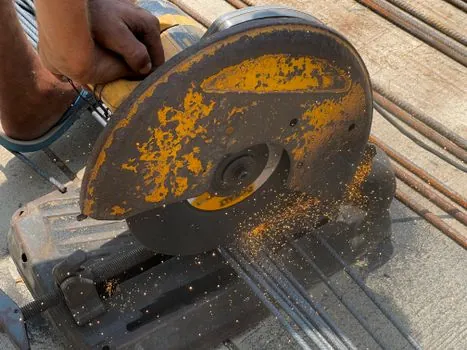
Wire rod in coil is a spring under tension: a 100 kg coil of 8 mm rod stores meaningful energy and uncoils violently if the bindings are cut without a pay-off cradle; every school shop needs a decoiler or a slow-payoff A-frame before accepting coil deliveries [S5][S6]. Rod above 12 mm diameter is generally not appropriate for student hand-bending and should be reserved for instructor-only demonstrations. Surface scale is sharp; students handling bare rod should wear cut-resistant gloves, which is also a useful entry point to broader safety glasses selection for work at height PPE conversations around the shop floor. Avoid high-carbon patented rod for general teaching; it is the right stock for advanced fatigue modules, but the wrong default because it work-hardens and snaps in student hands [S2][S7].
Procurement notes and 2026 trade signals
On the trade-policy side, the U.S. Department of Commerce published preliminary results of the 2023-2024 antidumping duty administrative review on carbon and certain alloy steel wire rod from Mexico on 12 February 2026, which directly affects landed cost for any North American school importing rod from Mexican mills under review [S1]. European buyers should note that the 2026 Elcowire positioning of its low-carbon copper line (verified to ISO 14064-3) signals a broader mill push toward decarbonised rod, although that supply is aimed at EV, rail, and wind power and is not generally cost-appropriate for a school budget [S3].
A practical next step: when the bid goes out, request the MTC with each lot, specify AISI 1008-1018 (or the regional equivalent), 5.5-12 mm diameter, coil weight under 200 kg, and a maximum surface-defect note, and reject any shipment that arrives without traceable markings. For schools in cold-climate campuses running outdoor demos, the same low-carbon rod selection logic applies, and the operational issues are covered separately in a wire rod selection for cold-storage warehouses spec map.
Component reference pages worth checking: draw wire sensor.