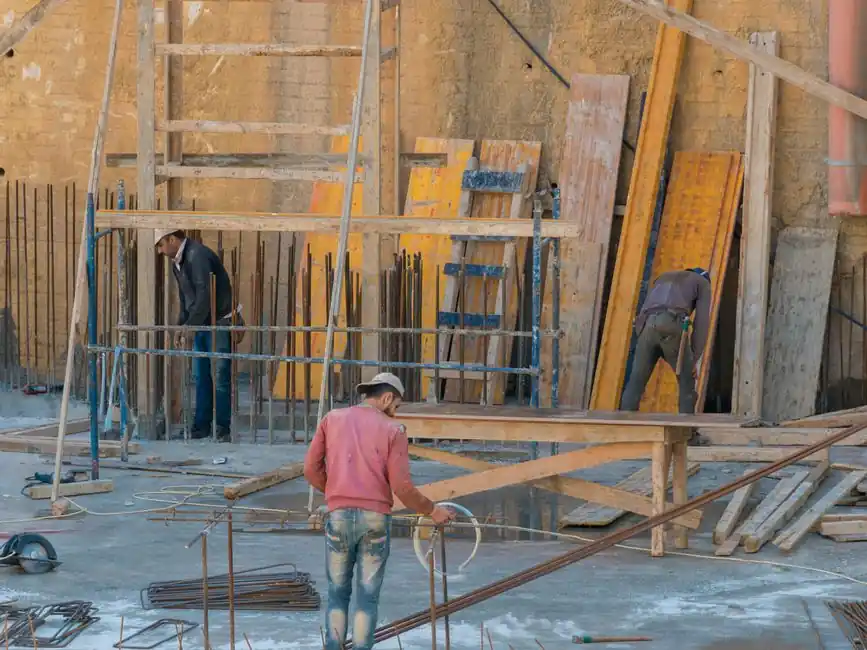
Wire rod for an industrial renovation must satisfy three filters simultaneously: UNS-grade compatibility with the existing piping or component, diameter tolerance that drops into the existing machining envelope, and a surface condition that survives the residual contamination of an in-service plant [S1].
A renovation project (更新改造项目) is defined as funded work using depreciation reserves, state change-out budgets, or technical-renovation loans to upgrade existing facilities and auxiliaries, with each sub-project requiring an independent design file and benefit case [S2]. That funding definition matters for procurement: it forces a documented grade-equivalence check rather than free substitution, because the new wire rod must be traceable to the original MTC line on the asset.
Renovation vs. new-build: why the procurement logic changes
Renovation scope is capped at existing facilities and auxiliaries, with each sub-project requiring independent approval and a measurable benefit line [S2]. That procedural gate forces the specifier to prove grade equivalence with whatever is already welded, bolted, or coiled into the asset, instead of freely selecting the lowest-cost coil on the market. In practice this means a renovation order always references an existing UNS or Werkstoff number on the asset data sheet, and the replacement wire rod must match that number within the same ASTM/ASME product form standard [S1].
On a greenfield EPC the buyer can optimise for one consistent inventory; on a renovation, mixed-generation stock is common, and the QA/QC file must carry the MTC, heat number, and dimensional report per spool. EPC contractors running refinery and nuclear-retrofit work typically demand one-stop documentation (PED, MTC, IPT, PQR, NDT) bundled with the wire-rod shipment, which is a heavier paperwork load than a domestic stockline sale [S1].
Decision criteria: grade, diameter, surface, form
Four criteria drive the shortlist. First, grade: for chloride-bearing, sour, or oxidising service, Ni-alloy families (UNS N06625 Inconel 625, UNS N10276 Hastelloy C-276, UNS N04400 Monel 400) are the workhorses; for structural and fastener replacement, carbon and low-alloy steel wire rod remains the default. Second, diameter: standard wire-rod coils ship in 5.5–32 mm ranges, and the renovation envelope must fall inside that window without drawing the rod down, because drawn wire has different mechanical properties and a separate ASTM specification [S1].
Third, surface: renovation sites often see residual oil, paint, or mild corrosion on the parent material, so a descaled or pickled finish on the incoming wire rod gives better weld-pool cleaning and reduces porosity risk on tie-in welds. Fourth, product form: confirm whether the spec calls for round bar, wire rod, thin wire, strip, or fasteners, because Ni-alloy suppliers list each form under a different UNS line (for example UNS N06625 round bar versus UNS N07718 powder) and lead times differ [S1]. A specifier who treats all five forms as interchangeable will reorder.
Comparison: Ni-alloy vs. carbon-steel vs. stainless wire rod for retrofit duty
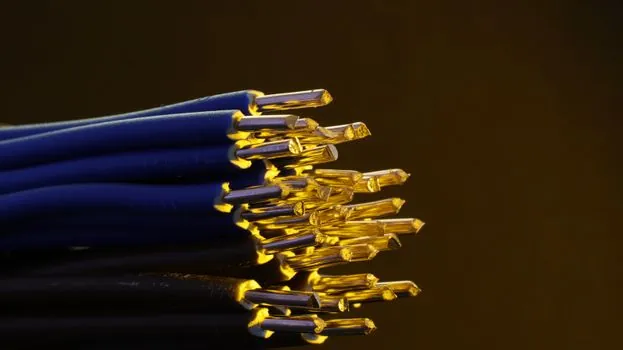
Ni-base corrosion-resistant alloys are specified where the medium is strongly acidic or alkaline and the existing asset is already in the Ni family; they offer broad chemical compatibility but carry the highest unit cost and longest mill lead time [S1]. Carbon-steel wire rod is the lowest-cost option and the right pick for non-corrosive structural and retaining-ring (挡圈) replacement where axial or circumferential fixing of shaft-mounted parts is the only function [S3]; it should not be substituted into a Ni-alloy system, because galvanic and corrosion-rate mismatches will eat the cheaper material first.
Stainless wire rod (austenitic 300-series) sits between the two on cost and is widely used for general-purpose retrofit where moderate corrosion resistance is needed and the existing piping is already stainless. Compared on four decision gates (corrosion resistance, unit cost, lead time, weldability to existing asset), Ni-alloy wins on corrosion and weld compatibility with Ni systems but loses on cost and lead time; carbon steel wins on cost and lead time but loses on corrosion; stainless splits the difference and is usually the safest retrofit default when the parent material is unidentified. Ni-alloy wire rod is also the right pick where the existing EPC documentation already lists UNS numbers such as N06625, N10276, N06600, N04400, N7718, or N07738-LC [S1].
Process and traceability requirements on a renovation order
Each renovation sub-project needs an independent design file or proposal that demonstrates it can deliver benefit on its own [S2]; for wire-rod procurement, that translates into a per-heat MTC, a UNS-to-UNS cross-check against the asset ledger, and a dimensional certificate covering diameter, ovality, and surface roughness. EPC-grade suppliers servicing refinery and nuclear work package these documents (PED, MTC, IPT, PQR, NDT) as a single deliverable with the coil, and the buyer should reject any shipment where the documentation is split [S1].
For retaining rings and similar shaft-fixing components (挡圈), where the ring is a closed or open circular fastener that axially or circumferentially locks other parts to a shaft, the renovation spec must match the existing groove dimensions and the material's elastic recovery; substituting a higher-carbon wire rod to "improve strength" usually cracks the groove rather than the ring [S3].
Where Ni-alloy wire rod earns its premium in retrofits
In refinery, nuclear, and aerospace EPC retrofits, Ni-alloy wire rod is the default where the existing system is already Ni-based and the operating envelope includes chloride, sour, or high-temperature oxidation service [S1]. The same source lists the canonical UNS lines used in these retrofits: N06625 round bar, N10276 seamless tubes, N06600 welded pipes, N06617 fittings, N08825 flanges, N04400 plate, N07738-LC thin wire, and N07718 powder, with the latter two specifically positioned for 3D-print field repairs and additive spares.
The premium is justified only when the operating environment and the existing parent material both call for it; using N06625 wire rod to replace a carbon-steel retaining ring on a benign shaft is wasted budget. The procurement gate is therefore a chemistry match first, then a mechanical-property match, then cost.
Common failure modes when the wrong rod is shipped
Three failure patterns recur on renovation jobs. First, grade drift: a sub-contractor substitutes 304 stainless for the specified Ni-alloy to cut cost, and the first chloride exposure pits the weld. Second, form drift: the spec called for wire rod, the supplier delivered thin wire (drawn), and the mill certificate no longer matches the wire-rod ASTM line; the parts machine to dimension but fail the mechanical test [S1]. Third, surface drift: an oily, unscaled coil is accepted in a contaminated site, porosity shows up on the first tie-in weld, and the spool is rejected.
A fourth, less obvious failure mode is documentation drift, where the MTC is generic and the heat number cannot be traced back to the original asset. Renovation audits routinely fail on this point because the funding definition requires a benefit case per sub-project, and an untraceable heat makes that case unreviewable [S2].
Sourcing signals worth tracking on the next procurement cycle
Watch the mill lead-time spread between Ni-alloy wire rod and stainless wire rod: a widening spread usually means the renovation sector is back-pressuring EPC deliveries, and buyers should lock forward orders. For comparison with adjacent retrofit work, the wire rod selection for data centers track focuses on conductivity and low-carbon grades rather than corrosion; the wire rod selection for hospitals track focuses on biocompatibility and surface finish, while the nickel alloy selection for general fabrication track covers the broader UNS-grade map that any Ni-heavy renovation order sits on top of. Cross-referencing these three before issuing a renovation PO tends to catch the grade and form drift above before it reaches the site. [S1]
The underlying component specifications are covered under wire rod, cable wire, and draw wire sensor.