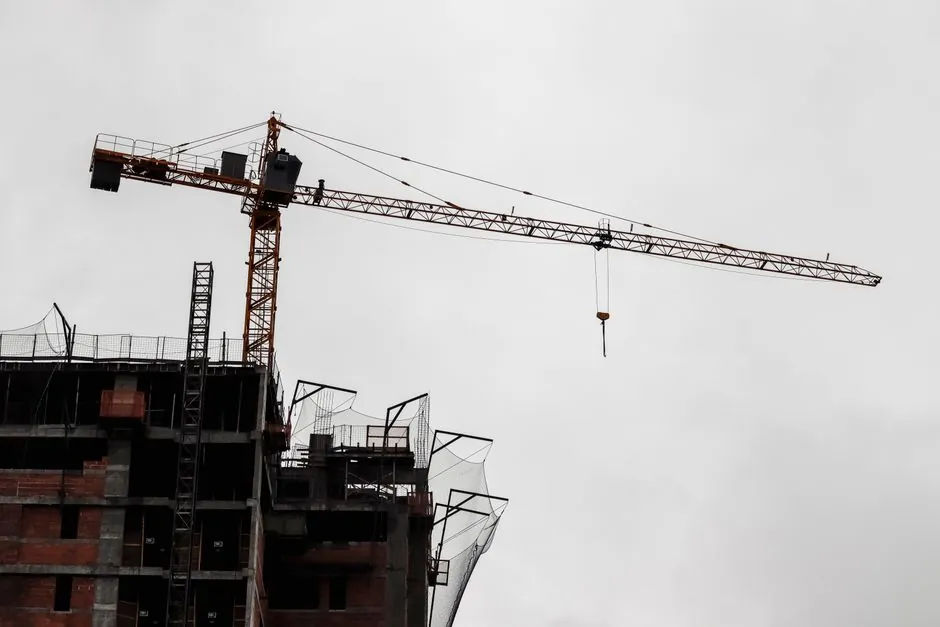
Residential steel framing and base-plate work is dominated by hot-rolled carbon steel plate in the 1.5–25 mm thickness band, with Q235B / Q255B (China GB/T 700) and ASTM A36 / A572 Gr.50 (US) sitting at the core of the spec table [S3][S4].
For detached homes, low-rise apartments, and light commercial builds, the plate order is almost always small-tonnage (1–25 ton MOQs are typical on the China supply side) and the decisions are governed by weldability, yield strength (≥235 MPa for Q235, ≥250 MPa for A36), and the section that will be cut or rolled, not exotic alloy content [S3].
What "residential-grade" plate actually means in 2026 specs
Welded-steel plate construction (钢板焊接结构) is the dominant fabrication route for residential members: plates are cut, then welded into built-up beams, columns, base plates, and gusset plates rather than being used as monolithic rolled sections [S1]. This is why the spec engineer ends up choosing plate, not just W-shape or C-section beams.
Carbon steel in the mild range is the default. Q235B hot-rolled plate, with 235 MPa minimum yield, 375–500 MPa tensile, and 26% minimum elongation, is the Chinese workhorse for welded residential steel structures, supplied in the US$520–650/ton band as of the May 2025 Made-in-China listings [S3]. A heavier 40 mm MS plate for bridge and platform work is also available from the same mill channel, demonstrating that thickness from 6 mm up to 40 mm is routinely stocked for the construction market [S4].
For corrosion-prone residential envelopes (coastal single-family homes, basement walls, balcony plates), stainless options exist but are not the default: 201/304/316 stainless sheet sits in the US$1,500–1,800/ton band, roughly 3× the carbon plate price, so it is specified only where carbon plus paint/galvanizing will not meet service life [S3].
The main plate options a residential spec engineer will see
Four plate categories cover the bulk of residential work, lined up against the criteria that actually drive a buy order: cost per ton, yield strength, weldability, and stock availability [S3][S4].
Q235B hot-rolled carbon plate is the cost leader at roughly US$520–650/ton, with 235 MPa yield and the easiest field weldability, making it the right default for base plates, gussets, stair stringers, and light columns in low-rise homes. Q255B and Q275 push yield toward 255–275 MPa at a small price premium and are chosen when a thinner plate must carry the same load, for example a balcony cantilever plate where depth is fixed. ASTM A36 plate (250 MPa yield) is the North American equivalent and is interchangeable with Q235B for most residential welded assemblies.
ASTM A572 Gr.50 high-strength low-alloy plate (345 MPa yield) is the option when the structural engineer wants to thin the section, typically in mid-rise residential (4–8 storey) where column and beam plate weights are driving the foundation size. The trade-off is that A572 requires preheat control on heavier thicknesses to avoid HAZ cracking, which most small residential fabrication shops are not set up for. A36 stays the safer call for any shop welding plate thicker than ~20 mm without controlled procedures [S3].
For plate thicknesses in the 1–6 mm range that are used in light-gauge residential members (door frames, window surrounds, light shelf brackets), cold-rolled and galvanized coil products sit in a different price band, around US$600/ton for galvanized coil in 25 ton MOQ, and these are usually sourced as coil then cut to panel, not as hot-rolled plate [S3].
Thickness, section size, and the welder's call
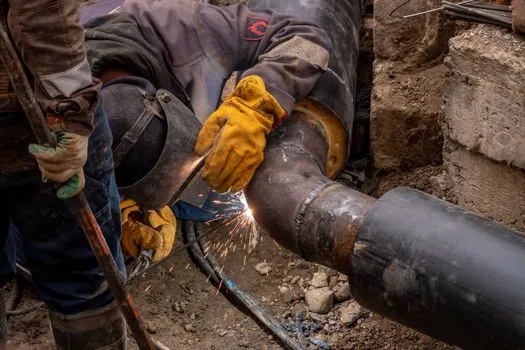
P.I.T. Pipe, a US fabricator, ships residential-project plate predominantly at 1 inch (25.4 mm) thickness in 4'×8' to 8'×20' sheets, with picking holes or welded-in lifting lugs added on request, which matches what a small residential steel contractor actually orders [S2]. That 1-inch figure is worth noting: it is thicker than what a true light-frame residential job needs, and P.I.T.'s book of business is closer to trench-cover road plates and temporary works than to single-family homes [S2].
For genuine residential plate applications, the thickness ladder is more like: 6–10 mm for base plates under light columns, 8–16 mm for gusset and end-plate connections in moment frames, 12–20 mm for built-up I-section webs and flanges in residential beam fabrications, and 20–40 mm only for transfer beams, header plates over large openings, or column splice plates in low-rise podium slabs [S3][S4].
Weldability is the gate that forces the grade decision: Q235B and A36 can be field-welded with E6013 / E7018 stick electrodes without preheat up to about 25 mm thickness in ambient conditions. Q355 (the Chinese 355 MPa grade) and A572 Gr.50 cross the preheat threshold earlier, so on a small residential site they are usually specified only when an engineer signs off the WPS (welding procedure specification) first. Skipping that step is the single most common cause of HAZ cracking in residential plate assemblies.
Corrosion, fire, and the parts residential engineers get wrong
Carbon steel plate in a residential interior (inside a wall cavity, above a ceiling, embedded in a concrete topping) does not need stainless, but it does need a coating system. Hot-dip galvanizing to ASTM A123, or a zinc-rich primer plus topcoat, is what extends the design life of a Q235B base plate to the 50-year target that residential codes are written against. Bare black plate left in a damp basement will show surface oxidation inside one winter. [S2]
Stainless 304 plate is over-spec for almost every residential use, but 316 plate earns its place in coastal single-family homes within roughly 1 km of the high-tide line, and on balcony and planter plates where chloride exposure is constant. At US$1,500–1,800/ton for 304/316 stainless pipe and plate products (per May 2025 China listings), the premium is real but bounded, and it is cheaper than replacing a corroded carbon plate after 10 years [S3].
Fire is the other constraint engineers underestimate. Plain Q235B / A36 plate loses yield strength rapidly above 400 °C, so a residential base plate sitting on a wood-frame sill or a non-rated floor needs a fire-rated underside or an intumescent coating, not a spec upgrade to a stronger grade. The fix is in the assembly, not the plate chemistry.
Where the supply chain actually sits right now
As of the May 2025 supplier snapshot on Made-in-China, 628 active manufacturers and trading companies list construction-grade steel, with 1,884 product entries, and Guangdong is the dominant export cluster for hot-rolled carbon plate in the residential tonnage range (5–25 ton orders) [S3]. Minimum order quantities in that dataset run from 1 ton (for carbon plate at Foshan and Lecong trading desks) to 25 tons (for galvanized coil), with US$450/ton as the low end for carbon plate and US$650/ton as the high end for the same nominal Q235 grade, the spread being a function of width, thickness, and mill-direct versus trading-house sourcing [S3].
Alibaba's construction-machinery and building-materials listings also show 40 mm MS plate for bridge construction as an active SKU, with mill-direct pricing for the heavier end of the residential transfer-beam range, confirming that the supply side has plate thickness covered from thin-gauge cladding up to at least 40 mm without a special-order penalty [S4].
Selection checklist a residential engineer can run in 15 minutes
Confirm the governing code (GB 50017 in China, AISC 360 plus the local residential code in the US, Eurocode 3 part 1-1 in the EU) before picking the grade, because each code has a different minimum yield mapping and a different rule for built-up welded plate members. [S1]
Pick Q235B / A36 for any field-welded plate under 20 mm thickness, because the cost is the lowest (US$520–650/ton) and the welder does not need a WPS beyond a basic E7018 procedure [S3]. Pick A572 Gr.50 only when the structural calculation shows that thinning the plate actually saves enough tonnage to pay for the preheat discipline, which is rare in single-family and duplex residential work.
Specify the coating in the same PO as the plate (galvanizing per ASTM A123, or a zinc-rich primer system), and reject the order if the plate ships without a mill cert that ties heat number to the stated yield and elongation values. The cheapest plate in the Made-in-China dataset is not a bargain if the heat-number cert is missing, because residential engineers cannot defend a welded plate without that paper trail.
For residential builds near salt water, or for plate that will be embedded in a wet slab, jump to 316 stainless for the visible plates (balcony fascia, planter walls) and keep Q235B for hidden structural plate inside a sealed cavity. This hybrid spec is the pattern most mid-rise residential engineers settle on once they have seen one chloride-induced failure.
Trackable signals to watch over the next quarter: a Q355 / ASTM A572 Gr.50 price move that closes the gap with Q235B below 8%, which would tip more residential engineers toward the higher-strength grade, and any revision to GB 50017 or AISC 360 that formally allows thinner transfer-plate assemblies in mid-rise residential, which would shift tonnage from beam-and-column plate toward thicker plate in a smaller number of locations. Suppliers and spec engineers should also be ready for a stainless plate price reset, since the May 2025 band of US$1,500–1,800/ton is high enough to be the first number trimmed if nickel moves down in Q3 2026. For related background on carbon steel selection criteria, and a quick refresher on the alloy steel grades that occasionally show up in residential plate specs, the linked encyclopedia entries are the fastest cross-check before issuing a mill order.
Background reading: Air Solenoid Valve Selection for Chemical Processing: 2026 Spec Map.