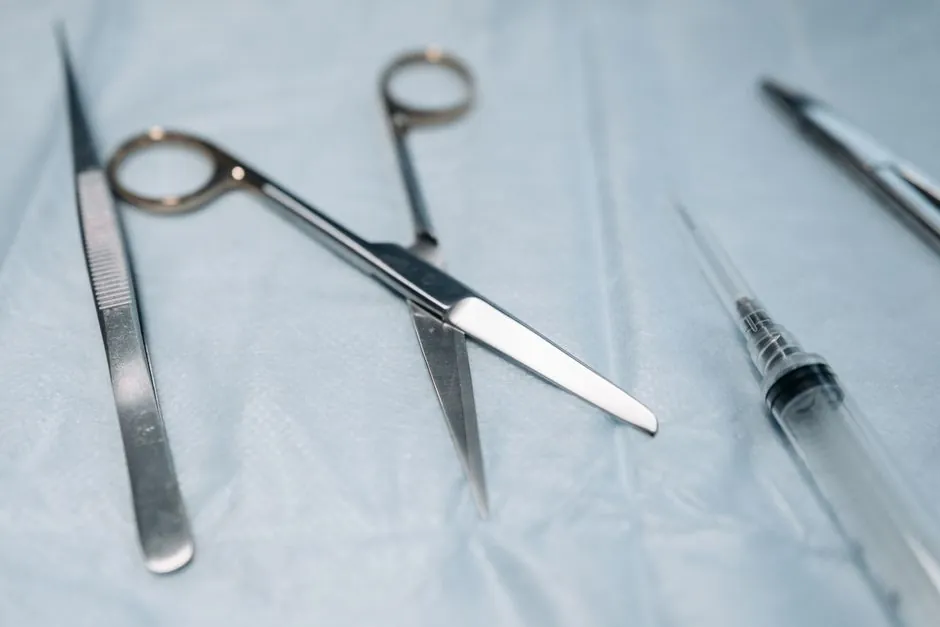
Hospital steel plate procurement splits cleanly into three families: austenitic stainless (304/316/316L) for wet, hygienic, and oxygen-line service; carbon steel grades S275JR/S355JR to EN 10025-2 for primary structural framing and concrete embedment; and specialist low-carbon or electrical silicon steel for MRI rooms and lift shafts where magnetic interference must be controlled [S2][S3].
The Metline Industries (ISO 9001:2015) product range published 2026-08-08 lists 304, 304L, 316, 316L, 321, 347, 2205 duplex, 2507 super duplex, 904L, plus 420, 430, 409 and 410 in plate form, which covers every clinical, kitchen, oxygen and pharmacy zone encountered in a 200 to 1,000 bed greenfield hospital build [S1]. Beijing Silk Road Enterprise similarly stocks 71 stainless plate SKUs alongside 47 carbon steel plate items for structural and pressure-vessel skids in plant rooms [S5].
Clinical, kitchen and laundry zones: austenitic stainless plate
304 stainless plate (18Cr-8Ni) is the default for non-corrosive interior cladding, instrument trays, scrub sink bowls, and HTM 63-compliant clean-room wall linings, and the Metline catalogue confirms 304 sheets and plates are stocked in 2B, BA and No.4 finishes suitable for healthcare interior cladding [S1]. Where chloride-bearing disinfectants such as sodium hypochlorite, chlorhexidine and peracetic acid are sprayed daily, 316L (16Cr-10Ni-2Mo) is the correct upgrade, since the 2% molybdenum addition raises pitting resistance against the chlorinated agents commonly used in 1:100 bleach surface disinfection protocols.
Specifiers should confirm 316L meets the EN 10028 or ASTM A240 chemistry and request a minimum 2.5% Mo content; 904L (20Cr-25Ni-4.5Mo-1.5Cu) is reserved for endoscopy reprocessing rooms where warm, acidic, chloride-rich chemistries attack 316L over 5 to 10 year service windows [S1]. For stainless steel plate thicknesses, hospital interior cladding and bench tops run 1.2 to 3.0 mm cold-rolled sheet, while structural sterilisers and autoclave shells need 6 to 12 mm hot-rolled plate. Cutlery, surgical instrument blanks and pharmacy tooling are 420 martensitic plate (hardenable to HRC 50+) rather than austenitic grades, since austenitic 300 series cannot be hardened by heat treatment [S1][S7].
Structural frame and concrete embed plates: carbon and low-alloy grades
Primary hospital frames use EN 10025-2 S275JR for beams and columns up to 16 mm thickness (minimum yield 275 MPa, minimum tensile 410 to 560 MPa) and S355JR for heavier transfer structures and plant-room mezzanines (yield 355 MPa, tensile 470 to 630 MPa), with BBN Steel's catalogue confirming EN 10025-2 S275JR, S355J0, S355K2 and S235J2 plate held in stock for structural fabrication [S2]. For multi-storey hospital frames in seismic zones, EN 10025-3 S355NL/S460NL normalised fine-grain plate (-50°C Charpy ≥ 27 J) is the standard sub-zero impact grade.
Embedded base plates, anchor templates and lift-machine support plates are typically 12 to 30 mm carbon steel S275JR or S355JR, then hot-dip galvanised to ISO 1461 for embedded concrete contact plus a 50 year design life in slab soffits. Where columns bear on medical gas storage or oxygen farm slabs, a 6 to 10 mm A516 Grade 60 or 65 carbon-silicon pressure-vessel plate (ASME/ASTM spec) is specified to resist the localised bearing stress from cryogenic LNG bulk tanks and N2O banks, as published in the Shandong Baohua abrasion-resistant programme for structural plate supply to demanding industrial sites [S3][S4].
Oxygen, medical gas, and cryogenic service plate

Medical oxygen pipeline (MGPS) risers, cryogenic LOX/LIN vessels, and N2O bulk tanks must avoid carbon and low-alloy plate that can burn or fragment in oxygen-enriched service. EN 10028-3 P355NL1 and P355NH (16Mo3 chemistry) pressure-vessel plate is the standard specified for oxygen manifolds, and BBN Steel confirms EN 10028-3 P355N, P355NH, P275NL1 and P275NL2 are stocked as plate for pressure-vessel fabrication, with documented impact testing to the relevant -20°C to -50°C temperature class [S2].
For elevated-temperature hydrogen service in hospital boiler houses and CHP units, A387 Grade 5 Class 1 (0.5Cr-0.5Mo) and Class 2 plate are the established choices, offering stable creep strength and hydrogen attack resistance, as documented in the Katalor pressure-vessel steel product line published 2026-08-03 [S4]. Specifiers should also verify that oxygen-service plate is supplied degreased, and that austenitic 304/316 oxygen-line plate meets the cleanliness and intergranular corrosion tests required for high-purity gas distribution.
MRI rooms, lifts, and ferromagnetic screening
MRI and imaging suite construction is the one place where the steel plate grade rule flips. Standard structural S275JR contains too much residual carbon and manganese to use near a 1.5T or 3T magnet, and 304/316 austenitic stainless is paramagnetic and accepted for trim and ducting but not for primary shielding. The correct choice is a low-carbon structural plate with verified magnetic permeability (μr ≤ 1.005) such as S235J0 (EN 10025-2) for non-magnetic support steel, plus specialist austenitic 310S or high-nickel 309 plate for trim and RF cage components [S2].
For lift counterweight and elevator guide rails running inside or adjacent to MRI rooms, 304 or 316 plate is the practical substitute, while the active shielding wall itself typically uses 6 to 12 mm silicon steel or low-carbon electrical plate rather than structural grade, supplied with mill permeability and loss-per-cycle certificates. Hospital-grade 1.4301 (304) plate is also widely accepted for kitchen extraction, scrub sink bowls, and endoscope reprocessing baths since it carries the same hygiene credentials as 316L in less aggressive chemistry, per the Metline 2026-08-08 product catalogue [S1].
Decision comparison across hospital zones
For procurement teams building a cross-zone plate take-off, the four decision gates are corrosion exposure, magnetic permeability, code of construction, and plate thickness range. Comparing the four main options: [S4]
304 austenitic plate: lowest cost of the stainless options, excellent formability and weldability, suitable for interior cladding, kitchen benches, instrument trays and pharmacy furniture; limited chloride resistance rules it out of reprocessing and chlorinated-cleaning rooms [S1]. S275JR/S355JR carbon plate: structural framing, embedded base plates, lift-machine supports; cheapest of the four, fully standardised under EN 10025-2, but requires galvanising or epoxy coating in humid plant rooms [S2]. P355NL1/A516 Grade 60 low-alloy plate: pressure-vessel-grade plate for medical gas manifolds, oxygen storage vessels, and CHP/boiler house steam headers; mandatory where the code-of-construction is the Pressure Equipment Directive or ASME BPVC Section VIII [S2][S4].
Adding duplex 2205/2507 plate to the menu is justified only for helideck-level plant rooms or coastal hospital sites where chloride deposition exceeds 200 mg/m²·day, in which case a 2205 plate specification outperforms 316L on strength (yield ~450 MPa) and chloride pitting resistance at a 50 to 70% price premium [S1]. For data-room-grade MRI shielding the reference decision route lives in adjacent grade selection logic for industrial facilities (steel plate grades and selection gates for industrial facilities) and the data center steel plate selection: grade, thickness, and corrosion gates spec map, both of which document the same permeability and thickness gates hospital MRI suites inherit.
Limitations, lead times, and verification points
Three failure modes recur in hospital plate procurement: austenitic 304 plate specified into chlorinated disinfection zones and failing by pitting within 3 to 5 years; structural S275JR embedded into MRI soffits and causing image artefacts; and oxygen-line plate supplied with hydrocarbon residue causing ignition risk. None is acceptable on a working hospital build, and each is caught by a single material-traceability step in the inspection and test plan. [S3]
Plate lead time in 2026, based on the active catalogues of Metline, BBN, Shandong Baohua, Katalor and Beijing Silk Road, runs 4 to 8 weeks for 304/316L plate ex-stock India or China for common thicknesses, 10 to 14 weeks for 2205/2507 duplex plate, 8 to 12 weeks for EN 10028-3 P355NL1 pressure-vessel plate, and 6 to 10 weeks for A387 Grade 5 Class 1/2 plate [S1][S2][S3][S4][S5]. Buyers should require EN 10204 3.1 mill certificates, ASTM A262 Practice E intergranular corrosion test reports for 316L where chlorides are present, and Charpy impact test certificates at the contractual temperature for P355NL1, S355NL, and A387 plate. Two trackable signals for the next procurement cycle: whether the 2026 update of EN 10028-3 raises the -50°C impact requirement for P355 plate, and whether MRI permeability testing (μr ≤ 1.005) is being written into hospital structural specifications rather than only RF-shield submittals.