
Cleanroom envelope steel plate is a controlled item, not a commodity buy, because the panel surface, weld seam and corrosion response directly determine ISO 14644-1 particle counts and the cleanroom's ability to survive repeated IPA, H2O2 and quaternary-ammonium wipe-downs.
The dominant spec is austenitic stainless plate, AISI 304 (1.4301) for general dry rooms and 316/316L (1.4401/1.4404) for biotech, animal labs and any zone where chloride-bearing disinfectants or saline aerosols contact the wall. Cleanroom stainless settle-plate stands, listed as fabricated in stainless steel for environmental monitoring use, are the same alloy family the wall system uses [S6].
Grades in scope: 304 vs 316 vs carbon plate
Austenitic stainless plate is the workhorse because its passive Cr2O3 layer self-repairs in oxygen and tolerates the 70% IPA and 3% to 6% H2O2 vapor typical of routine cleanroom disinfection; 304 fits ISO Class 5 through Class 7 dry environments, while 316/316L adds 2% to 3% molybdenum for chloride resistance and is mandatory where bleach, NaOCl, or salt fog contact the surface [S6][S8].
Carbon steel plate is normally excluded from the clean-side envelope because it rusts under any humidity breach and sheds iron oxide particles; it is, however, the standard substrate for framing, embedment plates and structural supports concealed behind the stainless skin, and SFI Gray Steel in Houston ships hot-rolled carbon and alloy plate with ISO 9001:2015 processing for these back-of-house uses [S2]. Carbon steel plate for hidden structural members is typically specified to ASTM A36 or A572, while the exposed face goes to a separate stainless overlay. Where the room is not GMP or semiconductor (e.g. ISO Class 8 industrial dry rooms), powder-coated galvannealed carbon plate is sometimes accepted, but never on the return-air side of a Class 5 or better zone.
Thickness, panel size and flatness gates
Wall and ceiling panel thickness is set by spanning and impact, not by corrosion: 3 mm stainless is the typical lower bound for self-supporting wall panels up to ~2.5 m, 4 mm for ceilings and tall partitions, and 6 mm for plenum returns and door frames; below 2 mm the panel oil-cans under negative pressure and the joint opens, above 6 mm the weld becomes a warpage problem without a back-up bar. [S3]
Plate flatness must be specified to ASTM A480 2B (annealed, pickled, skin-passed) for general use, or to BA (bright annealed) for the cleanest visual; the difference is not just cosmetic, as BA has lower Ra and lower residual rolling-oil film, which is why semi and pharma tool-installation bays default to BA [S8]. Sheet stock from mills such as JYTSTEEL ships 304/316 plate in standard 1219 mm × 2438 mm (4 ft × 8 ft) modules with 2B, BA, No. 4 brushed and mirror No. 8 finishes [S8]. Plate flatness is also the reason modular cleanroom builders prefer stainless steel sheet from a single heat lot, since mixed coils can produce visible shadowing after final wipe-down.
Finish and surface roughness targets
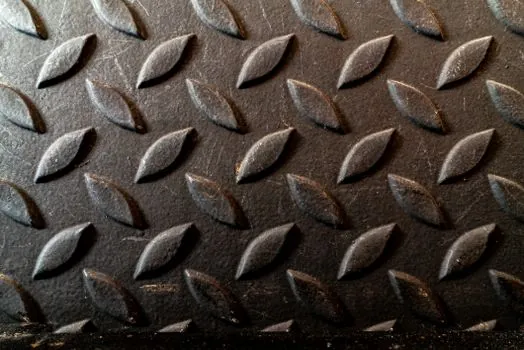
Cleanroom wall surface roughness is a measurable spec: 2B mill finish lands at roughly Ra 0.3 to 0.5 µm, BA near Ra 0.15 to 0.3 µm, No. 4 brushed at 0.4 to 0.8 µm (directional), and electropolished 2B at 0.1 to 0.25 µm; lower Ra reduces particle adhesion and shortens clean-in-place cycle time, but only below Ra 0.25 µm does the benefit clearly justify the cost delta in pharma cleanrooms. [S6]
Finishes also drive joint design: No. 4 brushed is the standard for non-product-contact partitions because scratches hide and weld discoloration grinds out cleanly, while mirror No. 8 and electropolished surfaces are reserved for visible features and aseptic cores where every scratch is a deviation. Passivation after fabrication, per ASTM A967 or ASTM A380 with citric or nitric acid, is mandatory to restore the Cr2O3 layer ground off during welding, and is the single most-skipped step that causes later rust spots on otherwise clean stainless [S3][S8].
Comparison: 304 2B vs 316 2B vs 316 BA vs coated carbon
On four decision criteria the four candidate plate options line up as follows: chloride resistance is poor for coated carbon, acceptable for 304, and good to excellent for 316 2B and 316 BA; surface roughness Ra is highest on coated carbon (typically > 1.0 µm as sprayed), mid-range on 304/316 2B (0.3 to 0.5 µm), and lowest on 316 BA (0.15 to 0.3 µm); panel cost per m² tracks the opposite way, with coated carbon cheapest and 316 BA the most expensive, typically 2× to 3× coated carbon; and cleanroom class suitability excludes coated carbon from anything better than ISO Class 8, leaves 304 2B at ISO Class 6 to 7, and allows 316 BA into ISO Class 5 and better aseptic zones [S6][S8].
This single matrix is the basis most spec writers use to lock the wall schedule: pick the row, not the column. The alloy steel alternative only enters the picture for structural embeds where weldability to the primary framing matters more than surface chemistry, and even then it stays on the dirty side of the envelope.
Fabrication, welding and on-site discipline
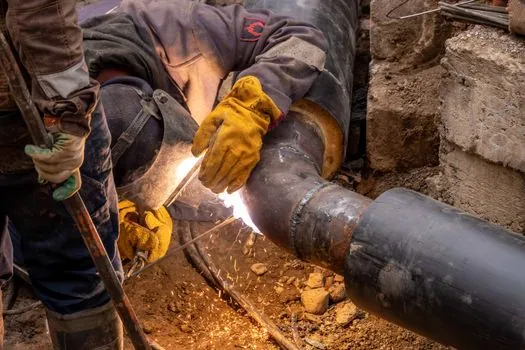
Cleanroom stainless plate fabrication is governed by AWS D18.1 / D18.2 for stainless welding in sanitary environments and by ASME BPE for bioprocess piping, but the wall-side rules are simpler: use GTAW (TIG) with argon purge on the back side, grind all welds flush, then passivate the full weld zone, not just the bead, because the heat tint extends 10 mm to 20 mm beyond the visible oxide. [S3]
Modular cleanroom builders also demand that the plate arrive covered with protective film, be cut and formed off-site under ISO 9001 traceability, and be rinsed with deionized water before final wipe-down, since chloride-bearing shop water leaves halos that bloom after the first H2O2 fogging. SPS in the UK ships profiling, cutting and bending across mild, stainless and high-yield stock for similar modular projects, and explicitly lists stainless plate, sections and hollow sections as separate value-added lines, a structure worth mirroring on the cleanroom MTO so the wall stainless does not get commingled with structural carbon on the same purchase order [S3]. Off-site prefabrication also helps because site grinding in a Class 5 zone is a contamination event that the QA team will reject.
Procurement, standards and tariff context for 2026
Procurement specs should call out ASTM A240 (plate and sheet), ASTM A480 (finish and tolerance), ASTM A967 (passivation), and the relevant ASME BPE or ISO 20370 clauses for bioprocess rooms; for non-GMP dry rooms ASTM A36 structural plate can be referenced for the back frame through mills such as SFI Gray Steel (ISO 9001:2015) or SPS (55+ years stockholding, with separate stainless and structural lines) [S2][S3]. Mills such as JYTSTEEL publish 304 and 316 sheet and plate with third-party TUV/BV/SGS testing and support T/T, L/C and Western Union terms, a standard payment set in the 2026 export market [S8].
Importers should also note that the Canadian SIMA measure MIF code PLA3, covering hot-rolled carbon and HSLA plate from China in widths 610 mm to 3,860 mm and thicknesses 4.75 mm to 101.6 mm, remained in force with anti-dumping duty of 80.2% of export price for Chinese producers without normal values as of the May 15, 2024 CITT order, a number that has carried forward through 2026 expiry review timing and is worth checking before sourcing Chinese hot-rolled carbon plate into Canada [S1]. The same scope excludes pressure-vessel quality A515/A516 grade 70 over 79.3 mm and excludes plate in coil form, so any carbon steel plate crossing the border for cleanroom back-frames should be matched against the definition, not just the HS code.
What to verify before releasing the PO
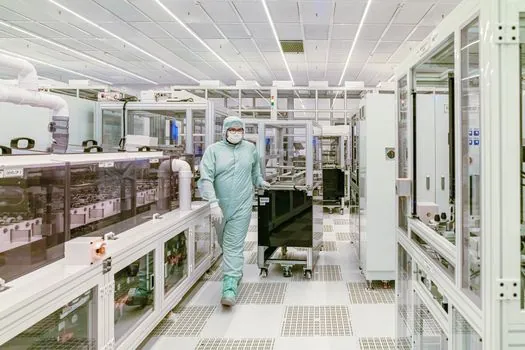
Before the purchase order is cut, lock the MTR to ASTM A240 with a 304/304L or 316/316L dual-grade certification, confirm 2B/BA/No. 4 finish on the same heat, require Ra readings on the mill cert for BA and electropolished orders, and add an ASTM A967 passivation step to the fabrication scope; for any Canadian-destined carbon plate, request origin paperwork and confirm it falls outside the PLA3 thickness and width window or carries a normal-value ruling [S1][S2][S8].
Trackable signals to watch into late 2026: any revision to ASTM A480 flatness tables (typically republished on a 3 to 5 year cadence), and any update to the CBSA SIMA PLA3 dossier tied to the next expiry review window, both of which can shift the cost-side of the wall schedule by single-digit percent with little warning.
For a wider view of how plate grade selection interacts with the rest of the facility, see the spec map on steel plate grades for industrial facilities, and for the non-cleanroom side of the same building the steel plate selection for residential construction guide shows the thinner, painted, structural-grade path that is normally excluded from the clean envelope.