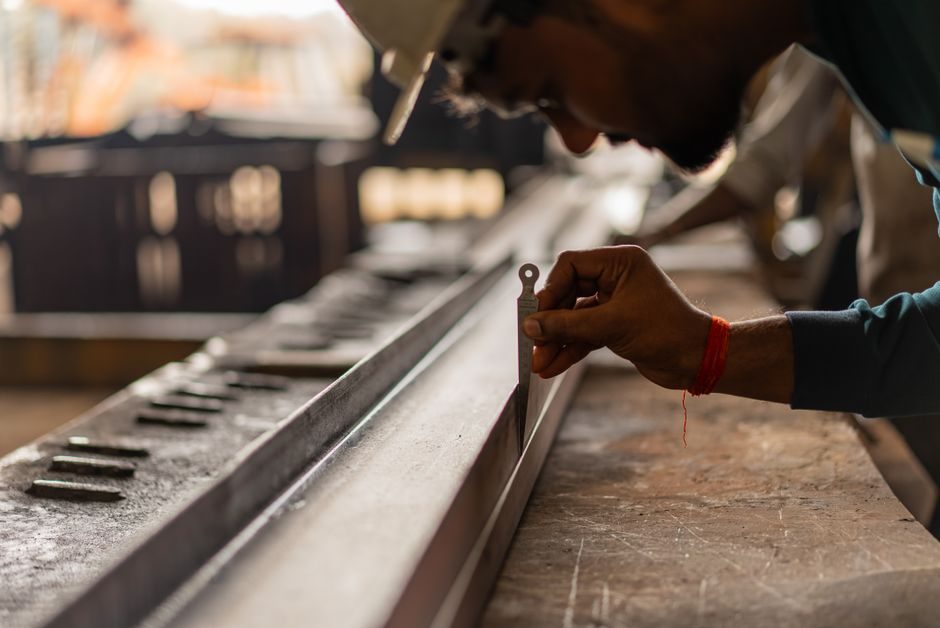
Steel plate selection starts with three numbers: thickness, width, and grade, with the steel plate category spanning roughly 3 mm cold-rolled sheet to 200 mm+ heavy plate for pressure vessel and offshore service.
Carbon steel, stainless, and clad plate follow distinct code paths, with carbon plate (ASTM A36, A572, A516) dominating structural and pressure-vessel builds; austenitic stainless (304/304L, 316/316L per ASTM A240) handling corrosive media; and clad plate (zirconium-steel, titanium-steel composite) reserved for aggressive chemical reactors [S3][S5].
Thickness, Width and Mill Capability Bands
Most service centres cut plate from 3 mm up to 100 mm as stock, with heavy-plate mills supplying 100–200 mm for thick-wall pressure vessels and offshore jackets; widths typically run 1500–3500 mm and lengths up to 12000 mm on a flame-cutting bed [S2].
SFI-Gray Steel's flame cutting service in Houston processes carbon and alloy plate into formed, rolled, and machined parts for oil-and-gas, heavy-equipment, and general industrial customers across the U.S., Canada, and Mexico, and holds ISO 9001:2015 certification for plate processing work [S2]. The line between "sheet" and "plate" is drawn at 4.76 mm (3/16 in.) in ASTM A480; below that gauge the product is a sheet, above it a plate, and the cut-edge, tolerance, and testing rules differ accordingly.
Grade Path: Carbon, Alloy, Stainless and Clad
For structural service, ASTM A36 plate remains the baseline (36 ksi yield, 58–80 ksi tensile) and ASTM A572 Grade 50 (50 ksi yield) covers most high-strength building applications [S1]. For pressure vessels, ASTM A516 Grade 70 is the workhorse for moderate- and low-temperature service, while ASME SA-387 Grade 11/22 chrome-moly plate handles elevated-temperature reactors and boiler drums.
Corrosive media drive a switch to stainless: 304/304L for general chemical and food-grade service, 316/316L where chlorides or pitting is a concern, with 2205 duplex plate specified when chloride stress-corrosion cracking risk pushes past 60 °C wet service [S3]. When neither stainless nor solid nickel alloy survives the process, zirconium-steel clad plate and titanium-steel clad plate are rolled or explosion-bonded composites that put 2–6 mm of noble metal on a carbon-steel backer, cutting material cost against a solid noble-metal build [S5].
Spec & Code Path Comparison

Carbon A36 vs A516 Gr.70 vs A240 304L vs Zr-clad: cost-low to cost-high roughly in that order, with temperature capability climbing A36 (≤ 400 °C) to A516 (–46 °C to + 425 °C) to 304L (cryogenic to 870 °C intermittent) and corrosion resistance climbing the same way; lead time follows the same curve, with clad plate commonly running 12–20 weeks versus 4–8 weeks for stock stainless. [S1]
Clad plate selection hinges on the ratio of base to cladding thickness and the bonding method (roll bonding, explosion bonding, or weld-overlay overlay). Zirconium-steel clad plate is specified for acetic acid, nitric acid, and urea reactors where zirconium's corrosion rate beats 316L by an order of magnitude but solid zirconium pressure-vessel cost is prohibitive [S5].
Sourcing, Testing and Fabrication Signals
Mill test certificates to EN 10204 3.1 are the baseline for traceable plate; third-party inspection by SGS, BV, or TUV is the next step up, and is offered as standard by Chinese export mills serving the U.S. and EU markets [S4]. Xinsteel Industrial, headquartered in Zhengzhou since 1982, exports plate, coil, angle, and seamless pipe to international customers, and Shengtian Industry Limited lists TUV/BV/SGS third-party testing and T/T, L/C, Western Union payment terms as standard commercial flow [S6].
Welding preparation matters as much as grade choice. Friction taper plug welding has been trialled by TWI for hole repair in 25 mm-diameter orbital friction welds in engineering steels including 50 mm BS 4360 Grade 50D plate, with two-pass submerged-arc weld procedures and 5 kW Yb-fibre laser cut-quality comparisons on C-Mn versus 304 stainless documented in the same core-research abstract set. For fabrication, steel plate buyers should confirm that cut edge, flatness, and ultrasonic-test scope match ASME Section II Part A or EN 10029 before signing the PO. Buyers who also cut alloy steel plate for quenched-and-tempered service should pin the spec to ASTM A829 and verify the heat-treatment certificate is on the MTC.
Cost Drivers, Lead Times and Common Mistakes
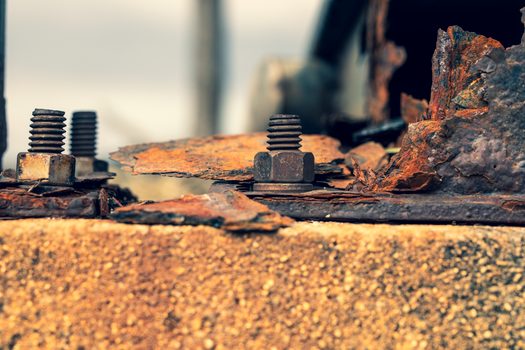
Plate cost is driven by weight, grade premium, and processing; a 25 mm A516 Gr.70 plate runs roughly 2–3× the per-tonne price of 25 mm A36 at the same dimension, and 316L carries another 3–5× premium over A36 on a per-tonne basis in normal market conditions. Buyers comparing carbon steel plate for storage tanks should also check the sour-service clause: if H2S partial pressure exceeds 0.0003 MPa, NACE MR0175 limits apply and the plate must be qualified to a sour-service grade, not the standard pressure-vessel grade. [S2]
Clad plate buyers frequently under-spec the cladding thickness: 2 mm is the minimum for zirconium-steel clad pressure vessels because corrosion allowance plus rolling tolerance consumes 1 mm of the bond zone [S5]. Another recurring error is ordering "A516" without naming the grade (60 vs 70), which produces the cheaper grade by default at many service centres.
Use Cases and Matching Logic
Storage tank floors and shells typically use A36 or A572 Gr.50; boiler and pressure-vessel shells use A516 Gr.70; offshore platform legs and节点 use A572 Gr.50 or A633; chemical reactors handling chlorides step up to 316L or 2205; and nitric/acetic acid reactors step up again to zirconium-steel clad plate. Buyers handling coil-handling drag chain cable inside steel-framed cells will also spec the plate thickness to the cable-tray support span, not just to the structural load. [S3]
For welded fabrication, plate choice feeds directly into the welding-procedure qualification: A36 to A572 can usually share a single WPS; A516 demands its own impact-qualified WPS; and 304L/316L requires an austenitic WPS with controlled heat input to avoid sensitisation. Buyers who also handle welded steel mesh for slab reinforcement should align the mesh-wire spec to the same corrosion environment as the plate to avoid mixed-service failure.
Track these signals before placing the next plate order: confirm the MTC is to EN 10204 3.1 (not 2.1), pin the impact-test temperature to the lowest expected service temperature, and check that the clad-plate bonding method is named on the certificate when ordering zirconium- or titanium-clad stock.