
Steel plate is sold under four material families — carbon steel, alloy steel, stainless steel and silicon steel — with selection driven by thickness, width, delivery state (HR, CR, normalized, quenched+tempered) and the governing standard, primarily ASTM A36/A516/A572, JIS G3101/G3106, DIN 17100/17102 and GB/T 700/1591 [S3].
Industrial sourcing in 2026 still routes through China-origin mills for general-purpose plate, with one long-running Canadian anti-dumping measure on Chinese hot-rolled carbon and HSLA plate (4.75–101.6 mm thick, 610–3,860 mm wide) still in force under CBSA measure code PLA3 [S5]. Plate-and-profile cutting service suppliers in North America — Classteel Inc., operating since 1989 in south-western Ontario, plasma-and-flame-cutting mild and stainless plate for Cambridge, Kitchener, Brantford and Guelph fabricators — illustrate the mid-tier processing tier that sits between mill and end user [S1].
Material-family classification: what each family actually contains
Alloy steel is split by total alloying content into low-alloy (under 5%), medium-alloy (5–10%) and high-alloy (over 10%), and is further sub-classified by dominant alloying element — Cr, Cr-Ni, Mn, Si-Mn systems — and by microstructure (pearlitic, martensitic, ferritic, austenitic, ledeburitic) [S6]. Carbon steel plate — the workhorse of structural and pressure-vessel work — and stainless steel plate form the other two main families a spec writer chooses between on a daily basis.
Practical plate families a buyer will see on a 2026 RFQ, with the typical application envelope: (1) carbon steel plate for general structural and non-corrosive service; (2) alloy steel plate for elevated-temperature pressure vessels and wear service; (3) stainless steel plate for corrosive or hygienic service; (4) silicon steel plate for electrical laminations, where grain-oriented grades carry the magnetic-load design. For a deeper dive into the carbon family used in structural and linepipe service, the carbon steel reference page lays out the grade trees; for the higher-alloy side, alloy steel covers the Cr, Cr-Ni, Mn, Si-Mn sub-systems [S3][S6].
Standard families and the typical thickness bands they govern
ASTM, JIS, DIN and GB remain the four standard families a 2026 plate buyer will see on a mill test certificate, with ASTM A36, A516 (pressure vessel), A572 (HSLA structural) and A387 (chrome-moly) the most-asked ASTM grades; JIS G3101 (SS400) and G3106 (SM490/SM520) the Japanese equivalents; DIN 17100 (St37/St52, now largely superseded by EN 10025) and EN 10025-2/-3/-4 the European structural grades; and GB/T 700 (Q235) and GB/T 1591 (Q345) the dominant Chinese domestic grades [S3].
The Canadian anti-dumping measure on Chinese hot-rolled carbon and HSLA plate defines the product as cut-length plate in widths from 610 mm to 3,860 mm and thicknesses from 4.75 mm to 101.6 mm, heat-treated or not, originating in or exported from the People's Republic of China — that 4.75–101.6 mm thickness band is roughly the sweet spot for structural and pressure-vessel plate and is the band most RFQs in 2026 fall into [S5]. Buyers specifying outside that band — sub-4 mm (now classed as sheet or strip) or above 101.6 mm (heavy-gauge) — move into different product codes and different anti-dumping or quota regimes. For a quick orientation on the broad material families, steel plate catalogues the four main types alongside the dominant ASTM/JIS/DIN/GB grade options.
Delivery state, heat treatment and how they change the spec
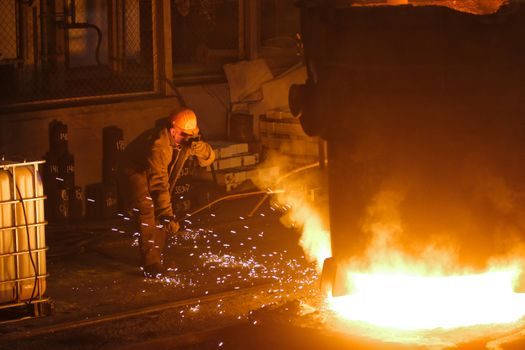
Plate can be ordered hot-rolled (HR), controlled-rolled (CR), normalized (N), quenched-and-tempered (Q+T), or thermomechanically-rolled (TMCP), and the delivery state changes both the price band and the guaranteed mechanical properties — normalized and Q+T plate carries higher impact-test guarantees (typically −20 °C or −46 °C Charpy, depending on grade) than as-rolled product of the same chemistry [S3].
For the silicon-steel branch of the family, silicon steel covers the grain-oriented and non-oriented electrical grades that are specified to thickness tolerances in the 0.23–0.35 mm range — a different product geometry from structural plate, even though it carries the word "steel" in the name. Stainless plate under ASTM A240 (304, 304L, 316, 316L, 321, 347) is the third high-volume branch, with stainless steel covering the 2B/BA/No.4/No.8 surface-finish codes a fabricator will be asked to call out on a PO. In sourcing practice, plate is also defined by its production process: a 2026 mill offering will typically list ERW/LSAW/SSAW for pipe and HR/CR/N/Q+T for plate, with the steel plate and pipe supplier product tree at AGICO illustrating that four-axis split (material × standard × delivery state × thickness) that an RFQ is normally built around [S3].
Cutting and fabrication: the service tier between mill and shop
Plate in 2026 is rarely shipped to an end user as a full mill plate — it is cut, beveled, rolled or bent by a service centre first, and the cut method (plasma, laser, oxy-fuel / flame, waterjet) is part of the spec, not an afterthought. Classteel Inc. has run a plasma-and-flame plate-and-profile cutting service out of south-western Ontario since 1989, supplying contractors, machine shops, welders, engineers, fabricators and heavy-equipment suppliers across Cambridge, Kitchener, Brantford and Guelph [S1].
One technical note that bites a lot of first-time plate buyers: stainless plate requires higher shear and stamping pressure than mild plate because the work-hardening rate is higher and the clearance between cutting tools must be tightened, otherwise burr and edge-crack rates climb — this is the same reason waterjet or laser is preferred over oxy-fuel for stainless above ~6 mm [S3]. The other practical spec gate is the plate's surface condition: hot-rolled plate carries mill scale and a roughness typically in the 100–500 µm Ra band, while cold-rolled or pickled-and-oiled plate drops into the 0.4–2.0 µm Ra band — relevant for any application where the plate becomes a visible surface (architectural cladding, food-grade tank shells) or where paint adhesion is critical.
Defect detection and quality gates on incoming plate
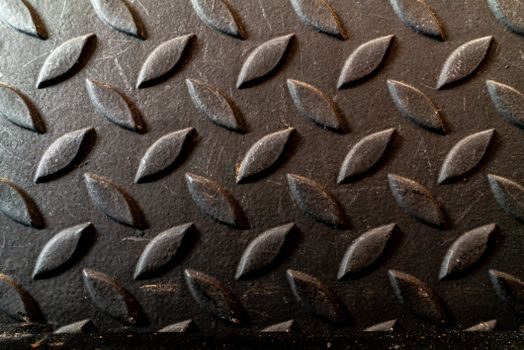
Plate acceptance in 2026 is increasingly gated by automated defect classification — the open-source Steel-fault-classifier project on GitHub implements an XGBoost-based XGBoost classifier trained on industrial steel-plate fault data, with the repository's 58-commit history showing model, metrics and figures tracked side-by-side [S4]. The seven classic defect classes on the UCI Steel Plates Faults dataset are Pastry, Z_Scratch, K_Scatch (K_Scratch), Stains, Dirtiness, Bumps and Other_Faults, and a tuned XGBoost model on that dataset typically lands in the high-80% to low-90% accuracy band — the figure is a research-paper benchmark, not a contractual guarantee.
The practical takeaway for a process engineer writing an incoming-inspection spec: do not rely on classifier output alone — combine it with visual surface inspection (mill scale, scabs, laminations), UT or MT for sub-surface defects on pressure-vessel grades, and dimensional checks against ASTM A6 / EN 10029 tolerance tables for thickness, flatness and length. The seven-class scheme used in the Steel-fault-classifier repo is a good internal-taxonomy starting point if you are standing up a vision gate at a service centre [S4].
What to verify before signing a 2026 plate PO
Five hard spec gates a plate buyer should pin down before placing an order: (1) the governing standard and grade (ASTM A36 vs A516-70 vs A572-50, or JIS G3101 SS400 vs G3106 SM490YA, or GB/T 1591 Q345B) and the matching CE / mill test certificate; (2) thickness tolerance class — ASTM A6 has a tighter "tolev" band and a looser "tolerance" band; (3) delivery state — HR, CR, N, Q+T or TMCP — because that drives the impact-test temperature; (4) surface condition — mill scale, pickled, shot-blasted, primed; (5) end-use certification — ASME U2/U3 for pressure vessels, EN 10025 CE marking for EU structural, or specific customer specs for shipbuilding (e.g. ASTM A131) and linepipe (API 5L) [S3].
Plate is also the feedstock for downstream fabricated products like welded mesh and pressure-vessel heads, so the welded steel mesh spec gates reference is a useful read-back on what a fabricator downstream of the plate service centre will be expected to deliver.