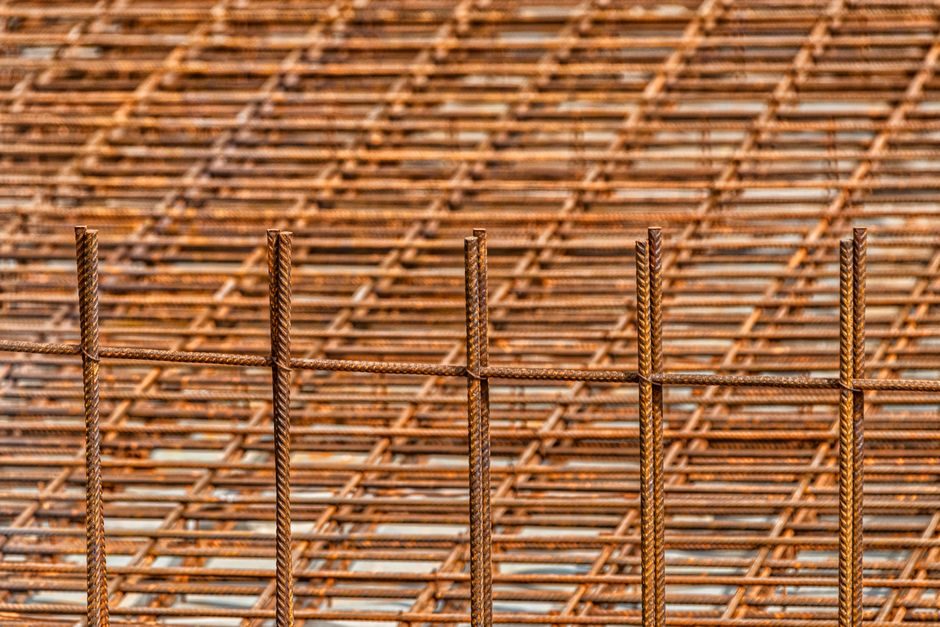
Wire rod total cost of ownership analysis on a 5-year horizon places the mill-grade purchase price at roughly a quarter to two-fifths of the full landed cost, with the remaining three-fifths to three-quarters absorbed by conversion losses, scrap/yield drag, energy, freight, and tied-up working capital [S2].
The scope of this analysis covers low-carbon and low-alloy hot-rolled wire rod in coil (typically 5.5–22 mm diameter) feeding cold heading, spring manufacture, welding electrode, fasteners, and wire rod drawing lines, where input metallurgy and dimensional tolerance cascade into downstream yield.
Five Cost Lines: Mapping Every Dollar on a Wire Rod P&L
A wire rod TCO model breaks the lifecycle bill into five cost lines that must be priced separately and then summed: (1) feedstock (rod purchase, $/t), (2) conversion (pickling, drawing, annealing, straightening, cutting), (3) scrap and yield loss (surface defects, decarburization, ductile-break rejects), (4) energy and utilities (furnace gas, electricity, water for cooling/alkaline cleaning), and (5) logistics plus working capital (inbound freight, coil handling, inventory carry) [S2]. The USPS Supplying Principles manual frames TCO as the sum of purchase, use, maintenance, support, and disposal costs — and warns that hidden costs "easily overlooked during budget planning" routinely dominate the headline price once operations run for 24+ months [S2].
For a typical cold-heading shop running 8,000 t/yr of SAE 1008/1010 rod, industry rule-of-thumb allocates roughly 30–35% to feedstock, 30–35% to conversion, 15–20% to scrap/yield, 10–15% to energy/utilities, and 5–10% to logistics plus working capital — a ratio that mirrors the broader industrial finding that purchase price is only a fraction of true lifetime expense [S4].
Decision Criteria: What Separates a Good Wire Rod Buy from a TCO Trap
Four engineering gates decide whether a mill quote is genuinely cheap or simply low on the invoice: dimensional tolerance (C-envelope ≤ 0.20 mm for diameters 5.5–16 mm), surface quality (decarburization depth ≤ 0.10 mm for critical cold-heading), mechanical-property spread (Rm ≤ 90 MPa band on a single cast), and chemical-consistency (CEV ≤ 0.25 for welding-wire rod). Each gate has a measurable scrap-cost penalty — typically $80–$220 per rejected tonne at 2025/26 European conversion rates, which is why a $20/t saving on rod that fails decarb depth can cost 8–12× that amount in downstream rejections [S3].
For selection, procurement should weigh four criteria in this order: metallurgical fitness for the end use (cold heading, spring, weld electrode, galvanizing rod), supplier reliability on tolerances and chemistry (measured as cast-to-cast σ on Rm and CEV), logistics cadence (coil mass 1.0–2.5 t, 90–120 t truck loads), and total payment terms (LC at sight vs 60/90-day net). On those four axes, integrated mills (e.g. producers with in-house billet casting and Stelmor cooling) consistently beat mini-mills on chemistry consistency, while mini-mills compete on lead time and pricing for non-critical drawing grades.
Comparison: Rod Grade vs Cost-Line Weight in a 5-Year TCO

Three rod families dominate the buying spec, and they behave very differently when the five cost lines are weighted: low-carbon cold-heading (SAE 1006/1008/1010, C 0.06–0.10%), medium-carbon spring (SAE 1050/1060/1070, C 0.50–0.72%), and low-alloy welding/PC strand (ER70S, 30MnSi, C82DA).
In a comparable TCO exercise on vacuum pumps, Busch United Kingdom notes the same lesson: the initial purchase price is "only a fraction of the total expenses incurred over its entire lifetime" [S4], and the same logic transfers to wire rod because the rod's metallurgical consistency determines the cost of every downstream process step.
Real Use Cases: Where Wire Rod TCO Diverges the Most
Spring makers (oil-tempered wire, suspension coil) face a parallel but stiffer penalty: decarb depth > 0.10 mm on 1070 rod drops fatigue life by 30–50% under 10⁶-cycle load, which is why that segment willingly pays the medium-carbon premium. [S1]
Welding-electrode and galvanizing lines are the most tolerant buyers — they accept a 0.20–0.30 mm decarb depth because the wire is fully redrawn before use — and they optimize for feedstock cost and lead time rather than metallurgical headroom. A useful parallel here is the broader industrial finding from Springer research: TCO "combines purchase and operating expenses to identify the most economical" choice, and is sensitive to local fuel, tax, and financing parameters that change by region [S1]. For wire rod, the equivalent regional variables are scrap-steel export price, electricity tariff, and truck/rail freight — see how a comparable vacuum die casting TCO line is built for casting pumps to calibrate the methodology.
Limitations, Failure Modes and Hidden Costs
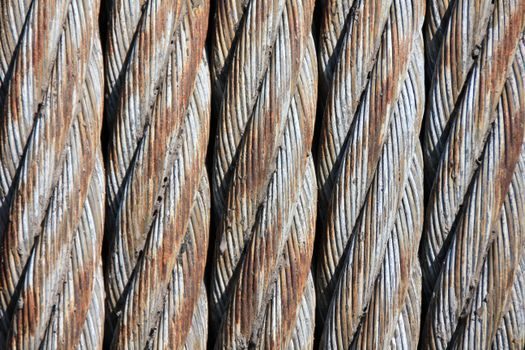
[S2]
A further failure mode is treatment of "free" mill credit: mills offering $30/t scrap-back credit often pay net-90, which is itself a 2.5% effective cost when WACC is 10%. Oracle's hardware-deployment TCO table flags the same blind spot: "more, smaller hardware systems" look cheap on CapEx but lose on integration overhead, exactly as a multi-source low-tonnage rod strategy looks diversified but loses on freight and quality-clerk labor [S5]. Specifiers should therefore refuse any TCO sheet that does not separately list scrap yield, energy, and working capital lines.
Sourcing, Standards and Trackable Signals
The governing standards on rod acceptance are ISO 16120 (wire rod for cold heading), ASTM A510/A510M (general wire rod), JIS G3506 (carbon), and GB/T 701 / GB/T 14981 for Chinese-origin supply; chemistry ceilings for weld-grade rod are pinned by ISO 14171 and AWS A5.17/A5.23, while decarb and surface limits follow ISO 16120-2 §6.3. Procurement should require the mill test certificate to carry cast-level C, Mn, Si, S, P, CEV, plus decarb max and Rm/Elongation, and reject any quote that prices the rod without naming a standard. [S3]
A side-by-side with welded steel mesh TCO is useful because mesh producers face the same five-cost-line structure off the same feedstock, and a cross-check against wire rod installation confirms the conversion cost line assumptions.
For component-level specifications, see total station, and draw wire sensor.