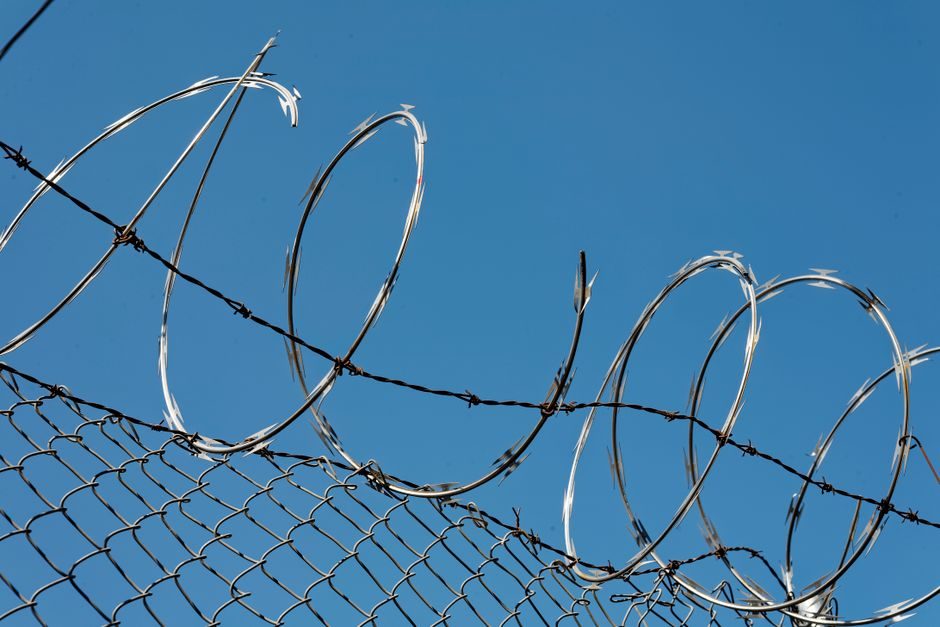
Wire rod is hot-rolled semi-finished steel coiled at the mill (typical coil weight 1.5–2.5 t, common diameters 5.5–32 mm) and must be uncoiled, straightened, and descaled before any cold drawing or heading operation — installation discipline at the payoff stand determines surface-quality reject rates downstream [S2].
For process engineers, the scope is bounded: site layout, payoff stand selection, descaling chemistry, straightener alignment, and pre-draw cleaning — every gate that protects drawing-die life and tensile-tolerance conformance to ISO 16120-1 (non-alloy wire rod for cold heading) and ISO 16120-2 (general purpose) [S2].
Definition, Grades and Where Wire Rod Stops Being "Wire Rod"
Wire rod is defined in trade dictionaries as "线材/盘条" — hot-rolled coiled stock supplied in the as-rolled or as-control-cooled state, intended for subsequent cold working rather than direct structural use [S2]. Carbon content, deoxidation practice and grain-size control all matter; the relevant reference is ISO 16120-1 for cold-heading wire rod and ISO 16120-2 for general-purpose rod.
For typical cold-heading feed, suppliers quote rimmed, capped or killed steel grades (e.g. C4D, C8D, C10C, C15C families in ISO 16120-1). Higher carbon (≥ 0.60 % C) routes to wire rope, spring and PC strand, while low-carbon rimmed/capped rod is preferred for nail, fencing and welded-mesh applications where surface drawability outweighs strength [S2].
Five-Stage Installation Sequence: Payoff, Descaling, Pre-Coating, Straightening, Drawing
Sequence matters because the same line cannot be re-ordered without changing tooling and lubricant chemistry: a mill-floor standard flow is (1) horizontal or vertical cantilever payoff, (2) mechanical or hydraulic descaling (bending-scale breaker + acid or shot blast), (3) optional phosphate or borax pre-coating, (4) multi-roller vertical/horizontal straightener, (5) draw dies and capstan. A vertical payoff (rotating upcoil) is normally specified for coil weights above 1.5 t because the inverted geometry lets the coil release without torsion back-kink [S2].
Descaling choices split cleanly: mechanical (shot-blast or bending-scale breaker) avoids acid-handling cost; chemical (HCl or H2SO4 pickle) gives lower surface roughness and is required for high-finish plating wire but adds waste-treatment load. Lines destined for wire rod used in upholstery and mattress spring coils (typical 1.0–4.0 mm finished wire) often run only mechanical descaling; fastener wire heading into a cold-heading press usually runs acid pickle plus phosphate coating for die-life protection [S2].
Specification Comparison: Mechanical vs Chemical Descaling at Install

Decision criteria for picking a descaling path: surface roughness Ra, capex, effluent handling, and material yield loss. Mechanical descaling scores on capex (one-shot, no acid line, lower regulatory load) and effluent (dry, recyclable shot); chemical descaling scores on Ra (typically 0.4–1.6 µm finished vs 2.5–6.0 µm from shot blast alone) and on yield (0.3–0.8 % acid loss vs 0.5–1.2 % shot-blast spalling) — but requires HCl or H2SO4 tanks, fume scrubbing, and acid-regeneration capacity [S2].
For a plant installing 5,000 t/yr of low-carbon rod for nail and fence wire, mechanical descaling is the lower-capex choice and matches the surface-roughness tolerance downstream customers accept. For a plant feeding cold-heading presses at 0.5–8 mm wire into fastener production, chemical descaling plus phosphate is justified because die wear on the cold-header drops measurably and ISO 16120-1 surface-grade acceptance becomes easier to evidence on mill certs [S2].
Alignment, Tolerances and Foundation Gates
Straightener roller alignment is the most under-controlled gate on most retrofits. Roller parallelism is held within 0.05 mm across the working face, and the entry-side guide must be coaxial with the payoff's vertical axis within ±1.5 mm at the die entry — any larger and the rod walks laterally on the first die, causing immediate overwear on one die land [S2].
Foundation tolerances also need to be specified before civil work: a 2 t horizontal payoff stand with cantilever mandrel needs an isolated pad of at least 25 MPa allowable bearing with anchor-bolt pockets cast to ±5 mm; vertical (rotating) payoff stands transfer moment into the foundation and ask for 30 MPa pads with anchor tolerance ±3 mm. The comparison is simple: heavier coil weight + vertical geometry = stiffer foundation, and the stacker crane installation reference engineering gives the same kind of pad-density logic for heavy rotating machinery.
Sensor and Instrumentation Hookups
Wire-drawing payoff stands need a tension-measurement device at the capstan, and for fine wire below 1.0 mm a dancer arm with a position sensor (typically a 0–10 V analog or pressure transmitter-style load cell behind the arm) is standard. A break-detection loop on each die block, usually a rolling-contact micro-switch or a current trip on the capstan drive, is the failsafe that prevents coil pile-ups downstream [S2].
For throughput accounting, a flow meter on the acid-pickle circulation loop and a conductivity probe on the rinse stage are the routine instrument additions; without these, ISO 16120-1 mill traceability on surface quality is hard to defend during a customer audit. Where a new line is being built next to an existing linear guide for material handling, the same instrumentation bus can be reused, but the wire-drawing loop must be electrically isolated from the linear-guide servo bus to keep VFD noise out of the tension signal.
Common Failure Modes at Commissioning
Three failure modes repeat across green-field wire rod installations: (a) bird-nesting on the first draw block because the capstan ramp is too aggressive; (b) slip on the capstan because the surface speed of the block has not been matched to the die-reduction ratio; (c) lateral rod walk on entry because the payoff snout and the first die are not on the same horizontal plane. All three are commissioning-time problems, not warranty problems, and they are caught by a five-field gate test pattern that mirrors other heavy-equipment acceptance logic such as the vibrating conveyor installation routine. [S1]
Operators also report scarfing-mark cracks on the rod surface that survive descaling and then open at the first die — these almost always trace back to a control-cooling problem at the rolling mill, not to the install, and should be caught at goods-in inspection against the mill cert's surface-grade callout (typically A, B or C per ISO 16120-2). If cracks are present, no amount of in-line descaling will hide them, and the corrective action is to the supplier, not the line.
Standards, Traceability and Sourcing Signals
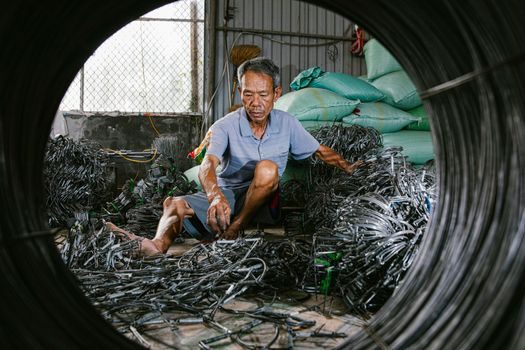
The minimum documentation set at goods-in for a wire-rod shipment is: mill certificate with heat number, chemical composition (C, Mn, Si, S, P, plus any microalloys), mechanical properties (Rm, Re, A%), dimensional tolerance (diameter, ovality), surface grade, and coil weight. ISO 16120-1 (cold-heading wire rod) and ISO 16120-2 (general purpose wire rod) are the two reference documents the spec should name; for alloy and spring wire the equivalent is ISO 16120-3 / ISO 16120-4 [S2].
On the supply side, the global wire-rod merchant market trades in standard 1.5–2.5 t coils and (in some regions) 0.5–1.0 t sub-coils for smaller payoff stands. The wholesale trade pattern visible on the Argentina-side supplier index in the Okorder catalogue shows wire rod listed alongside steel coils and steel pipe, which signals the same distribution channel moves rod, hot-rolled coil and pipe-end fittings together — useful when consolidating an RFQ if a plant also buys crossed-roller guide rails and other precision-machined components from the same regional fabricator [S2].
Verifiable next node: confirm the mill cert's surface-grade callout (A/B/C per ISO 16120-2) at goods-in and reject coils carrying grinding cracks before descaling; follow-on signal is the capstan current trend over the first 100 coils, where a rising baseline indicates die wear or under-descaled rod reaching the draw block.