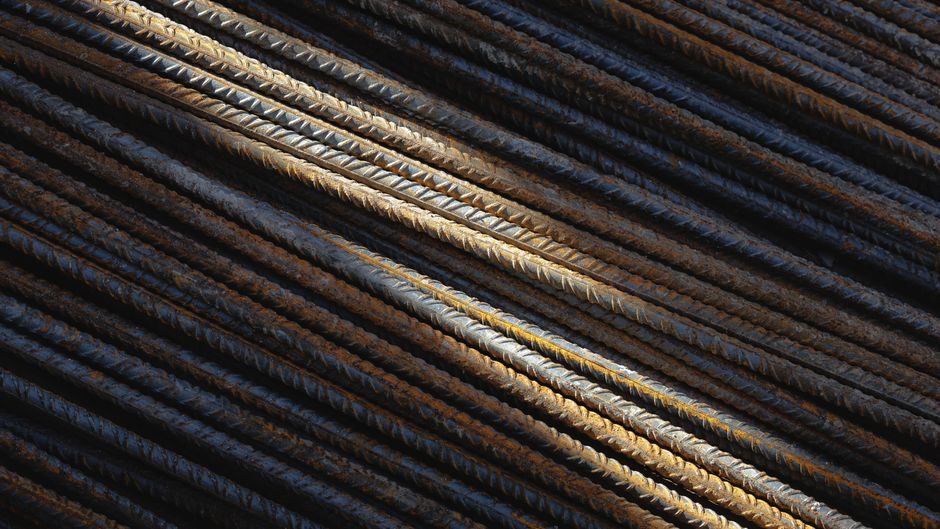
China-origin steel still anchors global supply for stainless steel, carbon steel, alloy steel and silicon steel grades, with made-in-china.com alone listing 304/304L/316/316L wire-mesh SKUs at FOB US$19.32 per roll with a 1-roll MOQ [S1].
Most newcomers underestimate the channel mix. A sourcing project for 50 t of alloy steel round bar typically touches 3-4 platforms before the actual mill is named: aggregators (made-in-china.com, Alibaba 1688 global), chemicals/steel verticals (guidechem for additives, dedicated steel apps), specialised trading houses (OSTEEL, 25-year ex-Baosteel staff, Shanghai 200135), and Western-facing procurement agents (China Global Sourcing in the US) [S3][S4]. The non-obvious trick: trader's pre-inspection at ex-works is a real differentiator, not a marketing line [S3].
Channel mix: marketplace vs trading house vs direct mill
For sub-5 t orders, the marketplace is the correct tool; for 20 t+ orders, contact a trading house or mill directly.
OSTEEL's positioning illustrates the trading-house model: ex-Baosteel management, Pudong office (58 Changliu Road, Zendai Cube Edifice Rm 708), 25 years in special steel, and an explicit promise to dispatch technicians for pre-shipment inspection on top of the mill's own QC [S3]. Their catalogue covers hot-forged round bar, abrasion-resistant plate, hot-rolled tool-steel flat bar, heavy plate, and forgings — exactly the alloy steel and tool-steel SKUs that a Western machine shop or mining-equipment OEM actually needs in 5-50 t lots [S3].
China Global Sourcing (cgsourcing.com) and Made-in-China's own Sourcing service (sourcing.made-in-china.com) cover the agent model — useful for first-timers who need sampling, prototyping, testing, certification, customs clearance, and worldwide shipping as a bundle [S4][S5]. Agent fees typically run 5-8% of order value, but they earn their margin by preventing the classic first-timer mistakes: wrong grade certificate, mixed-lot heat numbers, and MTC mill-test-certificate paperwork that won't pass incoming inspection at your plant.
Grade families and the standards that actually govern them
For a 2026 buyer, the decision tree is sharper than it looks. Carbon steel covers Q235, Q275, A36, A572, S235-S355 — structural shapes, plate, rebar — and is governed for Europe by EN 10025, for the US by ASTM A36/A572. The hot-rolled heavy plate and stainless steel flat bar flowing through Chinese mills must carry a mill test certificate (MTC) per EN 10204 3.1 to be accepted in EU machine-building and pressure-equipment work; the 2.1 certificate is a "compliance with order" statement and is not a test report. [S1]
Stainless steel sourcing centres on 304, 304L, 316, 316L, 321, 310S, and the duplex 2205/2507. The marketplace data in [S1] — 304, 304L, 316, 316L — is the commodity quartet; if a buyer's spec calls for 904L, 254SMO, or super-duplex, the path moves off the marketplace and into a mill or stockist conversation. Austenitic 304/316 is the safe default for general corrosion; switch to 316/316L when chloride exposure crosses roughly 200 ppm, and to duplex 2205 when you need higher strength and improved stress-corrosion-cracking resistance.
Alloy steel is the category that confuses first-time buyers because "alloy" in Chinese mill catalogues includes everything from 4140/4340 quenched-and-tempered rounds to 12L14 free-machining and 52100 bearing steel. OSTEEL's product list — hot-forged round bar, tool-steel flat bar, abrasion-resistant plate, grinding ball — maps to 4140/4340/SKD11/D2/AISI 52100/HB400-HB500 territory [S3].
Silicon steel is its own niche: non-oriented (CRNGO) grades like 50W470, 50W600, 50W800 for motors and small transformers, and grain-oriented (CRGO) grades like 30Q120, 30P120 for power transformers. Chinese mills (Baosteel/Wuhan Iron and Steel/Shougang) dominate CRGO globally; specify core loss in W/kg at 1.5 T / 50 Hz (or 1.7 T / 50 Hz) and you have an unambiguous procurement spec.
MOQ, lead time, and the price shape behind the headline FOB number

Steel shelter listings on the same platform cluster at US$18-30 per square metre MOQ 1 sqm, illustrating the structural-products pattern — buyers pay a per-piece premium that vanishes at full-truck or full-container scale.
For mill-direct, expect MOQs of 5-20 t on common austenitic stainless steel grades and 20-50 t on tool alloy steel. Lead times run 25-40 days for stocked grades and 45-75 days for custom heats. The 30/70 TT (30% deposit, 70% against copy of B/L) is still the default; an L/C at sight is common on first orders above US$50k because it shifts payment risk to the issuing bank.
Incoterms matter more than many buyers realise. FOB Shanghai leaves you paying ocean freight, marine insurance, and Chinese export clearance; CIF your-port adds freight and insurance to the seller's side; DDP your-warehouse removes the buyer's customs headache but invites the seller to inflate the line items. For a buyer's first three orders, CIF + L/C is the lowest-friction option.
QC stack: certificate, inspection, third-party test
Three layers separate a good Chinese steel shipment from a bad one. Layer one is the mill test certificate (MTC) per EN 10204 3.1 — chemistry, mechanical properties, heat number, and traceable to the actual heat. OSTEEL's explicit commitment to "dispatch technicians to inspect the goods before ex works" is layer two: supplier-side pre-shipment inspection (PSI), typically dimensional check, visual, and PMI (positive material identification) on a sample [S3].
Layer three is the buyer's third-party inspection: SGS, Bureau Veritas, or TÜV, called in at the mill after final packing. On first orders, budget US$300-500 per man-day plus expenses; on repeat business, the cost drops or the cadence drops to every third shipment. PMI with an XRF gun takes 30 seconds per sample and catches the classic 304-vs-201 substitution that still occurs in cut-price lots.
Cross-reference the heat number on the MTC against the stamp on the bar/plate/coil. If the numbers don't match, the lot is mixed and the supplier should sort it before container loading. This is not negotiable for alloy steel entering aerospace, mining, or pressure-equipment supply chains.
Common failure modes and how to avoid them

The five recurring failure modes for China-sourced steel in 2026 are: (1) wrong grade substituted for cheaper one (304 in place of 316, Q235 in place of Q275, A36 in place of A572); (2) thickness/width below nominal tolerance, especially on hot-rolled plate; (3) surface defects — scale, scratches, pitting — on cold-rolled stainless steel; (4) missing or altered MTC paperwork; (5) the shipping-mark mix-up that lands the wrong lot at the wrong consignee. Each is caught by a different part of the QC stack above; none is caught by a single inspection at destination. [S2]
That structure prices out the grade-substitution failure mode, because the buyer's incoming lab has a reference sample at all times.
For machine shops and fabricators that also cut titanium, the titanium bar stock price and cost guide: 2026 range, drivers and sourcing map is a useful cross-read — the trading-house model in Shanghai that serves aerospace-titanium buyers is the same one that serves special-steel buyers, and the QC stack is nearly identical.
Decision matrix: when to use which channel
Order size under 5 t, one-off, no spec criticality (fencing, decorative mesh, non-structural brackets) → made-in-china.com direct, 1-roll / 1-sqm MOQ, accept the premium, FOB or CIF, TT payment [S1]. Order size 5-50 t, machine-shop or OEM use, MTC required → trading house such as OSTEEL with ex-works PSI, or direct mill after a platform RFQ, with a 30/70 TT and EN 10204 3.1 certificate [S3]. Order size 50 t+, multiple grades, repeated business → move to direct-mill relationship with a master supply agreement, layer in third-party inspection (SGS/BV/TÜV) and an L/C at sight for the first three shipments.
For buyers in the Americas, China Global Sourcing's service catalogue (sourcing, factory inspection, custom manufacturing, sampling, testing/certification, customs clearance, worldwide shipping) is the closest analogue to a single-vendor solution [S4]. For buyers running RFQs alongside tent or paper-procurement projects, Made-in-China's "Easy Sourcing" feed is the lowest-friction discovery tool [S5].
Beyond steel, the same Shanghai trading-house channel sources structural profiles, pipe, and fabricated metal components — Shandong Xinyongfeng's structural-steel and pipe operation at metalsteelpipe.com is one of many, with the same EN/ASTM grade matrix and the same MTC workflow.
Trackable signals to watch through the rest of 2026

Two signals are worth monitoring between now and year-end. First, the stainless steel scrap-nickel ratio and the LME nickel price; a move in either direction resets the 304/316 base price inside 30-45 days, and Chinese mills adjust FOB quotes weekly. Second, the China export rebate adjustments on hot-rolled plate and cold-rolled coil; each percentage-point shift in the rebate moves the export offer by roughly the same margin, and rebate changes historically arrive with 15-30 days' notice. [S3]
For a 2026 buyer, the practical next step is to lock in the MTC wording (EN 10204 3.1, with chemistry and mechanicals per ASTM A240 for stainless steel or EN 10025 for carbon steel) on the PO template, and to book the third-party inspection slot with SGS or BV before the mill schedules the heat — not after.