
In 2026 the steel buyer's job is no longer beating last quarter's index price — it is defending allocation. Purchasing-practice positions "securing position" as the explicit replacement for cost optimization in constrained supply markets, framing procurement as a strategic function rather than a transactional one [S2].
This guide is written for industrial buyers at OEMs, fabricators, and EPCs that consume hot-rolled coil, plate, structural sections, stainless steel, electrical steel, and pipe, and that need a defensible grade-form-mill-country decision tree and a contract structure that survives an allocation event.
Grade and Form Selection: Match the Spec Before You Match the Mill
Before talking to a mill, fix the metallurgical envelope: tensile/屈服 range, impact temperature, forming method, corrosion class, and any fabrication code that pins the grade (ASME, EN 10025, JIS G, API 5L). The decision between carbon steel, HSLA, and alloy steel is set by the weakest downstream step — usually welding or low-temperature service — not by the base price. [S1]
For electrical and magnetic components, silicon steel grade (grain-oriented vs non-oriented, typical 0.23–0.35 mm thickness, 3% Si typical) is selected first because only a handful of mills globally can deliver the core-loss and permeability window the design needs; this collapses sourcing options before any commercial negotiation starts. Form then drives quantity and lot size: coils (HR/CR/galvanized), plate, sections (UB/UC/IPN/HEA), pipe (seamless vs welded, line vs OCTG), and bar.
Sourcing Model: Decide Between Mill-Direct, Service Center, Stockist, and Digital Marketplace
Four channels are live in 2026, and each carries a different risk/lead-time/cost profile: (1) mill-direct contracts for high-volume, repeat-grade buyers; (2) service centers for cut-to-size, blanking, and just-in-time delivery; (3) stockists/distributors for spot and small lots; (4) digital B2B platforms such as Hashtagsteel for regional brand aggregation and price discovery [S3].
Mill-direct wins on unit cost and grade depth, but loses on MOQ (often 20–100 t per heat), 4–12 week rolling lead times, and exposure to mill mix changes during allocation. Service centers trade a 10–25% price premium for 1–3 week lead times and the ability to absorb small-batch demand, which suits job shops and EPC spares. Digital marketplaces primarily add transparency on regional price differentials and brand availability rather than moving tonnage on their own. The wrong call is using a mill-direct contract for sub-MBQ tonnage, or a service center for an exotic grade neither stocks nor processes.
Mill Geography and Industrial Policy: Country of Origin Is Now a Hard Spec
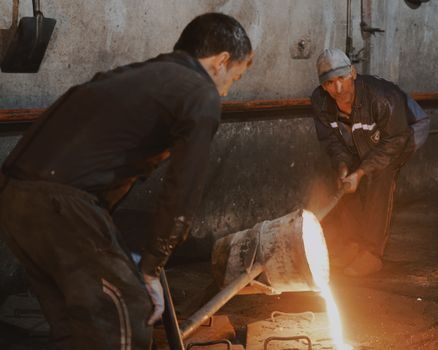
Steel is the test case for industrial-policy-aware procurement: CBAM, anti-dumping duties, US Section 232, and local-content rules (India PLI, EU Net-Zero Industry Act) now sit alongside chemistry and mechanical properties on the buyer's checklist. Nippon Steel publishes a dedicated Machinery & Materials Procurement policy with a separate IR briefing track, signaling that supplier selection at major mills is itself a strategy-level decision [S1].
Country of origin drives three concrete numbers in 2026: (a) the CBAM embedded-emission declaration burden when sourcing into the EU; (b) anti-dumping duty exposure on specific HRC/plate/stainless categories from named origins; (c) local-content percentage thresholds that gate eligibility for public-project bids. A "lowest-cost mill" that is locked out of the destination market by a duty or a content rule is not actually the lowest cost — the duty, the rework, or the disqualification is the real landed cost. Buyers should map each grade to a 2-country minimum sourcing footprint to keep an allocation event from becoming a line-down event.
Contract Structure: Price, Volume, Allocation, and Data Clauses
[S2]
The allocation clause is where 2026 contracts actually break or hold: it must define the trigger (declared allocation event), the pro-rata mechanism, the cure period, and the audit right. Without those, the buyer has a price contract, not a supply contract. Index-linked pricing is now standard because it lets both sides survive volatility without renegotiating every quarter, but the index choice must match the grade (HRC index ≠ plate index ≠ scrap-based rebar index).
Internal Capability: What the Buying Team Must Own in 2026

Procurement platforms in 2026 frame the function as "procurement as strategy," not as a back-office PO desk — meaning the category team must own market intelligence, supplier risk, and sustainability data, not just RFQs [S2]. For a steel category that means three concrete capabilities: continuous price/index monitoring with grade-level granularity, a live supplier-risk scorecard (financial, geopolitical, ESG, capacity), and a demand-forecast shared with key mills at rolling 6–12 month horizon.
The minimum staffing model is one senior category manager per major grade family plus a market-analyst function, even in mid-size fabricators.
Failure Modes and Constraints: Where Steel Strategies Actually Break
Three failure modes recur in 2026 steel sourcing: (a) grade substitution by the mill during allocation (a "similar" grade that does not actually meet the impact, chemistry, or surface spec the design assumes); (b) certificate fraud or downgraded EN 10204 documentation on spot purchases; (c) logistics-driven miss — booked tonnage that sits at port or on a railcar while the line waits. Each has a different mitigation: written substitution-approval rights, mandatory 3.1/3.2 with independent lab verification on critical lots, and owned or contracted inland logistics rather than spot trucking. [S3]
The hard constraints that bind the strategy: mill MOQs, rolling-program visibility (most mills publish a 6–10 week rolling schedule), and CBAM reporting windows. The buyer's job is to fit inside those constraints, not to negotiate them away — attempting to force a mill below its MOQ or outside its rolling cadence just routes the order to a re-roller with thinner quality margins. Related wire mesh panel specification and flame arrester versus seamless steel pipe decisions inherit the same grade-and-mill logic and benefit from a shared supplier base where overlap exists.
Track these signals over the next quarter: CBAM Phase 2 reporting thresholds and any revisions to the EU embedded-emissions default values for blast-furnace routes; Q3 2026 producer-price moves on HRC, plate, and electrical steel; and any new anti-dumping initiations from the EU, US, or India on hot-rolled and stainless categories. Three of these moving in the same direction usually marks the start of the next allocation cycle.