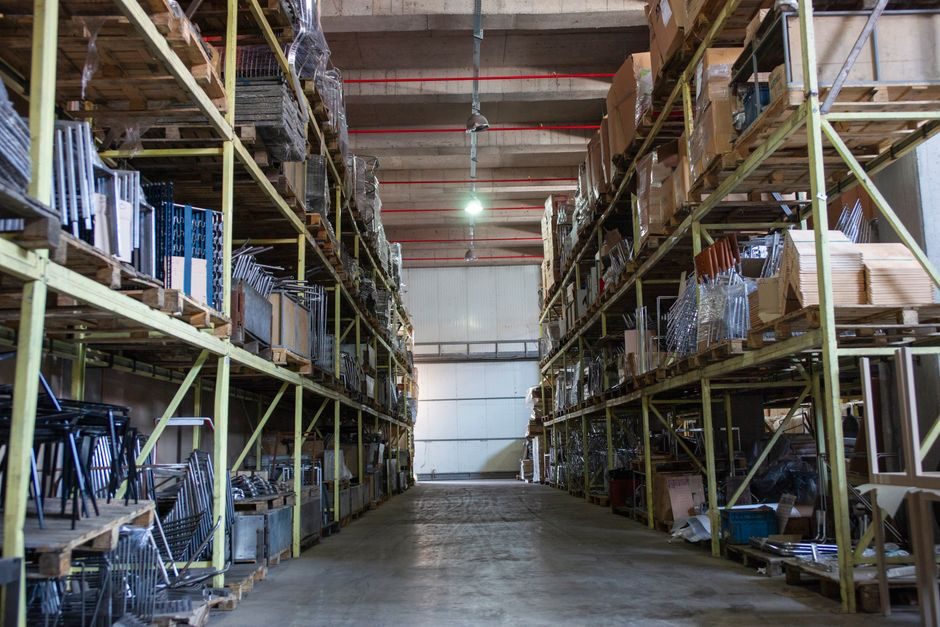
Selective pallet racks are the most widely deployed storage-rack configuration in North American warehouses, prized for low cost and full SKU access, with alternatives — double-deep, push-back, drive-in/drive-through, pallet flow, mobile, cantilever, and ASRS — selected against SKU count, pallet velocity, and aisle-to-density trade-offs [S3][S5][S10].
The 40" × 48" GMA pallet remains the design baseline for beam length and upright depth in most U.S. distribution-center layouts, and medium-duty light-shelf ratings are typically segmented around 200 kg per level (light-medium) and 300-500 kg per level (medium) [S3][S4].
Selective Pallet Rack: The Default Configuration
Selective pallet rack systems provide one-pallet-deep access to every load position, making them the default for high-SKU-count facilities where order-picking frequency outweighs raw storage density [S5][S10]. Frames are boltless or bolted, beams typically have a teardrop or step-beam safety-locking interface, and overall frame heights in CSI-format specifications are commonly capped at 276" for standard-duty installations [S8].
For cold-storage retrofits, hot-dip galvanized or powder-coated frames are routinely substituted to extend coating life in sub-zero condensating environments, and selective racks are the only style that allows true random-access to every pallet — the trade-off being roughly 35-40% of the floor footprint consumed by aisles when bays are spaced for counterbalance reach trucks [S3].
Double-Deep, Push-Back, and Drive-In for Higher Density
Drive-in and drive-through racks are the densest configurations for unit-load block storage, with drive-in (single entry) running LIFO and drive-through (entry + exit) enabling FIFO; both rely on the fork truck driving into the structure, which typically reduces impact damage rates only when column protectors and rail-guided trucks are specified together [S3][S10]. Cantilever racks, by contrast, are the engineered choice for long loads — lumber, pipe, bar stock, furniture — because the front column is eliminated and arms can be set at 24" or 36" vertical centers [S3][S7].
Load-Class Boundaries and Beam Selection
Light-duty shelving for hand-loaded carton picking is generally specified at 100-200 kg per shelf, while medium-duty racks cover the 300-500 kg/level range and heavy-duty selective systems step up to 1,000-4,000+ kg per beam pair depending on profile, length, and steel grade [S4].
Component-side selection matters: structural channel uprights and structural-angles (welded C-section) are specified where fork-truck impact is anticipated, whereas roll-formed teardrop columns dominate cost-sensitive selective builds; RIDG-U-RAK publishes a structural-channel plus reinforced-column nomenclature with row spacers and front-to-back beam ties as standard companion parts in its pallet-rack catalogue [S9]. Selective pallet rack beams are typically specified as a pair, with capacity per pair — not per beam — and capacity dropping materially as beam length grows; specifiers should match the published load chart to the exact length and frame-to-frame clear dimension, not a nominal 96" or 108" value [S7][S9].
High-Density and Automated Storage Choices
For FIFO at high density, pallet flow racks use inclined roller or wheeled tracks with brake-rollers to stage pallets at the pick face, while mobile racking systems run the entire rack structure on floor-embedded rails to eliminate fixed aisles — a configuration that can compress storage footprint by up to roughly 50% versus selective at the cost of moving-mass control and aisle-shift cycle time [S10].
Where throughput, accuracy, or labor cost dominate, ASRS — including unit-load stacker-crane miniload, vertical-lift module (VLM), and carousel systems — replaces the fork truck entirely, and shuttle-based shuttle systems are now a common hybrid for high-density FIFO with single-load face access. Specifying the wrong rotation discipline is the most common cause of re-slotting churn: drive-in should be LIFO-only, drive-through FIFO-only, and pallet flow FIFO-only, and these are the three rotation rules codified in RMI/ANSI MH 16.1 guidance that most U.S. engineered submittals reference [S3][S10].
Comparison of Main Rack Types Against Decision Criteria
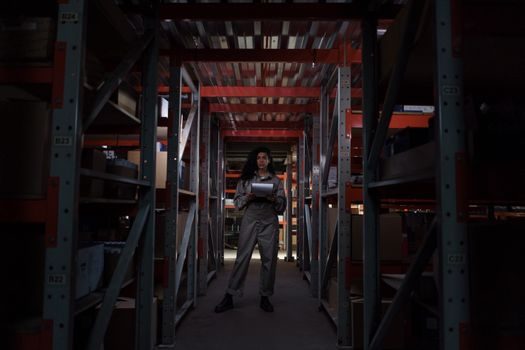
The four criteria that drive most rack selection are: storage density (pallet positions per square foot), SKU accessibility (random vs. sequential, FIFO vs. LIFO), unit-load range (light, medium, heavy), and cost-per-position including truck and accessory cost. Selective racks score high on accessibility and unit-load range, low on density and per-position cost; drive-in/drive-through invert that pattern with high density and low cost-per-position but only block-access storage; push-back and double-deep sit in between; pallet flow and mobile close the gap on density while preserving rotation discipline [S3][S10].
For long or odd-shaped goods, cantilever is the only category that fits — standard selective or drive-in cannot accept lumber, pipe, or furniture without custom dunnage — and the storage rack family as a whole is normally specified against the Rack Manufacturers Institute (RMI) ANSI MH 16.1 standard for U.S. engineered layouts, with seismic-zone multipliers applied per the local building code rather than the rack catalogue [S3][S8][S10].
Spec Submittals, Codes, and Engineering Documentation
A complete CSI-format pallet-rack submittal requires manufacturer product data, installation instructions, and a load-capacity chart that substantiates the products meet the contract documents; this is the same package most U.S. specifiers use to anchor engineered seismic calculations [S8]. Overall height limits in the same spec example are 276" for item S4, 144" for S5, and 180" for S6, with footplate excluded from the stated height — a typical ceiling-clearance envelope for warehouses served by stand-up counterbalance or reach trucks.
RIDG-U-RAK is identified as a founding member in good standing of the Rack Manufacturers Institute (RMI), the body that maintains ANSI MH 16.1, which is the standard most U.S. engineered racking submittals are checked against [S9]. Outside the U.S., EN 15635 governs the use and inspection of static steel shelving and pallet racking, while AS 4084 covers Australia and SS 506 : Part 1 covers Singapore — specifiers should pin the applicable regional standard on the drawing rather than defaulting to a U.S. reference [S3].
Limitations, Failure Modes, and Where Racks Are the Wrong Tool
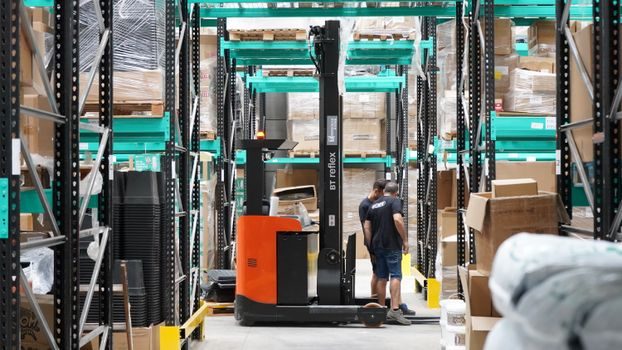
Storage racks are the wrong tool for very small parts that should be in bin shelving or storage cage systems, for hazardous goods that require segregated containment, and for any load where the unit weight exceeds the published beam-pair rating for the installed beam length; over-specifying beam length is the single most common engineering error and typically surfaces as beam deflection rather than collapse [S4][S7].
Damage from fork trucks is the dominant in-service failure mode: column deflectors, end-of-aisle guards, and rail-guided truck specifications reduce impact frequency and are required by most insurance carriers on drive-in installations, and any rack with visible 3°-plus column lean or twisted beams should be unloaded and inspected against EN 15635 / RMI guidance before being returned to service [S3][S10].
Trackable signals to watch over the next planning cycle: RMI/ANSI MH 16.1 seismic-anchor updates for high-risk U.S. zones, the spread of shuttle-based hybrid systems into mid-size e-commerce DCs, and the migration of medium-duty shelving from roll-formed teardrop back to structural-channel framing for cold-storage retrofits. The pallet rack category continues to absorb design pressure from rack-supported buildings and from automated storage integration, both of which compress the spec window and push more engineering onto the racking supplier.
See also our earlier report, Injection Molded Part Types and Industrial Applications: A 2026 Spec Map.