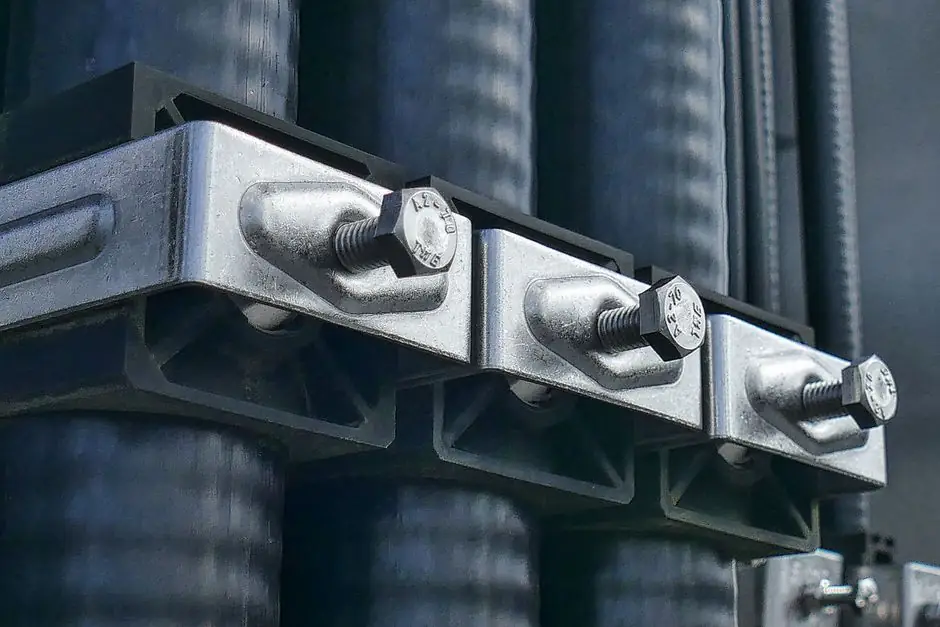
Type A strapping is a smooth, unembossed ribbon, while type Z strapping carries an embossed, ribbed surface across the strap face; the embossing on Z is the single biggest variable controlling how the strap behaves inside a strapping machine tensioner and seal path.
Both grades are commonly run on the same semi-automatic and automatic PET lines, but the tension they accept, the tension they keep, and the way they fail under shock load diverge sharply, which is why packaging engineers spec them by load profile rather than by generic breaking strength alone.
What "Type A" and "Type Z" Actually Mean on a Spec Sheet
Type A denotes flat, unembossed polyester (PET) strapping with a smooth, glossy face; type Z denotes embossed PET strapping whose surface is intentionally textured with raised ribs running across the strap [S4][S5].
The two surface states are not cosmetic: the embossed pattern on Z increases surface friction, which is what the seal-jaw, the tensioner drum, and the welded joint actually bite into. A running line commonly stocks strap widths of 9, 12, 15.5, and 19 mm, in thicknesses from roughly 0.5 to 1.27 mm, with the same nominal width available in either surface state [S4].
Applied Tension and Elongation at Break
Type A PET typically breaks at higher absolute tensile load than a same-dimension type Z, because the cross-section carries uninterrupted oriented polymer chains, while Z loses a small fraction of gross cross-section to the embossing pattern [S4].
Type A's working elongation at break commonly lands in the 10 to 14 percent range, while embossed Z tends to run a few points higher because the ribs stretch before the core does; for a given strap size the gap is small (often under 2 percentage points) but visible on a tensile curve. In real packaging work that translates to type A pulling up tighter initially, and type Z stretching further before it gives, which matters when the load is compressible cardboard or a stack that settles over the first 24 hours.
Retained Tension: The Number That Decides the Spec

Retained tension is the strap's residual clamp force hours or days after the seal is made, and it is the figure a packaging engineer actually fights for, because the load always settles and the strap always relaxes [S1][S5].
Type A delivers the higher initial tension reading on the machine's gauge, but it relaxes faster on settling loads because the smooth surface lets micro-slip happen at the seal interface. Type Z, with its embossed ribs, locks into the seal and the load more aggressively, so the strap keeps a higher fraction of its initial tension once the pallet has stopped shifting, which is one of the standard reasons PET is named as a steel replacement for heavy loads [S5].
Seal Method, Joint Strength, and Tooling
Type A PET is almost always joined by heat welding (hot wedge or ultrasonic) because its smooth surface will not hold a friction seal reliably; type Z PET can be welded the same way, and the embossing pattern also raises friction-seal pull strength when metal clips or buckles are used [S3][S4].
On the tooling side, manual steel strapping requires separate tensioner, sealer, and shear tools (or a heavy notching all-in-one), while plastic strapping tools are lighter and accept clips, buckles, or battery-powered friction welds; the same tensioner geometry usually accepts both A and Z, but the tensioner clutch and the seal-dwell time have to be reset when switching surface state [S3].
Selection by Load Profile: A vs Z
Pick type A when the load is rigid, the surface is hard, and you need the maximum initial clamp force: bricks, lumber, concrete block, steel coils, and dense pallet stacks where any further settling is minimal [S1][S2].
Pick type Z when the load is compressible, stacked high, vibration-prone in transit, or when the line is running through metal-clip seals: corrugated master packs, softwood bundles, baled recyclables, bagged goods, and any unit where post-seal settling is expected to be 1 to 3 percent of stack height [S5].
Failure Modes and Limits Process Engineers Watch
Type A's main failure is seal slip under shock: a fork-truck impact can pull a smooth welded joint in the direction of the strap, dropping retained tension by 30 to 50 percent in a single event, which is a known cause of pallet-load shift on long-haul loads. [S2]
Type Z's main failure is rib shear at the seal edge: the embossed ribs can tear under very high tension, especially if the seal-dwell time is too short, and the failure looks like a clean peel rather than a slip. Both grades also lose tension in outdoor storage when temperature swings exceed roughly 30 degrees C across a 24-hour cycle, and any grade stored wet will see UV and hydrolysis degradation if the resin is not stabilised [S2][S5].
Cross-Reference: Width, Break Strength, and Sourcing
A working spec line for 12 to 19 mm PET strapping typically pairs 0.6 to 0.9 mm thickness with break strengths in the 2.5 to 7.5 kN window, and the same width will read slightly lower for type Z than for type A at identical thickness because of the emboss relief [S4][S5].
For a side-by-side reference of break strength by width and thickness across both surface states, see the Strapping Band Break Strength by Width and Thickness spec table, and for a direct material-yield comparison that affects how many metres of A versus Z you can run per kg of resin, the PP vs PET Strapping: Meters per Kilogram Yield reference is the quickest cross-check.
Two trackable signals to watch into the next sourcing cycle: PET resin price spreads versus hot-rolled steel (which push lines between A, Z, and steel), and the release of any updated EUMOS 40509 / EUMOS 80209 test-method revisions, which already govern retained-tension reporting on European pallet loads and will continue to tighten the spec gap between A and Z in published datasheets.
Spec-level background on the components involved: strapping band, and dry type transformer.