
Industrial PoE switches deliver a fixed per-port ceiling defined by IEEE 802.3: Type 1 (802.3af) supplies up to 15.4W per port at the Power Sourcing Equipment, with a minimum of 12.95W guaranteed at the Powered Device over 2 pairs [S5][S9]. Type 2 (802.3at, marketed as PoE+) raises that to 30W at the PSE and 25W at the PD, again over 2 pairs [S5][S9].
Type 3 (802.3bt, PoE++) and Type 4 (802.3bt high-power PoE) move the bus to all 4 pairs and lift the per-port envelope to 60W (minimum 51W at PD) and 100W (minimum 71-90W at PD) respectively [S5][S1]. The gap between the number on the switch label and the wattage actually arriving at the camera or AP is cable loss, typically burned as heat over Cat5e/Cat6 copper runs of 60-100 m [S5].
Reading the spec sheet: per-port cap vs total chassis budget
Per-port wattage and total PoE budget are two different numbers and the most common engineering mistake is to spec only the former. A typical 16-port industrial switch in the 802.3at class advertises 30W on every port but ships with a chassis PoE budget of 120-150W, meaning only 4-5 ports can run at the 30W maximum simultaneously [S3][S4]. Cisco's industrial PoE reference documentation shows the same pattern: a 4-port 802.3bt switch delivering 90W per port would require a chassis budget of (4 x 90W) plus internal switch power, with no headroom for the supply itself [S8].
Industrial hardened switches from suppliers like Antaira follow the same 802.3bt tiering (15.4W / 30W / 60W / 100W at the PSE) but pair the higher per-port numbers with explicit total budget figures in the datasheet, because a PTZ camera or industrial tablet drawing 60-90W is a real loading case, not a marketing line [S1][S5]. The per-port cap is the maximum the port can negotiate; the chassis budget is the maximum the power supply can deliver across all ports combined.
Choosing a port class: which Type matches which load
For access-control readers, basic VoIP phones, and most fixed IP cameras, Type 1 (802.3af, 15.4W PSE / 12.95W PD) is sufficient, and the PD often draws far less than the cap [S5][S9]. Wireless access points commonly land in the Type 2 (802.3at, 30W) band, with real-world measured draw on a busy AP sitting closer to 9-13W even when the spec says 20-25W [S3].
Type 3 (60W) covers high-end PTZ cameras, industrial tablets, and some 802.11ax Wi-Fi 6E APs under load; Type 4 (100W) is reserved for pan-tilt-zoom housings with heaters, high-brightness LED lighting panels, and a small but growing set of industrial thin clients and small-format displays [S1][S5]. A practical comparison: budget a 25W WAP on a Type 2 port and you have ~5W headroom for cable loss; budget the same WAP on a Type 3 port and you have ~35W of headroom for future load growth or a longer cable run [S9].
The real calculation: how to size chassis budget for an industrial cabinet
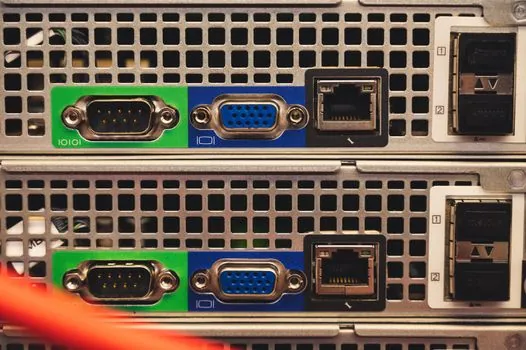
A worked example: eight devices each rated up to 25W yield 8 x 25W = 200W of PD load, which is why industrial switch datasheets for that load case land at a 240W chassis PoE budget [S7].
Field feedback from the install community reinforces this: when every port is loaded to its maximum simultaneously, an 8-port switch would need 208W, a 16-port would need 408W, a 24-port would need 612W, and a 48-port would need 1,224W at the 25.5W-per-PD level of 802.3at, and no commercially available industrial switch ships with that kind of overhead [S3]. Operators are instead expected to know their real per-port load, not the ceiling. The same logic is why a US-16-150W switch (150W total) cannot be assumed to power eight AP6-Pro units at their 25W spec sheet maximum [S3].
Failure modes, passive PoE, and the [industrial switch] caveats
Two failure patterns dominate the field: ports that power-cycle intermittently when the chassis budget is exceeded, and PDs that refuse to boot at all when the supply cannot deliver their classification current [S5]. The first looks like a flaky device; the second looks like a bad cable. Both are budget errors. The only diagnostic that resolves them is reading the actual maximum power consumption of every PD, not the type-3 or type-4 cap that the port supports [S4].
Non-standard passive PoE switches, common in some legacy industrial and wireless-backhaul lines, supply a fixed voltage regardless of PD classification and will burn out any device that does not match the expected voltage rail; only IEEE 802.3-compliant PSEs perform detection and classification before applying power, which is the safety property the industrial spec relies on [S5]. For a deeper look at how the broader switch hardware selection fits into a control-cabinet bill of materials, see the related guidance on the industrial switch reference page.
Standards, cable loss, and supply-side engineering
The governing standards are the IEEE 802.3 family: 802.3af (Type 1, 2003), 802.3at (Type 2, 2009), and 802.3bt (Types 3 and 4, 2018), and these define both the per-port wattage and the negotiation handshake that protects the PD [S5][S9]. Cabling category matters: Cat5e supports 802.3at at 30W to 100m, while 802.3bt at 60-100W is officially rated to 100m on Cat6A, with longer runs or smaller-gauge copper progressively eroding the wattage that reaches the PD [S5].
Industrial cabinets also have to consider the upstream power supply sizing, the power distribution wiring, and the power cable gauge that feeds the PoE switch itself, because a 240W PoE budget is wasted if the DIN-rail supply can only deliver 150W before derating. Where per-port metering or load monitoring is required, a power meter on the chassis feed is the cleanest way to log actual draw against the budget.
Track these signals: the next revision of 802.3bt for higher per-port power classes (under discussion in IEEE 802.3 working groups), and the rollout of Single Pair Ethernet (SPE) with its own PoE profile for field-sensor and building-automation retrofits where a single twisted pair carries both data and up to 50W [S2]. For a related decision-flow on industrial automation hardware, see the breakdown of LPDDR4 supply for industrial and embedded boards, which follows the same pattern of spec-sheet caps versus actually deliverable margins in harsh-environment builds.