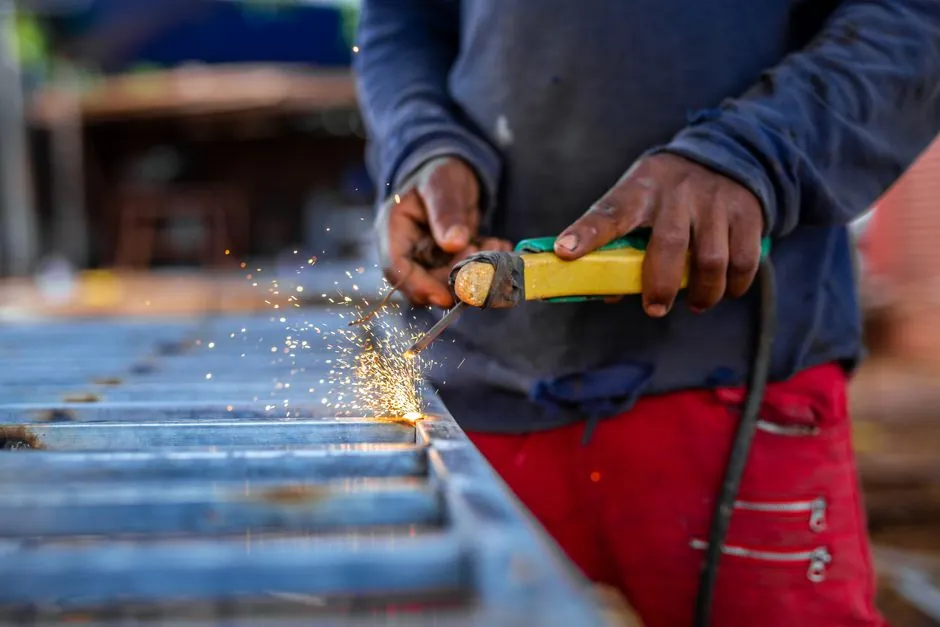
Selection of a stretcher for welding support tasks is driven by four hard specs: load rating, throat depth, material compatibility, and mobility class, with frame material (aluminum vs steel) tied to whether the unit lives on a shop floor or a field rig [S1].
Operators routinely confuse "stretcher" with the medical device; in metalwork and welding contexts a stretcher is a forming or pulling frame used to stretch sheet, plate, or tubing prior to or after a weld pass, and it is often paired with a matching shrinker in the same tool [S2]. Welding skids, by contrast, are mobile frames that carry the welding head, power source, and fixturing for tube or structural welds [S1][S3].
Load rating and throat depth: the two non-negotiables
Load rating is the first spec to lock in: a skid that carries a welding head plus wire feeder plus gas cylinder must be rated for the combined static and dynamic load, including the 0.3-0.5 g side load seen during travel over shop floor seams [S1]. Throat depth, the distance from the frame face to the working point, governs the largest workpiece the stretcher can swallow without re-fixturing; standard benchtop units run 150-300 mm, while field skids extend to 600 mm or more for pipe spool work [S1][S3].
Under-rating either value is the dominant failure mode: a frame rated for 200 kg loaded with a 350 kg head and wire drum will rack during travel, distorting the skid base and misaligning the weld torch over time. A useful internal cross-reference for stretcher frame geometry and selection is the stretcher encyclopedia entry, which catalogs the throat-vs-rating trade-off across manual, hydraulic, and powered variants.
Frame material: aluminum vs steel trade-off
Aluminum stretcher frames are the default for portable autobody and light sheet work because they cut empty weight by roughly 40-50% versus a comparable steel frame, which matters when a single operator has to reposition the unit between weld passes [S1]. Steel frames win on stiffness and fatigue life: a welded steel skid running three-shift pipe fabrication will hold its dimensional tolerance longer under cyclic loading than an aluminum equivalent of the same mass [S1].
A practical comparison: aluminum skids suit jobs under ~150 kg total moving load where operators move the unit more than twice per shift; steel skids suit static heavy-pipe work where the skid is craned into place once and then welded around for weeks. The cost gap is real but secondary: a steel skid typically runs 1.5-2.5x the price of an aluminum unit of the same load class, so the decision is really about mobility frequency versus stiffness demand [S1].
Mobility class: casters, wheels, or skid-mounted
Three mobility classes dominate welding-shop spec sheets. (1) Benchtop or floor-mount stretchers with no wheels, used where the workpiece comes to the tool. (2) Caster-equipped shop stretchers, typically with two rigid and two swivel casters rated 80-150 kg each, for inter-bay moves on smooth concrete. (3) Skid-mounted units with integral fork-pocket channels, designed to be lifted by forklift or crane and set on a field fabrication pad [S1].
For tube welding cells, the third class is standard: the TBW-500 QX class of benchtop tube welders sits on a rigid base that drops into a larger fabrication skid, and the skid itself must be rated for the benchtop weight plus the vision system, heat shield actuators, and any in-line fixturing [S3]. A related welding-side spec sheet worth reading is the arc welding machine selection for concrete work guide, which covers how mobile welding skids are anchored when the base material is non-standard.
Powered vs manual: matching the weld length and frequency
Manual shrinker/stretchers cover autobody dent repair and small sheet work, typically with a 1-2 ton hand-lever force and a stroke of 30-50 mm per pull [S2]. Powered (pneumatic or hydraulic) stretchers deliver 5-10 ton clamping force with repeatable stroke, which is what high-volume production welding cells require when a panel must be pulled to dimension before each weld pass.
For tube and pipe welding, the "stretcher" function is often built into the weld head itself: the TBW-500 QX, for example, drives a heated die into the polymer tube and clamps with an automated heat shield, holding the part within 5°F (3°C) of the die set point before weld initiation, which removes the manual stretch-align step entirely from the workflow [S3]. Operators specifying a separate stretcher alongside a tube welder should first confirm whether the welder already performs the alignment function; doubling up adds cost and floor space without quality gain. Adjacent welding-spec reading: the arc welding machine picks for plumbing pipe installations article covers similar skid-and-head integration choices for pipe work.
Compatibility checks: dies, jaws, power, and shielding
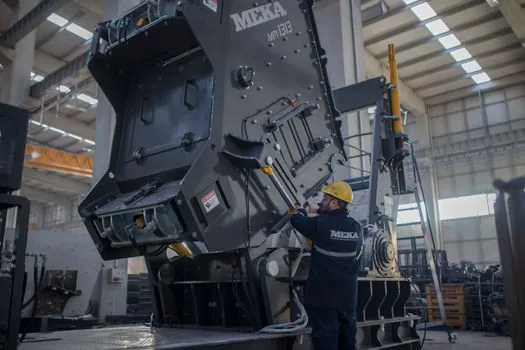
Before purchase, four compatibility gates must clear. First, die or jaw range: the stretcher's working envelope must cover the thinnest and thickest material the shop runs, otherwise the tool gets shelved for one job in three. Second, power source: pneumatic stretchers need 6-8 bar clean shop air at 100-200 L/min; hydraulic units need 70-100 bar and a return line; mismatch with available utilities is a common commissioning delay [S1].
Third, thermal compatibility: any stretcher used in-line with a welding heat source must keep its seals, hoses, and operator handles below 60°C at the worst-case weld pass spacing; elastomer seals rated below that temperature will fail in weeks, not months. Fourth, fixturing interface: the stretcher's mounting pattern (slot width, hole pattern, or quick-change receiver) must match the existing welding-skid bolt footprint, or a custom adapter plate gets added to the BOM. A broader view of the welding-side tooling ecosystem is given in the welding and cutting tool encyclopedia page.
Limitations and failure modes
Stretcher selection breaks down in three predictable ways. Over-rated mobility: casters specced for shop floor but actually used across gravel or grating will fail at the swivel race within months, and the failure usually takes the workpiece with it. Wrong frame material: aluminum stretchers used on heavy structural steel welds rack under the heat input and lose perpendicularity, which then shows up as drift in the weld torch path. [S3]
Third, under-spec'd power: a manual stretcher asked to pull 3 mm steel plate over a 400 mm span will deform the frame before it moves the plate, and operators compensate by heating the panel, which then changes the metallurgy at the next weld pass. None of these are visible on the spec sheet at quote time; they only show up after 200-500 hours of service, which is why field reference data from similar shops matters more than catalog numbers.
Track these signals before the next purchase: request the OEM's mean-time-between-failure data for the swivel casters or hydraulic seals at the rated load, and confirm in writing that the skid base has been fatigue-tested to at least 1x10^6 cycles at 1.25x rated load. The hyperscale and oil-and-gas fabrication sectors are pulling welding-skid demand upward, and vendors are responding with more configurable frames, so lead times on custom skids are the second trackable signal to watch through the rest of 2026 [S1].
Spec-level background on the components involved: pressure transmitter.