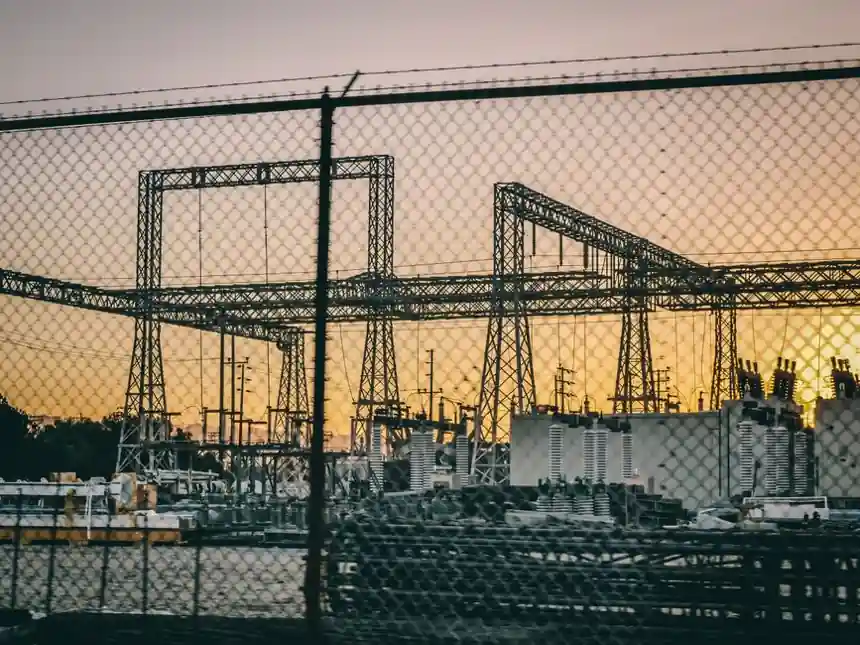
The global substation automation market is projected to expand from USD 23.95 billion in 2025 to USD 34.38 billion by 2031, with grid modernization and digital monitoring driving demand [S3].
Substation automation combines SCADA, intelligent electronic devices, remote terminal units, communication networks, hardware, software, and services for transmission, distribution, monitoring, and control applications [S5].
Market scale and forecast range
The 2026 market estimates vary materially by research scope. The September 2026 report segments the substation automation market by component type, product type, technology, end use, and region for 2026–2033 [S2].
Another forecast places the market at USD 41 billion by 2035, rising from USD 25.67 billion in 2025 at a 4.79% CAGR for 2025–2035 [S5]. A separate January 2026 release projects growth from USD 23.95 billion in 2025 to USD 34.38 billion by 2031 [S3].
The global substation automation market was valued at USD 43.98 billion in 2025 and is projected to reach USD 82.56 billion by 2035 [S6]. Polaris Market Research projects USD 99.1 billion by 2034 with an 8.10% CAGR for 2026–2034 [S4]. These figures should not be combined because market boundaries, product coverage, and forecast periods differ.
Transmission projects anchor the near-term mix
The 2026–2035 forecast report covers the substation automation market by application, including transmission and distribution, and includes market opportunity, growth drivers, industry trends, and forecast analysis [S1]. That makes transmission the strongest supported volume segment in the available data, while distribution and industrial applications remain important but are not quantified in the supplied material.
The 2026 segmentation framework covers transmission and distribution substations, new and retrofit installations, hardware, software, services, utilities, steel, oil and gas, mining, transportation, and other end uses [S2]. This breadth matters because utility transmission projects differ from industrial installations in protection, communications, operational constraints, and procurement ownership.
The September 2026 report segments the substation automation market by component type, including hardware, software, and services [S2]. The practical implication is a mixed hardware and software opportunity rather than a uniform replacement cycle.
Automation architecture and technology choices
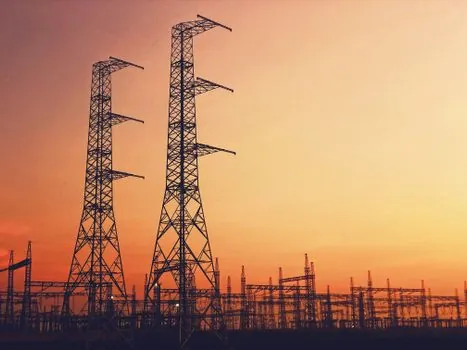
Digital substation automation is the integrated architecture, while SCADA systems, RTUs, IEDs, and communication networks are the principal technology categories used to monitor and control substations [S5]. SCADA supports real-time process and equipment monitoring, while digital substation architectures integrate field intelligence with wider utility communications and control systems [S4][S5].
The major technology options should be compared by function rather than treated as interchangeable. SCADA provides supervisory monitoring and control; IEDs execute protection, measurement, and local control functions; RTUs support remote telemetry and supervisory control; communication networks transport process data; and software adds configuration, analytics, or operational applications [S5].
Digital substation automation suits coordinated grid upgrades and new digital designs. SCADA-centered systems suit supervisory control projects. RTU-led configurations fit remote monitoring and control, while communication networks are enabling infrastructure rather than stand-alone operational systems [S5]. The supplied research does not provide protocol, latency, redundancy, or interoperability thresholds for comparing these architectures.
Selection criteria for utility and industrial buyers
Grid modernization, renewable integration, reliability requirements, and remote monitoring are the principal demand drivers identified for the 2026 market [S2][S4]. Buyers should therefore start with operating requirements, including protection, telemetry, communications, cyber resilience, and retrofit constraints, rather than selecting only on headline market growth.
New installations offer the opportunity to integrate SCADA, IEDs, RTUs, and communications as a coordinated architecture, while retrofit projects must accommodate existing field equipment, wiring, communication paths, and utility operating procedures [S2][S5]. In industrial facilities such as steel plants, oil and gas sites, mines, and transport systems, process continuity and equipment-specific control requirements may outweigh a utility’s standard transmission design.
Cybersecurity must be evaluated as part of the automation scope because digital solutions increase the consequence of compromised communications or controls [S5]. Electrical automation applies to substation projects because protection, measurement, control, telemetry, and inter-device coordination must operate as one engineered system.
Regional demand and industrial use cases
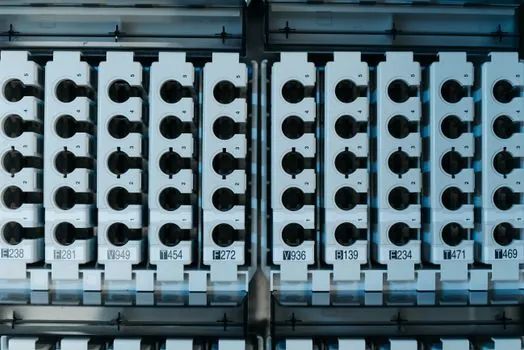
The September 2026 report includes regional analysis of the substation automation market for 2026–2033 [S2]. China and India are identified as drivers of growth in the global substation automation market projection [S6].
Utilities are the primary market for transmission and distribution automation, while industrial users include steel, oil and gas, mining, and transportation operations [S2]. Industrial use cases include remote equipment monitoring, fault response, operating diagnostics, and integration of distributed generation or renewable assets into wider power networks [S4].
Fully automated, semi-automated, and manual automation levels coexist in the market [S5]. A manual installation may suit a small or isolated site with limited remote-control requirements, while full automation requires a defensible communications architecture, tested protection logic, adequate redundancy, and operational cybersecurity. Semi-automation can provide an intermediate retrofit path where field equipment supports partial monitoring and control.
Commercial constraints and implementation risks
Forecast dispersion is itself a procurement constraint: the supplied 2026 estimates span USD 34.38 billion by 2031, USD 72.7 billion by 2033, and USD 82.56 billion by 2035 across differently scoped studies [S2][S3][S6]. Buyers should require each forecast to disclose installation type, product scope, service inclusion, and regional definition before using it in planning.
Integration remains the principal engineering risk because SCADA, IEDs, RTUs, communication networks, and power-system equipment must exchange correct information without creating an unstable control path [S4][S5]. Cybersecurity exposure, commissioning complexity, interoperability, and the cost of retrofitting aging infrastructure are separate constraints from the hardware-only market share [S2][S5].
Grid modernization, renewable integration, real-time monitoring, and predictive maintenance support demand, but none removes the need for site-level studies [S4]. Existing protection coordination, communications coverage, environmental conditions, switching arrangements, and outage plans must be established before selecting a fully automated or semi-automated configuration.
Standards, sourcing, and project discipline
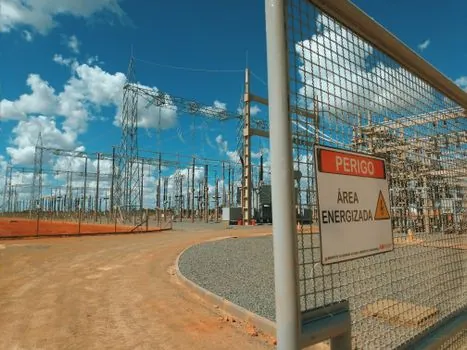
Substation automation covers SCADA, IEDs, RTUs, communication networks, hardware, software, and services, so procurement schedules should separate functional layers rather than rely on a single market label [S5]. Vendor and market references include Siemens, Schneider Electric, General Electric, ABB, Eaton, Honeywell, Rockwell Automation, Mitsubishi Electric, and Emerson Electric [S5].
The September 2026 segmentation also distinguishes utilities from industrial end users and new construction from retrofit work [S2]. That structure provides a practical sourcing framework: identify installation type, automation level, application, component category, and region before comparing quotations or market-share claims.
Cyber controls, inter-device testing, protection validation, and communication commissioning should form the acceptance plan. Vendor product names do not establish protocol compatibility or performance, so requested evidence should include system architecture, interface definitions, test results, and lifecycle support rather than a generic market position.
The most trackable 2026 signals are the 6.9% transmission-substation growth projection for 2026–2035, hardware’s estimated 52% share, and Asia Pacific’s faster regional growth profile [S1][S2]. Medium-voltage cable demand and selection is a related downstream planning signal for substation projects because control power, protection circuits, and auxiliary supplies depend on suitably specified cables.