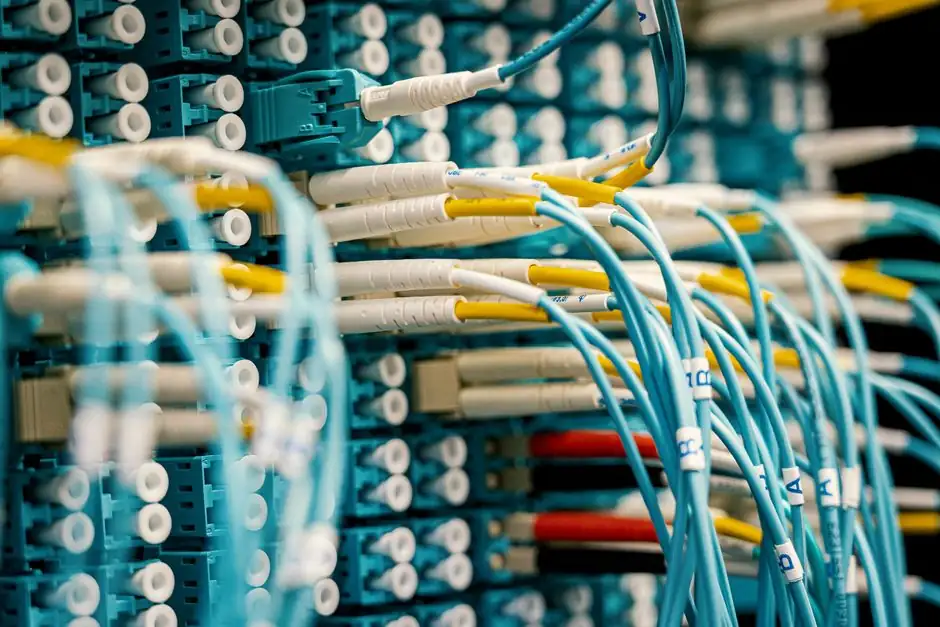
A market report covers superconducting power cables for 2026–2033, while long-term field operation remained technically feasible.
The 2026 pipeline spans grid connections, industrial busbars, data centres and aviation, with magnesium diboride, rare-earth HTS tape, AC and DC designs competing against different voltage, current and installation requirements [S2][S3][S5].
What Changed in the 2026 Superconducting Cable Landscape
The decisive 2026 change was the move from repeated demonstration toward early permanent deployment. That matters because earlier high-temperature superconducting projects proved individual components and routes, but did not establish a broad commercial cable market [S2].
High-temperature superconductivity permits large current transport with vanishing resistance at the liquid-nitrogen temperature of 77 K [S2]. That manufacturing scale remains a cost prerequisite, not proof that demand has already reached the scale of conventional copper cable procurement.
Cable Options Compared by Voltage, Current and Function
The main design choice is not a single cable category but a match among conductor material, voltage class, current requirement, cooling arrangement and installation environment. The comparison below uses established examples and the project pipeline documented through 2026. [S2]
The SURE project aims to develop an MgB₂ superconducting cable capable of addressing the energy-efficiency and environmental-sustainability challenges of next-generation data centres.
Across these options, second-generation rare-earth HTS tape dominates utility cable development because manufacturing capability and performance have improved over the past decade [S2]. MgB₂ offers a distinct development path for compact, high-current power delivery, but its project status remains application-specific rather than evidence of broad utility adoption [S5]. Conventional copper remains more mature where installed capacity, procurement familiarity and cooling-free operation outweigh first-cost savings.
Where Superconducting Cable Fits and Where It Does Not
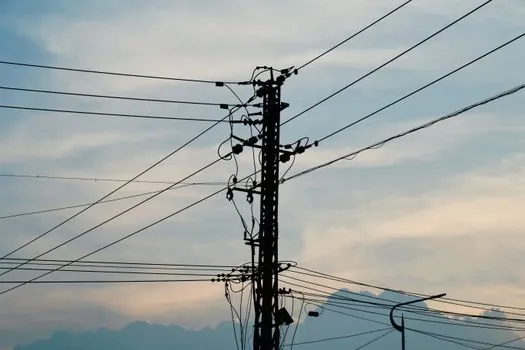
Superconducting cables are strongest where compact routing, very high current or constrained urban space justifies auxiliary cooling. Due to the coaxial structure of superconducting cables, the electromagnetic field outside the cable is zero and there is no ground heating of the environment. These properties suit dense substations, high-current industrial busbars, data centres and selected overhead or underground grid links [S2][S3].
The technology is less attractive for ordinary distribution links with spare trench capacity. The current in conventional underground cables is usually not higher than around 1 kA without cooling the cable.
For data centres, the attraction is compact megawatt-scale distribution, but the buyer must evaluate the complete electrical and cryogenic architecture rather than the tape alone. The SURE project is a development initiative that brings together INFN and ASG Superconductors to develop an MgB₂ cable for next-generation data centres.
Cooling, Length and Reliability Set the Engineering Limits
Active cooling is the principal engineering constraint because it adds cost and affects system reliability [S2]. Cable design also depends on length: temperature and pressure vary along the route, and the distance between intermediate cooling stations is limited [S2]. A route survey therefore needs to establish the allowable section length, refrigeration redundancy, auxiliary supply, leak response and maintenance access before comparing superconducting and copper alternatives.
The early U.S. utility portfolio illustrates the engineering diversity.
Market Evidence Points to Growth, Not Full Commercial Maturity
Market forecasts indicate expansion without eliminating the commercialization gap. One October 2026 estimate values the superconducting power cable market at US$3.1 billion in 2026 and US$5.6 billion by 2033, an 8.8% compound annual growth rate [S4]. A separate forecast for the narrower high-temperature superconducting cable segment rises from US$874.86 million in 2026 to US$1,694.75 million by 2034 at an 8.62% CAGR [S6].
The segment assumptions point to high-temperature superconductors holding about 74% of the broader market in 2026 and Asia Pacific accounting for around 40% [S4]. Renewable-energy integration is identified as the fastest-growing application, while data centres offer an opening for compact, megawatt-scale systems that private operators can deploy faster than regulated utilities [S4]. These are forecasts, not installed-base measurements, so procurement decisions should remain anchored to project specifications and operating records.
What to Track in the Next Project Cycle
The commercial test is whether cooling and termination complexity can be packaged into a repeatable procurement package. Trackable signals include the first operating data from permanent installations, tape supply measured in continuous kilometres rather than pilot batches, project cost per transmitted MW, cooling-system availability and the number of utilities that move beyond demonstration contracts [S2][S3].
The SURE project adds a development initiative led by INFN and ASG Superconductors to develop an MgB₂ superconducting cable for next-generation data centres. The decisive comparison remains capacity and reliability per installed corridor, including cryogenic losses, auxiliary power, joints, maintenance and required civil works, rather than conductor current density alone [S2].