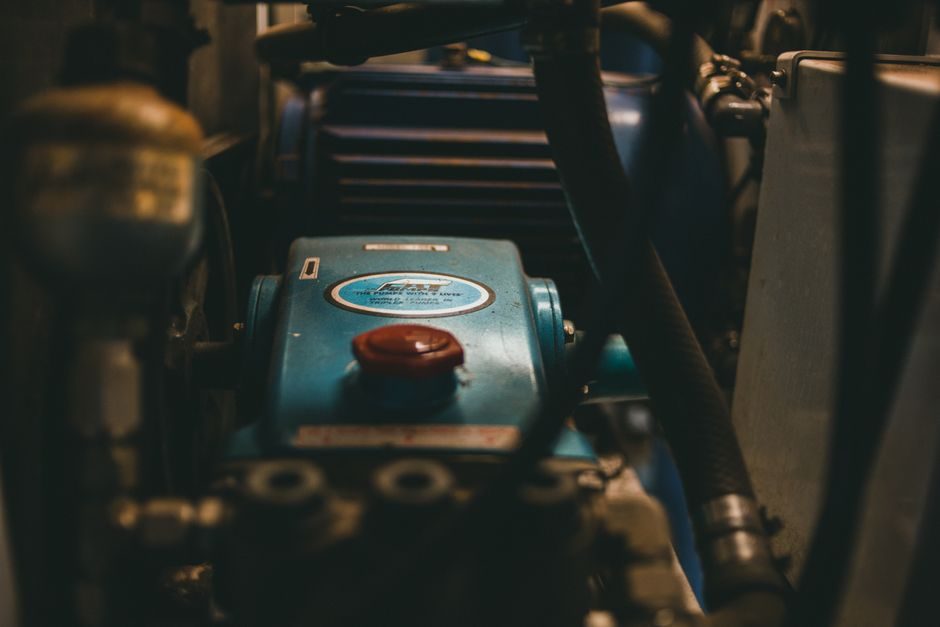
A sump pump is flow-stable on a given duty only when the impeller, seal, motor, and discharge curve are co-specified against the actual fluid and the downstream flow meter — pick any one of those interfaces wrong and the unit either pulses, air-locks, or stalls under load [S2].
This map is written for process engineers and EPC specifiers who must drop a sump pump onto a line that already carries a stable electromagnetic flowmeter signal, and who need to know which WQ sub-class fits which dirty-water, chemical, or low-level duty before issuing a purchase order.
WQ Sub-Class Selection: Five Impeller/Casing Variants for Distinct Duties
V-FLO's WQ submersible sump pump family is offered in five mechanical variants, each engineered for a different contamination and head profile rather than a generic sewage duty [S2]. Type JS uses a stainless casing roughly 25% lighter than ordinary cast-iron pumps, suiting cellar, domestic sewage, pasture, and factory grinding drainage where the fluid is dirty but non-corrosive. Type SV adds a complete non-clog design with a unique double guiding impeller geometry that passes solid particles up to 100 mm in diameter, the right call for leather, textile, and animal slaughterhouse effluent where rag and fibre binding is the dominant failure mode. Type SS/SUS moves to full SS316 construction with a mechanical seal, rated for acid and alkali liquids and therefore applicable in chemical, electroplating, foodstuff, and seawater service. Type RS/RSD adds a double-face cooling diffuser, sized for space-limited low water level applications such as building construction sites, cellars, water pools, and gardening where the pump must run partially exposed. Type S4 (description truncated on the source page) is described as a non-clog large-capacity geometry for high-flow dirty-water duty. For flow stability, the choice between JS, SV, and SS/SUS is the decision that matters: pick SV when solids dominate, SS/SUS when chemistry dominates, and JS only when both are mild [S2].
Flow-Stability Interface 1: Impeller Solids Passage vs Downstream Flow Sensor
A WQ pump that is flow-stable on its own can still generate a noisy signal at the downstream flow meter if the impeller is chewing through stringy debris and passing bursts of rag. The double guiding impeller on Type SV is explicitly rated to pass 100 mm solids without binding, which keeps the discharge curve continuous rather than stepped [S2]. When the downstream instrument is an electromagnetic flowmeter on a sewage or process line, the sensor itself is unaffected by air entrainment but will record every pump-induced pulse, so a non-clog impeller and a vibration-isolated discharge are both required to keep the 4-20 mA output within the control-loop deadband. Specifiers should request the pump's NPSHr and the expected pulsation amplitude at the duty point rather than only the rated flow, because pulsation is what destroys flow-stability margin even when the average flow is correct. For sump applications with low water level exposure, the RS/RSD double-face cooling diffuser matters: it prevents the motor from overheating during partial-submerged runs, which is the most common cause of a pump that starts cleanly but loses flow stability after 20-30 minutes as the thermal protector opens [S2].
Flow-Stability Interface 2: Mechanical Seal and Material Compatibility
Seal selection is the single largest leak-risk decision on a submersible sump pump, and the submersible pump seal compatibility trade-off is a hard gate for chemical and seawater service. Specifiers working with sodium hypochlorite, ferric chloride, or sodium hydroxide dosing pits should default to SS316 plus a documented seal face material (SiC/SiC or SiC/Carbon) rather than asking for "stainless" alone. For less aggressive fluids — animal slaughterhouse, textile, cellar drainage — Type JS or Type SV with the standard mechanical seal is adequate because the corrosion driver is biological, not chemical. A leak past the seal does not only lose prime; it can also short the motor windings and force the pump into thermal trip, after which the next start cycle is the moment flow stability is lost.
Flow-Stability Interface 3: Motor Cooling and Duty Cycle
WQ submersibles cool by surrounding fluid contact, so any duty cycle that runs the pump in a partially exposed state — sump low-level alarm, peak inflow that outfalls faster than the pump can drain, or batch discharge of a process pit — must be matched to a cooling-rated variant. Type RS/RSD with double-face cooling diffuser is the manufacturer's published answer to this duty, targeted at building construction sites, cellars, water pools, and gardening where the water level is intermittent [S2]. Specifiers should compare the pump's maximum ambient temperature rating, the minimum submergence depth stated on the data sheet, and the expected duty cycle (starts per hour, continuous run minutes). A pump that meets flow at 50 Hz on a VFD at 30 Hz will have reduced cooling because the surrounding fluid velocity drops, so derating rather than nameplate is the correct comparison value. When a vortex flowmeter is the downstream billing meter, thermal cycling at the pump becomes a billing error source as well as a maintenance issue, because vortex shedding frequency shifts with fluid temperature and density.
Comparison Table: WQ Sub-Class vs Duty and Flow-Stability Fit
The five WQ sub-classes line up against four decision criteria — solids handling, chemical resistance, low-level operation, and large capacity — as follows. Type JS scores high on light weight (25% lighter than ordinary pumps) but is the weakest on solids and chemistry, suiting only clean dirty water. Type SV is the strongest on solids at 100 mm passage and is the right pick for fibrous sludge, but its standard materials limit it to non-corrosive service. Type SS/SUS is the strongest on chemical resistance thanks to SS316 and mechanical seal, and is the only one rated for acid, alkali, and seawater. Type RS/RSD wins on low-level operation because of the double-face cooling diffuser, but trades off peak solids capacity. Type S4 is positioned as the large-capacity non-clog geometry for high-flow duties where neither chemistry nor low-level exposure is the constraint. The compatibility verdict for flow stability: SS/SUS when the fluid is chemical, SV when the fluid is fibrous, RS/RSD when the water level is unreliable, JS only when the duty is mild, and S4 for high-volume non-corrosive transfer [S2].
Who Should Specify a WQ-Type Submersible Sump Pump (and Who Should Not)
WQ-type submersibles are built for pit, cellar, and process-sump applications with single-stage single-suction hydraulics and a vertical motor stack [S2]. They are the right call for specifiers handling municipal and industrial sewage containing fibres and scraps, animal slaughterhouse and leather plant effluent, electroplating and chemical sump service, foodstuff and seawater intakes, and construction-site or cellar dewatering. They are not the right call for clean-water booster duty (use a multistage centrifugal), for high-head slurry transfer above the published head curve (use a slurry pump), or for potable-water distribution (use a stainless sanitary pump with a certified lining). Within instrumentation, a coriolis flowmeter downstream of a WQ pump is rarely justified because the flow is single-phase dirty water and the cost premium of Coriolis is wasted; a magmeter or a vortex flowmeter is the better match. For general reference on the sump-pump category itself, see the sump pump encyclopedia entry.
Specification Checklist and Sourcing Signals

A compliant RFQ for a flow-stable sump pump should include: fluid type and chemistry (pH range, chloride content, temperature), solids content and maximum particle size, required flow in m³/h and head in metres, minimum submergence depth, duty cycle (continuous run minutes and starts per hour), preferred wetted material (cast iron, SS304, SS316), mechanical seal face material, and the downstream instrument type so the discharge curve can be matched to the flow sensor loop. V-FLO publishes these data on the WQ product page and supports inquiry through its sales network [S2]. Trackable signals to watch over the next sourcing cycle: whether the WQ family is extended with a VFD-rated motor option for low-level cooling, whether SS316 mechanical-seal units are stocked against the typical 4-6 week foundry lead time, and whether the Type S4 large-capacity geometry publishes a full hydraulic curve rather than a single duty point.