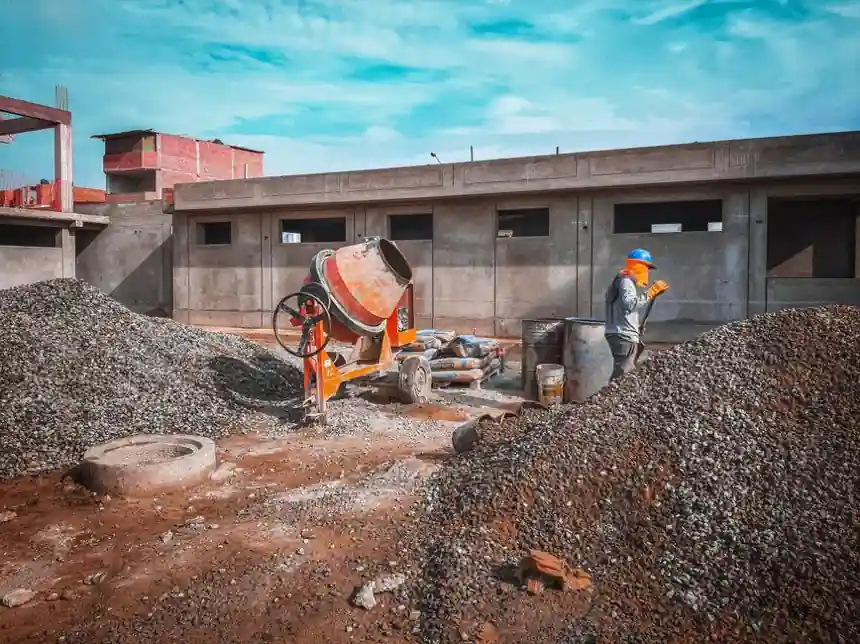
A 2026 study on road-engineering anti-skid wearing courses raised a BDDE-toughened Mannich-base epoxy system to 44.3% elongation at break, 7.0 MPa tensile strength, 6.9 MPa bond strength and 1.77 J/cm² impact toughness, with verified rapid cure at 0–5°C and 25°C [S1].
For spec engineers, the working frame in 2026 narrows to three families: two-component epoxy (EP) for structural bonds, coatings and polymer concrete; polyurethane and acrylic for flexible wearing courses; and polyvinyl alcohol (PVOH) at sub-percent loading as a binder/film-former in caulks, joint compounds and redispersible powders [S2][S3][S4].
Epoxy as the structural default: mix ratio, film thickness, cure window
Two-component epoxy systems pair Component A (resin) with Component B (hardener) at manufacturer-defined ratios, most commonly 1:1 or 2:1 by mass, with mixing for at least 3–5 minutes in slow circular strokes to avoid air entrainment [S2]. Deviating from the specified ratio risks under-cure or exothermic runaway, and the working environment should be dust-free, dry, and ventilated at 20–25°C ambient [S2].
Application thickness scales with use case: 1–3 mm for coatings, 5–50 mm for casting, with full cure in 24–48 hours depending on ambient temperature [S2]. RECKLI Construction Resin EP, a solvent-free two-component system, demonstrates the multi-use envelope, covering binding, bonding courses, sealants and laminations in a single grade with a long pot life and low-temperature cure capability [S3]. For background on the broader synthetic resin family and how epoxy sits beside polyester, vinyl ester and phenolic grades, the encyclopedia entry is the practical starting point.
Toughened epoxy for anti-skid wearing courses: 2026 formulation data
Conventional room-temperature-cure epoxy anti-skid systems are brittle, with thermal expansion coefficients significantly higher than the asphalt substrate, which drives cracking and poor durability; flexible epoxies cure too slowly for short traffic-closure windows [S1]. The 2026 BDDE-toughened Mannich-base system addresses both ends by chain-extending triethylenetetramine (TETA) with 1,4-butanediol diglycidyl ether (BDDE), then running a Mannich reaction with formaldehyde and cardanol to introduce flexible segments into the curing agent.
At the optimal reactant molar ratio n(Cardanol):n(TETA):n(F):n(BDDE) = 1:1.4:0.8:0.7, a 1:1 mass ratio of EP to Curing Agent B, and 10 wt% epoxy-terminated polyurethane (EPU) prepolymer on the epoxy mass, the system delivered 44.3% elongation at break (up from 28.7%, a 28.9% gain), 7.0 MPa tensile, 6.9 MPa bond, and 1.77 J/cm² impact toughness [S1]. The system cures at 0–5°C and at 25°C, and substituting bisphenol F epoxy yields the best thermal expansion match to asphalt [S1].
Substrate and chemistry comparison across the three workhorse families
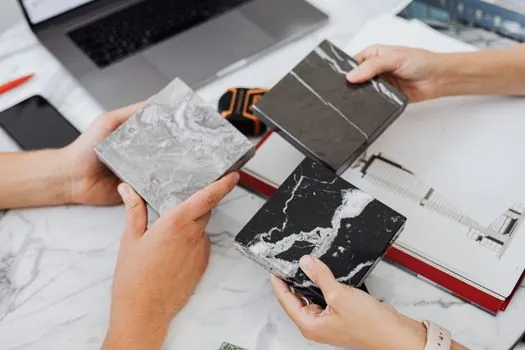
Epoxy, polyurethane and acrylic dominate anti-skid wearing courses, but the trade-off matrix is sharp: epoxy wins on storage stability, cost-per-performance and wide component-ratio tolerance; polyurethane offers flexibility at the cost of slower cure; acrylic splits the difference but lacks the chemical resistance of crosslinked epoxy [S1]. For non-structural building products, PVOH runs at the opposite end of the loading scale, around 0.41 wt% of dry formulation in all-purpose, lite and multi-use joint compounds, where it provides binding, thickening, moisture retention, open time, sandability and slip resistance [S4].
A useful criteria table for spec writing: structural bond or coating on concrete/steel, specify two-component epoxy at 1:1 to 2:1 mix, 1–3 mm coat or 5–50 mm cast, 24–48 h full cure, 20–25°C ambient [S2]; flexible anti-skid layer on asphalt, specify a toughened Mannich-base or EPU-modified epoxy capable of ≥40% elongation and 0–5°C cure, with bauxite clinker as the wear aggregate [S1]; water-based joint compound, caulk or redispersible powder, specify Selvol PVOH at ~0.41% with limestone filler 46–58% and latex binder 2–3% [S4]. For the equipment side of resin deployment, the construction tools and construction machinery and equipment pages cover the dispense/mix/finish chain.
Where each resin fits, and where it fails
Two-component epoxy is the right call for factory, warehouse, parking-garage, hospital, school and laboratory floor coatings, for bonding steel, rebar and reinforced concrete in structural repair, and for high chemical-exposure surfaces needing resistance to acids, solvents and alkalis [S2]. It is the wrong call when the substrate moves significantly relative to the resin (use polyurethane), when UV-stable colour is required without a topcoat (use acrylic or aliphatic PU), or when the joint must breathe (use silicone or PVOH-modified caulk).
PVOH-modified formulations suit caulks, sealants, joint cements, drywall mud, grouts, mortars and redispersible powders, where the resin contributes binding power, thickening and moisture retention rather than structural strength [S4]. The Selvol all-purpose joint compound formula lands at 30% water, 58% limestone, 6% mica, 2.1% clay, 0.41% Selvol PVOH and 2% latex binder, a load-bearing reference recipe for procurement benchmarking [S4]. For shop-floor comparison with adjacent processes, the related arc welding machine selection for HVAC installation: 2026 spec gates article covers a different joining method that often shares the same substrate-prep discipline.
Limits, failure modes and the next verification step

Brittleness and thermal-expansion mismatch remain the dominant failure modes for unmodified room-temperature-cure epoxy on asphalt, and slow cure remains the limiting factor for flexible epoxy variants, both of which are quantified in the 2026 BDDE-toughened study [S1]. PVOH is water-sensitive by chemistry, so any joint-compound or caulk grade selected for humid service needs verification of the specific Selvol grade's hydrolysis resistance and plasticiser migration behaviour beyond the 0.41% baseline loading [S4]. Epoxy cure below 15°C generally requires a winter-grade hardener or low-temperature-rated system such as RECKLI Construction Resin EP, and the cited two-component epoxy is validated for low-temperature use [S3].
Engineers specifying for the 2026 season should track two signals: peer-reviewed publication of the BDDE-toughened Mannich-base epoxy under AASHTO-equivalent wheel-load tests, and OEM datasheet revisions of multi-use two-component epoxy grades confirming 0–5°C cure alongside the 25°C baseline [S1][S3]. For adjacent equipment context on dispensing and finishing, the fettling grinder selection for hardware manufacturing: spec gates and format map piece covers the surface-prep half of the workflow.