Synthetic resin is a high-molecular-weight polymer produced by addition or condensation reactions of monomers, manufactured and sold as pellets, powders, or reactive liquids with melt flow index, viscosity, and reactive group content as the principal specifiers [S6]. Industrial gas is a separate commodity stream — high-purity O2, N2, Ar, H2, CO2 and their mixtures — delivered as cryogenic liquid, compressed gas, or on-site generated product, where purity grade (3N to 6N), dew point, and ISO 9001-traceable certificate of analysis are the dominant purchase criteria.
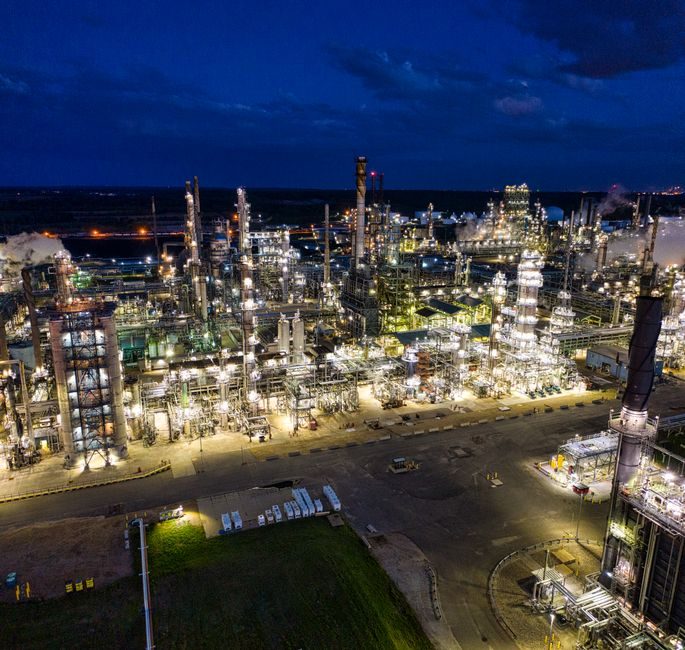
The two streams touch in petrochemical complexes where monomers (ethylene, propylene, vinyl chloride, styrene) are cracked and polymerised, and in fabrication shops where resin moulds require inert blanketing with N2 or Ar during cure. Process engineers writing purchase orders should treat them as non-substitutable: you cannot blanket a tank with polypropylene pellets, and you cannot mould with nitrogen cylinders.
Definition, Chemistry and the Polymerisation Reaction Window
Synthetic resin is defined as a polymeric resin material with or exceeding the properties of natural resin, formed by polymerisation of monomers (ethylene, propylene, styrene, vinyl chloride, formaldehyde, urea, melamine, bisphenol A + epichlorohydrin) into a chain or network structure, supplied in viscous liquid, pellet, or powder form [S6]. Common families include polyethylene (PE), polypropylene (PP), polyvinyl chloride (PVC), polystyrene (PS), polyurethane (PU), epoxy, phenolic, acrylic, and silicone — each with characteristic melt flow index (MFI 0.1-50 g/10min), tensile strength (10-80 MPa), heat deflection temperature (50-260 °C), and chemical resistance windows [S3].
Industrial gas, by contrast, is a single-component or pre-mixed gas product used as feedstock, inert, oxidant, or refrigerant, with merchant purity grades of 99.9% (3N), 99.99% (4N), 99.999% (5N) and 99.9999% (6N) defined against specific impurity panels (H2O < 1-10 ppm, O2 < 2-5 ppm, total hydrocarbon < 1 ppm) on the supplier's certificate. The chemistry overlap is real but narrow: O2 and ethylene feed petrochemical crackers, while N2 and Ar purge polymerisation reactors and resin storage vessels to prevent moisture pickup and oxidative degradation.
Selection Criteria: Five Decision Levers for Each Stream
Synthetic resin selection pivots on five levers: mechanical spec (tensile, flex, impact), thermal spec (HDT, glass-transition, continuous service temperature), chemical spec (acid/alkali/solvent resistance, food-contact FDA/EFSA approval), processability (MFI, gel time for thermosets, viscosity for coatings), and cost/availability per kg in the project region [S3]. Engineers confirm properties against the resin manufacturer's technical data sheet — typical tensile strength bands run 20-35 MPa for general-purpose PE/PP, 50-80 MPa for epoxy and phenolic, and 60-80 MPa for glass-filled PA66.
Industrial gas selection pivots on a different set of five: purity grade (3N-6N), pressure/phase (compressed 200-300 bar, cryogenic liquid at -196 °C for LIN, on-site PSA/VSA generation), supply mode (merchant cylinder, bulk liquid, pipeline), impurities of concern (H2O dew point typically -40 to -80 °C, O2 content in N2 blanket typically < 5-50 ppm), and safety/compliance envelope (ISO 9001 manufacturing, ISO 14001, regional gas-quality standards). A single bulk-liquid N2 tank at 99.999% purity with -80 °C dew point cannot be substituted by a 99.9% compressed cylinder for the same cryo-grinding application.
Comparison: Synthetic Resin vs Industrial Gas Across Four Decision Criteria

Side-by-side against four decision criteria, the contrast is sharp. <strong>Form factor:</strong> synthetic resin ships as 25 kg bags, 500-1000 kg octabins, or 20-25 MT bulk silos; industrial gas ships as 40-50 L cylinders (5-10 m3), bulk cryogenic tanks (3,000-30,000 L), or pipeline. <strong>Primary value:</strong> resin contributes mechanical, thermal, or barrier function to a finished part; gas contributes atmosphere, pressure, or reactive species to a process step. <strong>Lead time and MOQ:</strong> resin MOQs start at one 25 kg bag, with most industrial distributors stocking commodity grades off-shelf; industrial gas typically requires minimum monthly contract or cylinder-rental commitment, with on-site generation a 6-12 month capex project. <strong>Hazard class:</strong> resin classification ranges from non-hazardous pellets to Class 3 flammable liquid (styrene monomer) and Class 9 (uncured epoxy with reactive diluent); industrial gas classification is dominated by UN 1002 (compressed air), UN 1006 (Ar), UN 1046 (He), UN 1971 (CH4), UN 1977 (N2 cryogenic), and UN 2187 (CO2 cryogenic). [S1]
Standard references diverge entirely. Synthetic resin engineers consult ISO 1133 (MFI), ISO 527 (tensile), ISO 178 (flexural), ISO 180 (Izod impact), ASTM D648 (HDT), UL 94 (flammability rating), and FDA 21 CFR / EFSA regulations for food contact. Industrial gas engineers consult ISO 9001 / ISO 14001 for production, CGA G-4.1, G-4.3, G-6.5, EIGA documents, and regional gas-quality norms (e.g. China's GB/T 3863 for industrial O2, GB/T 3864 for industrial N2, GB/T 4842 for Ar, GB/T 7445 for H2). The two standard sets do not overlap.
Real Use Cases: Where the Two Streams Converge on a Site
A thermoset composite plant uses epoxy resin plus a polyamine hardener cured under N2 blanket to suppress amine bloom and surface oxidation — both materials appear on the same bill of materials, but the resin is the part and the gas is the process utility. Similar pairings appear in PU foam production (resin + isocyanate, with N2-driven foam expansion), injection moulding (resin + N2 gas-assist injection for hollow sections), and cryogenic grinding of PE pellets (LIN at -196 °C makes polymer brittle for fine pulverisation). [S2]
Readers mapping the resin-composite decision space will find the FRP composite selection criteria piece on resin, fibre, and service levers a useful parallel reference FRP Composite Selection Criteria, and those cross-referencing polymer versus metal can use the alloy steel selection criteria article on grade, hardenability, and service environment Alloy Steel Selection Criteria as a baseline for the materials-substitution question. A wider industrial-gas reference for the blanketing-and-detection side appears in the industrial gas encyclopedia entry.
Limitations, Failure Modes and Common Mis-Spec

Resin mis-spec usually traces to ignoring moisture pickup (PA, PC, PET must be dried to < 0.02% before processing), UV degradation (general-purpose PP fails outdoors within 6-12 months unless carbon-black stabilised), or chemical attack (PS dissolves in many hydrocarbons, ruling it out for fuel-system parts). Industrial gas mis-spec typically traces to using compressed-air or technical-grade N2 (99.9% with -40 °C dew point) where high-purity N2 (99.999%, -80 °C dew point) is required — the result is moisture-driven oxidation, weld porosity, or analytical baseline noise. Both streams also have downstream equipment failure modes: resin regrind contamination, and cryogenic-burn / asphyxiation hazards for industrial gas. [S3]
Buyers should also be alert to the resin catalogue claims: distributor listings frequently show the same commercial-grade product under multiple CAS numbers and trade names, with mechanical properties copied from the OEM data sheet without independent verification [S1]. For critical-service or regulated applications (food contact, medical, potable water, ATEX/IECEx zones), require the resin manufacturer's lot-traceable certificate and the gas supplier's ISO 9001-traceable certificate of analysis. For specifiers working across material families, broader context on ceramic alternatives is available via alumina ceramic selection criteria, and engineers transitioning from polymer to metal can pull benchmarks from the alloy steel vs aluminum alloy spec cut.
Sourcing, Standards and Verification Path
Synthetic resin procurement runs through three channels: manufacturer direct (BASF, Dow, SABIC, Sinopec, Reliance) for bulk contract; regional distributor (e.g. Resplast-type compounders offering custom formulations) for custom formulation [S4]; and B2B catalogue platforms (ChemNet, GuideChem) for spot or specialty grades [S1][S6]. Industrial gas procurement runs through merchant gas companies (Air Liquide, Linde, Air Products, Messer, Hangyang, Praxair) under supply agreements, with bulk cryogenic, on-site PSA/VSA, or merchant cylinder as the three supply modes.
Standard reference points to record in any purchase specification: for synthetic resin — ISO 1133 (MFI), ISO 527 (tensile), ISO 178 (flex), ISO 180 (Izod), ASTM D648 (HDT), UL 94 (flammability), FDA 21 CFR or EU 10/2011 (food contact); for industrial gas — ISO 9001 (production quality), ISO 14001 (environmental), CGA / EIGA safety documents, and regional product standards such as GB/T 3863 (industrial O2), GB/T 3864 (industrial N2), GB/T 4842 (Ar), GB/T 7445 (H2). For more on the polymer-side taxonomy and related terms, the synthetic resin encyclopedia entry gives the entry-level vocabulary.
For component-level specifications, see resin sand line.