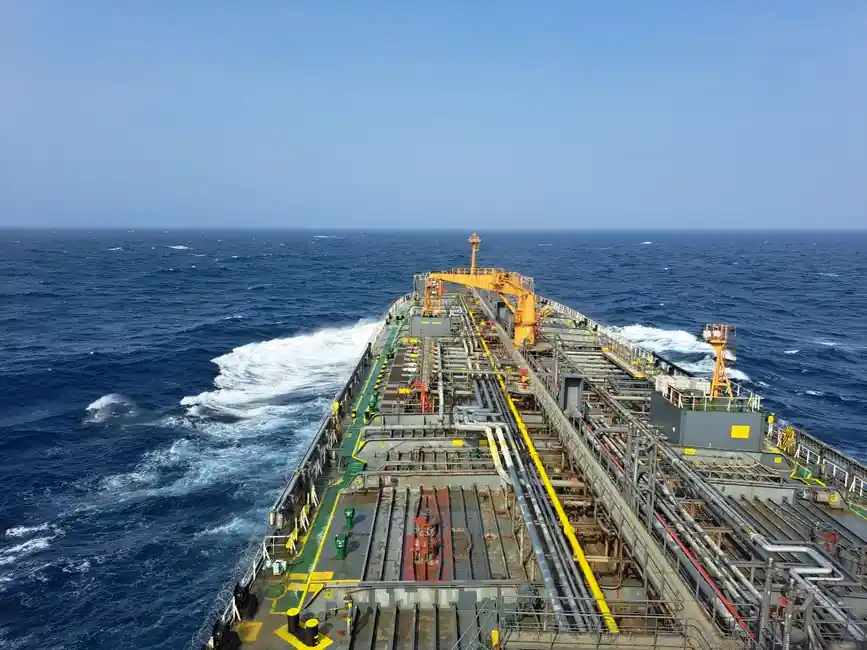
An earth verification system for tanker loading is a monitored interlock that will not issue a permissive signal until it sees a verified ground loop of ≤10 Ω, a vehicle-to-earth capacitance above the tanker-type recognition reference, and a continuously attached grounding clamp [S4].
The architecture sits between the grounding clamp at the tanker and the loading-arm pump or overfill system, and is distinct from a simple passive grounding reel or bolt-on bonding strap that provides no GO/NO-GO verification [S1][S6]. Across road tanker, railcar, and IBC/FIBG handling, a verified static ground path is treated as a frontline safeguard against electrostatic discharge (ESD) igniting flammable vapour during transfer [S3][S5].
What the system actually checks
Three discrete conditions are checked before the relay closes, and the permissive output is held only while all three remain valid: conductor continuity back to the site earth bar, vehicle-to-earth capacitance above the tanker-recognition reference, and a clamp-to-vehicle-to-earth loop resistance at or below 10 Ω [S4].
The capacitance check is the practical anti-defeat feature: a road tanker body presents a characteristic vehicle-to-earth capacitance generally greater than 1000 pF, and using that as the recognition reference prevents an operator from clipping the clamp to a pipe rack, a handrail, or another unearthed metal object and getting a green light [S4]. Newson Gale's Earth-Rite RTR is built around the same idea, providing true ground verification plus clear GO/NO-GO indication so that loading only proceeds when the tanker, not just any conductive object, is referenced to earth [S1][S6].
Selection criteria engineers should lock in first
Hard pass/fail criteria on most datasheets are the loop resistance threshold (≤10 Ω is the figure used by Earthing Pro TK and is the de facto value across modern ground verification monitors), the tanker recognition reference (>1000 pF vehicle-to-earth capacitance), and the hazardous-area certification pattern that the loading bay requires [S4].
Secondary but often binding criteria are the supply voltage window (24–48 VDC or 85–250 VAC on Earthing Pro TK), the interlock contact count and rating (1 standard, configurable to 3; 5 A at 30 VDC or 10 A at 250 VAC), the operating temperature range (-40°C to +60°C), and the IP66 enclosure rating for outdoor rack exposure [S4]. Cable gland and clamp-cable length choices matter at the install stage: Ex armored and Ex non-armored glands are both offered, with clamp leads available in 5 m, 7 m, 10 m, 13 m, and 15 m lengths to match the reach from the rack column to a typical tanker API coupler [S4].
Who it is for, and who does not need it
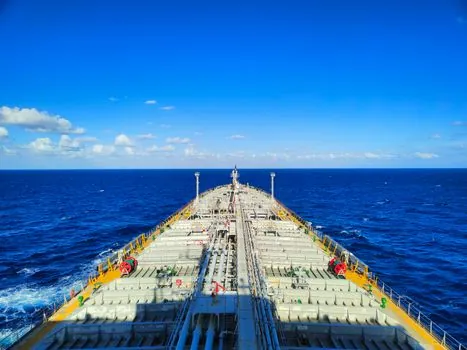
The unit is specified for fixed loading racks handling flammable or combustible liquids, including road tanker top- and bottom-loading, railcar transfer, and petrochemical or chemical loading bays that already interlock the pump or overfill prevention system to a permissive signal [S4][S5].
It is not a substitute for an earth ground tester used for commissioning site electrode resistance, and it is not the right tool where the hazard is dust ignition on bulk solids transfer rather than liquid vapour: dry-bulk Type C FIBC and static-dissipative plastic drum handling call for separate bonding kits rather than a road-tanker ground verification monitor [S5]. Operations that only need anti-static precaution for personnel (footwear, wrist straps, work surfaces) are served by the broader anti-static equipment category and do not need a tanker ground interlock at all.
Options compared against decision criteria
The mainstream product families are the Newson Gale Earth-Rite RTR, the Scully ST-47 Groundhog, the Earthing Pro TK, and OPW/Civacon monitors distributed through rack builders such as SafeRack, and they differ mainly on three axes: whether they verify loop resistance continuously or only at the start of the cycle, whether they include a tanker-type recognition step, and how the permissive output is wired into the existing loading control [S1][S3][S4][S5].
On continuous loop monitoring, Earth-Rite RTR and Earthing Pro TK both hold the permissive only while the ≤10 Ω loop and clamp presence remain valid, whereas basic ground-only reels lose the GO state as soon as the operator stops moving [S1][S4][S6]. On tanker-type recognition, only Earthing Pro TK among the cited devices adds a >1000 pF vehicle-to-earth capacitance check, which materially reduces the false-green risk at a shared rack serving different vehicle classes [S4]. On interlock integration, Earthing Pro TK ships with NO/NC dry contacts rated 5 A at 30 VDC or 10 A at 250 VAC, which is a comfortable match for hard-wiring into a pump starter or overfill prevention relay; the Scully ST-47 Groundhog is positioned as a verification aid and historically drives its own GO/NO-GO indication into the loading sequence [S3][S4]. A useful side-by-side for the procurement engineer is: Earth-Rite RTR for global hazardous-area compliance coverage with long Newson Gale install base; Scully ST-47 Groundhog for fleets already standardized on Scully rack electronics; Earthing Pro TK where tanker-type recognition and a ≤10 Ω continuous loop are both non-negotiable; Civacon/SafeRack-supplied units for turnkey rack builds that bundle the ground monitor with the loading arm and API coupler [S1][S3][S4][S5].
Use cases, standards, and failure modes
The dominant use case is hazardous liquid transfer at a fixed loading rack, where flow rates of around 600 gallons per minute through the bottom-loading pipe generate charge separation and vapour that is fuel for a static spark if the truck is not referenced to earth [S3]. The standards cited as governing these systems are IEC 60079-32 for electrostatic hazards, NFPA 77 for static electricity, and API RP 2003 for protection against ignitions arising out of static, lightning, and stray currents, and SafeRack explicitly designs and implements its grounding and interlock package to that compliance set [S5].
The realistic failure modes are not in the electronics but in what the clamp is attached to and how the loop is read. A verified low-resistance path on its own does not prove the clamp is on a tanker-type vehicle, which is why Earthing Pro TK evaluates vehicle-to-earth capacitance alongside the loop resistance and only gives the permissive when both are true [S4]. Removing the clamp, lifting it off the vehicle mid-cycle, or losing either condition triggers a non-permissive alarm and interlock response, and this continuous alarm plus interlock protection is the behaviour the standards expect the system to deliver [S4]. For an engineer wiring the unit into the rack, the practical signal chain is the ground verification monitor closing a dry contact into the loading-arm pump starter or the overfill prevention system, so that the pump cannot run, and the rack cannot authorize flow, until the loop and the tanker-recognition check are both valid [S4][S5].
Sourcing, supply, and what to verify before sign-off
Procurement routes are direct from the OEM (Newson Gale for the Earth-Rite RTR line), through hazardous-area system integrators (SafeRack bundles Newson Gale and Civacon monitors into full rack builds), through specialist tanker-automation vendors (Alpet Automation for Earthing Pro TK), and through general industrial distributors that carry Scully rack electronics alongside hoses, couplings, and API couplers [S1][S2][S3][S4][S5].
Before sign-off, the engineer should confirm the hazardous-area certification pattern matches the rack zone classification (the Earthing Pro TK marking II 2(1) G Ex db ia [ia Ga] IIC T6 Gb and II 2(1) D Ex ia tb [ia Da] IIIC T80°C Db covers both gas and dust groups), confirm factory calibration is in place and no routine customer calibration is required, and verify the clamp cable length and gland type are ordered for the actual API coupler reach on the bay [S4]. The next node to track is whether the site already runs an automatic identification layer (RFID, overfill, or Scully Intellitrol) and how the new ground verification permissive will be AND-ed with that layer, since a clean permissive chain is what actually makes the ≤10 Ω and >1000 pF checks translate into a safe loading cycle.
For the relevant spec sheets and selection criteria, see static var generator.