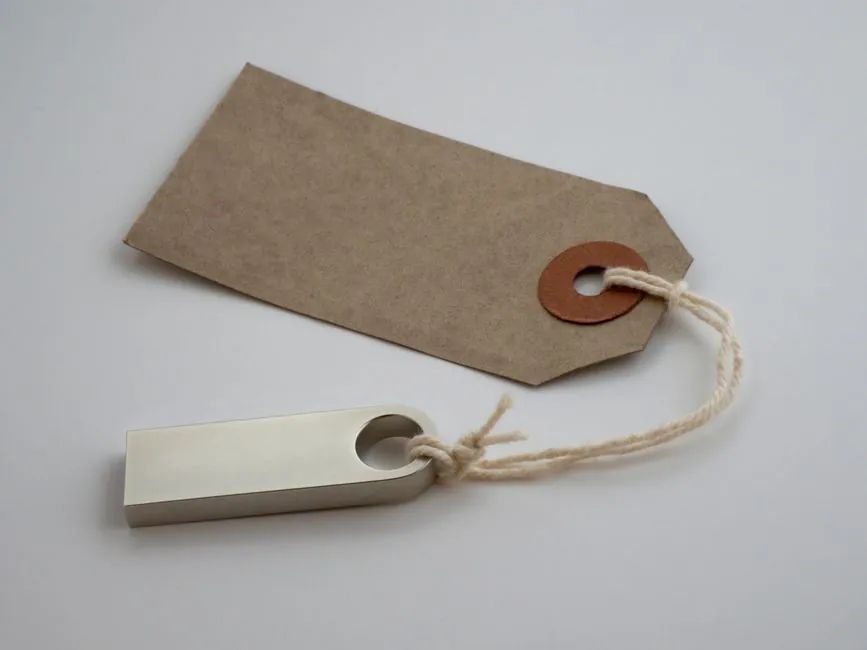
A basic temperature humidity recorder with USB download sells in the US $25 to US $80 range per unit in 2025 retail channels, while an OMEGA CT-485B electronic chart recorder with remote sensor was listed on eBay at US $73.71 plus US $100.00 freight on 2025-05-12 [S1].
That spread reflects sensor count, enclosure rating, memory depth, and whether the device is a single-use cold-chain logger or a multi-channel industrial paperless recorder intended for fixed panel mounting on a process line.
What the device actually is, and which class you are pricing
Temperature and humidity data loggers split into four procurement classes, and each class sits in a distinct price band: (1) USB single-trip cold-chain loggers, (2) Bluetooth/Wi-Fi reusable loggers for warehouses and labs, (3) bench and portable temperature recorder instruments, and (4) panel-mount multi-channel industrial recorders with paper or paperless display [S4].
The Sogou Baike entry defines the category as instruments with built-in or external temperature and humidity sensors, used to record storage and transit conditions for food, pharmaceuticals, and chemicals across cold-chain logistics, refrigerated containers, reefers, cold rooms, and laboratories [S4]. Function blocks listed include GPRS/4G wireless upload, SMS alarm, and built-in or external probe variants, all of which move unit cost.
Oracle's Cloud at Customer deployment guide treats the temperature and humidity envelope as a hard specification: operators must review the documented operating temperature and humidity ranges before placing any IT or industrial hardware, which is why datasheet RH range and ambient temperature are first-page selection criteria [S3].
Cost drivers that actually move the price
Five variables account for the majority of variance between a $30 logger and a $2,500 recorder: sensor type and count, display and storage medium, ingress protection, calibration certificate, and connectivity stack. [S1]
Sensor type is the largest single driver. Adding a second external probe for differential measurement, or specifying a high-accuracy PT100 RTD input for the temperature channel, typically doubles the BOM cost because the analog front end, ADC resolution, and reference resistor network must improve. Industrial recorders also add cold-junction compensation and linearization for thermocouple inputs, which increases assembly and test time.
Display and storage is the second lever. Paper chart recorders need a stepper-driven print head, paper roll mechanism, and ink or thermal print cartridge, which is why even a used OMEGA CT-485B still carries a US $73.71 list price with a separate US $100 freight line item [S1]. A paperless recorder swaps that mechanism for an LCD or TFT panel, internal flash storage, and a real-time clock with battery backup, and the higher component count keeps the price in the US $300 to US $1,200 band for 4 to 8 channel units. Higher channel counts (16, 32) and faster scan rates (under 100 ms per channel) push that into the US $1,500 to US $2,500 band.
Ingress protection, calibration, and certifications round out the cost stack. An IP65 or NEMA 4 front panel for washdown environments, traceable NIST or UKAS calibration certificates, and wireless modules (Wi-Fi, LoRa, NB-IoT, 4G) each add measurable unit cost. The Oracle deployment guide treats the ambient envelope as a binding requirement, so specifying a logger below the rated humidity or condensing range is a common spec error that triggers rework [S3].
Price tiers and what you get for the money
Entry tier, US $25 to US $80 per unit, covers single-trip USB loggers for pharmaceutical and food cold-chain shipments. These ship with one internal sensor, 16 to 32 kB memory, fixed log interval, and PDF or CSV export on plug-in. The OMEGA CT-485B sits at the top of this band for used or surplus stock when bought through secondary channels [S1].
Mid tier, US $100 to US $400 per unit, covers Bluetooth and Wi-Fi reusable loggers for warehouse mapping, museum monitoring, and lab use. These add mobile app configuration, cloud sync, larger flash (1 to 8 MB), and audible or visual alarm outputs. Battery life typically extends to 6 to 24 months on a pair of AA cells.
Industrial tier, US $300 to US $2,500 per unit, covers panel-mount recorders with 4 to 32 analog inputs, relay outputs, Ethernet or RS-485 Modbus, and 21 CFR Part 11 style audit trails for pharmaceutical and biotech lines. The same bracket covers paper chart recorders with mechanical print assemblies, which is why the OMEGA CT-485B used unit is priced comparable to a basic new industrial unit [S1].
Total cost of ownership beyond the unit price
Purchase price is the smallest line on a five-year TCO sheet for industrial recorders. The larger recurring costs are calibration, consumables, and the validation overhead for regulated sites.
Calibration against a known reference humidity generator (e.g., a two-pressure or mixed-flow generator) and a calibrated temperature bath is typically a US $150 to US $400 line item per channel per year if performed by an accredited lab, and most ISO 17025 sites require annual recertification for recorders used in FDA, EMA, or MHRA audited processes. Sending a unit back to the OEM for factory recalibration often costs 10% to 20% of the new unit price, plus shipping.
Paper chart recorders carry a separate consumable line: thermal paper rolls, ink ribbons, and print heads. A 50 m roll of chart paper for a 100 mm strip chart recorder costs roughly US $8 to US $20 and lasts weeks in a continuous-trace application. Print heads wear out every 2 to 5 years in continuous service and run US $80 to US $300 as a spare part, which is one of the economic arguments for migrating to a paperless recorder on a long horizon.
Battery replacement, firmware update support, and end-of-life spares also factor in. A panel-mount recorder with 5 to 7 years of declared parts availability keeps a plant's stocking cost predictable; a single-trip USB logger has no serviceable parts and is replaced outright at the end of each shipment.
Use cases the spec actually fits
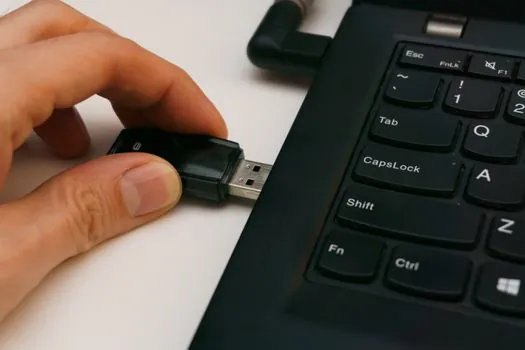
Cold-chain logistics for pharmaceuticals, biologics, and vaccines is the volume driver for single-trip USB loggers, and the price sensitivity is high because each shipment consumes one logger. Warehouse and cleanroom mapping for GxP sites is the main pull for Bluetooth reusable loggers, where the procurement decision is weighted toward software ecosystem, audit-trail export format (PDF, CSV, FDA Title 21 CFR Part 11 compliant), and battery life over a multi-week mapping campaign.
Continuous process monitoring on food, chemical, and HVAC lines is the bread and butter for panel-mount multi-channel recorders, with the procurement decision driven by channel count, scan rate, Modbus or Ethernet/IP integration with the SCADA layer, and front-panel IP rating for washdown. The Oracle Cloud at Customer guide shows how strict ambient envelope specifications can be, which is why a recorder on a plant floor is rarely interchangeable with a lab-grade portable unit even at the same channel count [S3].
Selection criteria and the comparison grid
Four criteria separate the four procurement classes: sensor accuracy, memory and export, enclosure rating, and connectivity. USB single-trip loggers typically quote ±0.3 to ±0.5 °C temperature accuracy and ±3% RH, with sealed IP54 enclosures and no connectivity beyond USB. Bluetooth reusable loggers add ±0.2 °C and ±2% RH with IP65 and BLE 5.0. Panel-mount recorders add ±0.1 °C with NIST-traceable cal, IP65 front panel, and Modbus TCP or Ethernet/IP. The Oracle deployment guide treats the documented operating envelope as a binding review item, so any spec that puts a logger above its rated RH or condensing point is a hard fail [S3].
If you are pricing for cold-chain shipments where each box gets one logger, a USB single-trip unit at US $25 to US $80 is the economic answer. If you are pricing for a GxP warehouse with annual validation, a Bluetooth reusable unit at US $100 to US $400 with the right software ecosystem wins on TCO.
Two signals worth tracking: the ongoing migration from paper chart to paperless recorder formats in pharmaceutical and food lines, and the steady decline in unit cost for Bluetooth reusable loggers as the semiconductor content (BLE SoC, low-power MEMS RH sensor) drops year over year.
For related coverage, see Lux Meter vs Sound Level Meter: Spec-Driven Selection Guide.