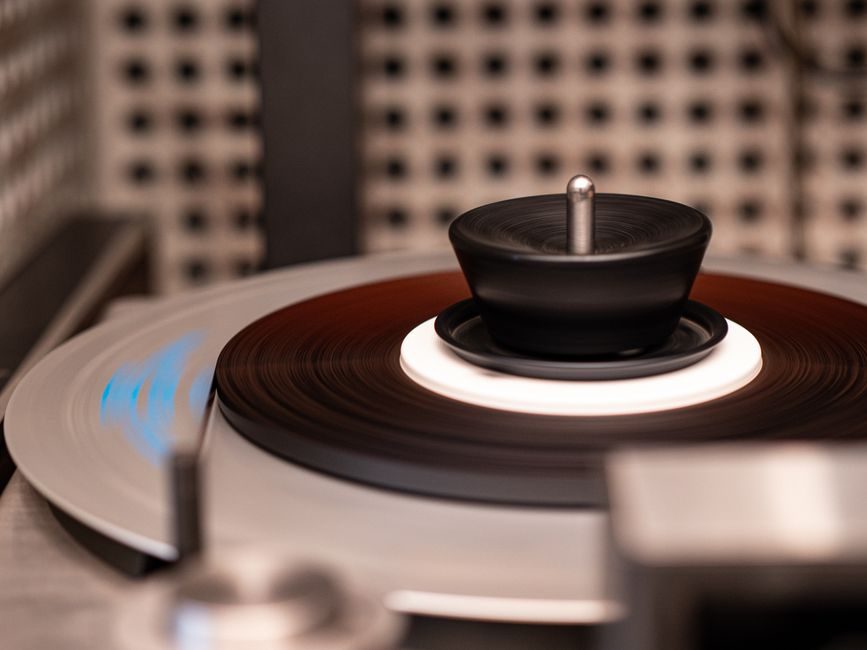
The current DirectIndustry index of industrial temperature recorders lists 68 products from at least eight named manufacturers, with Yokogawa's GX paperless recorder series positioned as a panel-mount continuous-monitoring offering for control rooms [S1].
Buyers comparing recorders in 2026 typically work across three form factors — bench/panel paperless recorders, handheld temperature-humidity loggers, and single-trip cold-chain tags — and the deciding variables are input type, accuracy class, memory depth, and hazardous-area certification, not brand preference.
What counts as a "temperature recorder" in industrial procurement
A temperature recorder is an instrument that samples a temperature sensor at fixed intervals and stores the readings for later retrieval, audit, or alarm escalation, distinct from a transmitter that only forwards a live 4-20 mA or digital signal [S1].
Industrial catalog entries on DirectIndustry cluster recorders into panel-mount paperless units (Yokogawa GX series) for permanent control-room installation, transport/cabinet loggers with traceable calibration certificates (Comet System G0221E, per EN ISO/IEC 17025 traceability) for in-cab use, and Min/Max display units with audible high/low alarms (Dickson TM320, -20 to +85 °C screen) for ambient monitoring [S1][S2]. The traceability certificate angle matters in pharma and food transport: the G0221E datasheet explicitly states the certificate is issued "with declared metrological traceability of etalons … based on requirements of EN ISO/IEC 17025" [S2].
Input type and sensor compatibility
DirectIndustry manufacturer entries confirm thermocouple and RTD (PT100/PT1000) inputs as baseline, with most panel-mount paperless recorders accepting 8-16 universal channels and handheld units limited to one or two internal/external sensors [S1].
Where the application is bearing or motor-winding temperature, buyers typically pair the recorder with a PT100 RTD probe; PT100 selection pitfalls (lead resistance, 3-wire vs 4-wire) are covered in PT100 RTD selection for bearing temperature alarm loops. For non-contact profiling — surface audits of energized panels, motor housings, or steam traps — a handheld IR thermometer or thermal imager feeds the same data-logging workflow and is benchmarked in thermal imaging camera selection; using the wrong emissivity setting on either is the dominant source of audit failure, not the recorder itself.
Accuracy class, calibration, and traceability

Traceable calibration to EN ISO/IEC 17025 is the procurement-level requirement that separates audit-acceptable units from commodity loggers, as stated on the Comet G0221E spec sheet [S2].
Buyers should demand the calibration certificate scope to match the operating range — a -20 to +85 °C Dickson TM320 screen logger will not cover sub-zero cold-chain or >200 °C sterilizer duty without a separate certificate [S2]. For process-side work where the recorder sits next to a control loop, temperature controllers and recorders share sensor wiring, but the controller's PID output stage should not be confused with the recorder's logging firmware; the two devices are typically ordered separately even when mounted in the same panel cut-out.
Memory depth, communication, and data retrieval
Cold-chain NFC loggers advertised on Alibaba's OEM temperature recorder supplier page (May 2026 snapshot) specify a -20 to +60 °C operating range and tap-to-phone retrieval, optimized for shipments where the recorder never returns to the buyer [S6].
Permanent panel-mount paperless recorders (Yokogawa GX class) are designed for continuous control-room monitoring with onboard storage and Ethernet/SCADA export, sized for tens of thousands of samples per channel rather than single-trip capacity [S1]. The decision rule: if the recorder leaves with the product, single-use or reusable USB/NFC tag format is correct; if it stays on the wall, panel-mount with remote retrieval is correct. For ambient-only monitoring with display, temperature monitors without logging firmware are a cheaper baseline when no audit trail is required.
Hazardous-area and enclosure ratings
Recorder selection inside ATEX/IECEx zones must follow the same Ex rating discipline as any other instrument in the boundary — category and gas group are specified by the plant, not chosen by the recorder vendor. [S1]
Recorder enclosures for washdown or outdoor service should be checked against the same IP/NEMA ratings that govern the panel they mount in; sourcing from the China Customs HS-code reference for "Temperature-Recorder" (HS-code index page, May 2026) only confirms tariff classification, not certification status, so importers still need the vendor's Ex certificate in hand [S5]. Cold-chain disposables avoid this question entirely by staying outside the classified area.
Comparison: three recorder formats against four decision criteria
Panel-mount paperless, handheld data-logger, and single-use cold-chain tag are the three formats a 2026 buyer will choose between, and the four criteria that actually separate them are: traceability documentation, channel count, memory depth, and recurring cost per measurement. [S2]
Paperless panel-mount (Yokogawa GX type): multi-channel universal input, factory or in-situ calibration certificate, months of onboard memory, high unit cost amortized over years of service [S1]. Handheld data-logger (Comet G0221E, Dickson TM320): 1-2 channels, EN ISO/IEC 17025 traceable certificate, fixed internal memory, moderate per-unit cost, reusable across shipments [S2]. Single-use NFC/USB cold-chain tag (Alibaba OEM category): 1 channel, factory certificate of conformance (not the same as a traceable cert), small fixed memory, lowest per-trip cost, no return logistics [S6]. Buyers specifying "traceable calibration certificate" in the RFQ will eliminate single-use tags automatically; buyers specifying "sub-$5 per shipment" will eliminate paperless panel-mount automatically.
Limits, failure modes, and what to watch in 2026
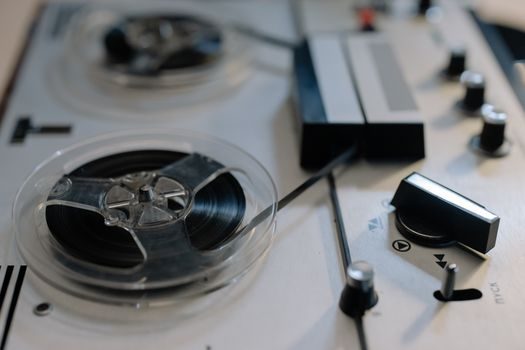
Recorder failure modes cluster in three areas: sensor lead resistance on long RTD runs, battery exhaustion on long-haul cold-chain tags, and memory rollover on paperless units left at default sample rate — all are configuration errors, not hardware defects. [S3]
Trackable signals for the rest of 2026: DirectIndustry's manufacturer count (currently 68+ products, 8+ vendors visible on the index page) and the emergence of cloud-native paperless recorders from the same vendors that historically sold chart recorders [S1]. Importers should also watch the China Customs HS-code classification line for "Temperature-Recorder" as tariff revisions periodically re-bucket USB loggers and panel-mount units into different duty bands [S5].