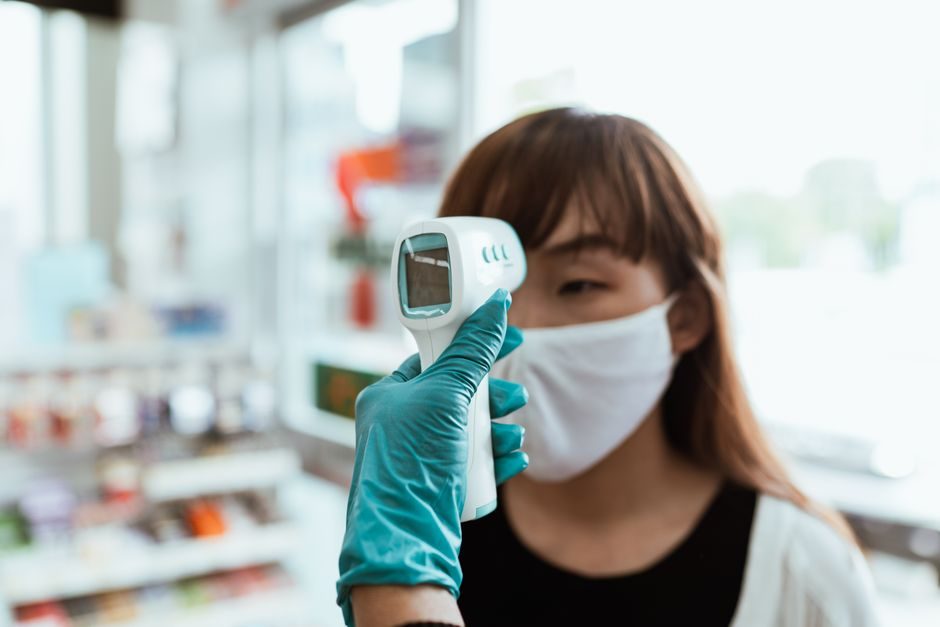
A temperature transmitter and a temperature recorder are not competing products — they live on different sides of the same measurement chain, and the wrong choice shows up either as a control loop that hunts or as a CSV file with no provenance. Industry catalogs published in 2025-2026 keep them as separate SKUs because the underlying job is separate: convert a sensor signal into something a controller can act on, or persist that signal so a quality team can defend a batch release months later [S2].
The two categories cross over only on a narrow strip of the spec sheet. Micro Sensor's 2025 product page lists temperature devices that span -200℃ to 1600℃ using RTD and thermocouple elements, packaged either as a transmitter output or as a recorder head depending on the suffix code [S2]. PR electronics, describing a 4-20 mA / digital temperature transmitter, calls the device out for converting a small sensor signal "into a more robust 4–20 mA or digital signal" — a definition that says nothing about storage at all.
Function split: convert-and-emit versus capture-and-persist
A temperature transmitter is defined by its output, not its memory: it takes the millivolt signal from a thermocouple or the resistance of an RTD and linearises, isolates, and re-emits that reading as 4-20 mA, HART, FOUNDATION Fieldbus, or PROFIBUS PA for a DCS, PLC, or SCADA tag. ITM's 2026 transmitter catalog lists the same input set — RTD, thermocouple, thermistor — with the role of "monitor temperature readings" routed outward, not stored locally [S6].
A temperature recorder, by contrast, is defined by its media: Chinese-language instrument references translate the term literally as temperature logger or temperature recorder, with the single-use temperature recorder (single-use / in-transit) sub-category explicitly built for cold-chain shipment logs rather than live process control [S3]. The recorder's output is a file, a chart, or a printed trace, and the user typically retrieves it on a USB stick, SD card, or paper chart after the run finishes.
Asmik's 2026 product grouping underlines the split on the manufacturer side: temperature sensors, paperless recorders, and pressure transmitters are listed as parallel categories inside the same process-instrument family, not nested inside one another.
Signal chain and where each device sits
In a thermocouple loop, the transmitter sits directly on the sensor head or in a DIN-rail block nearby, compensating cold-junction error and driving a current that survives hundreds of metres of shielded cable back to a control room I/O card. PR electronics describes the device as the bridge between a "small signal" sensor and a robust industrial bus, which is why transmitter datasheets lead with input type, accuracy class, and protocol — not with memory depth or log interval. [S1]
A recorder sits downstream of that same loop, or it sits on its own sensor in a fridge, truck, or warehouse where no control system exists. The single-use transport temperature recorder referenced on the ybzhan.cn catalog is purpose-built for shipment validation: it records during transit, then plugs into a PC to dump the trace as proof of chain-of-custody. That is a different physical artefact from a head-mount transmitter, even when both measure the same RTD.
Engineers building calibration rigs can extend the same logic: a loop calibrator forces a known mA into a transmitter input to verify the 4-20 mA leg, while a decade resistance box simulates the RTD resistance the transmitter's input stage is supposed to linearise — separate jobs, separate instruments, covered in Decade Resistance Box vs Loop Calibrator: Fabrication Method Differences for Calibration.
Selection criteria that actually decide the order code
Four questions settle the call before anyone looks at brand or display colour. First, does the application need a closed-loop control action in real time? If yes, the order needs a transmitter output — typically 4-20 mA with HART for smart diagnostics, per PR electronics' 2026 product definition. Second, is the temperature data required as evidence for a regulator, customer, or HACCP audit? If yes, a paperless recorder or a validated single-use logger is non-negotiable, because the transmitter's live reading will not survive a power loss or a network outage. [S2]
Third, what is the measurement span and environment? Micro Sensor's temperature device family extends to 1600℃ with both RTD and thermocouple inputs, which is the band a process engineer hits in fired heaters, superheaters, and reformer outlets — locations where the sensor and transmitter live in a thermowell, not on a shelf [S2]. Fourth, is the device going into a hazardous area? A transmitter spec'd for Zone 1 or Zone 0 will pull ATEX/IECEx certification into the part number regardless of whether it logs internally; certification is selected at the transmitter level, not added by bolting a recorder on top.
A short, criteria-driven comparison helps frame the call for less-experienced specifiers:
Output form: 4-20 mA / HART / FF / PA for a transmitter; CSV / chart / PDF trace for a recorder. Role: real-time control feedback vs audit-grade evidence. Power: loop-powered from the 4-20 mA pair for most transmitters; battery or mains for a standalone recorder. Failure mode the engineer is protecting against: control loop hunting or sensor break (transmitter territory) vs lost shipment data or unprovable batch release (recorder territory).
Where the two genuinely overlap, and where they do not
Modern "paperless recorders" blur the line: they accept multiple input types including RTD and thermocouple, display the live value, and store years of data on internal flash. That recorder can drive a 4-20 mA retransmission output to a DCS as a bonus, but the device is still engineered for capture-and-persist first; its retransmission accuracy and update rate are usually below a dedicated transmitter's, and its safety-certification scope rarely covers Zone 0 mounting on a thermowell. [S3]
Conversely, a "smart" HART temperature transmitter may buffer a short rolling window of diagnostics internally, but it is not a logger. PR electronics and ITM both market their transmitters strictly as signal-conditioning devices with protocol output, not as recorders with storage media [S6]. Trying to use a transmitter as a recorder means accepting that the data is only as durable as the historian that polls it — which fails the cold-chain and pharmaceutical validation cases that the single-use recorder category was built for.
For non-contact process temperature work, the same logic applies: an infrared pyrometer outputs a 4-20 mA signal for control, while a bimetal thermometer gives a local dial reading with no electronics. The selection reasoning parallels the transmitter-vs-recorder decision and is laid out in Infrared vs Bimetal Thermometer: Spec Match for Process Jobs.
Standards, certification, and the data-integrity trap

Transmitter selection is dominated by hazardous-area classification and protocol conformance: ATEX category, IECEx scheme, SIL rating for safety loops, and the bus standard (HART, FOUNDATION Fieldbus, PROFIBUS PA) that the DCS expects. Recorder selection is dominated by data-integrity and traceability requirements: regulated industries expect time-stamped, tamper-evident logs with calibration traceability back to national standards, often enforced by 21 CFR Part 11-style electronic-record rules for pharma or by HACCP documentation for food. [S4]
For mechanical-strength and load-test rigs, the analogous documentation load is met with a different tool family — load cells and weighing instruments — and the trade-offs there mirror the recorder/transmitter split: live force feedback for control versus a logged trace for the test report. That comparison is covered in Load cell vs electronic scale: which instrument to specify for mechanical-strength tests.
Cross-references and what to verify on the datasheet
Pull three numbers on every transmitter datasheet before signing the PO: input type and reference accuracy (typically ±0.1℃ or ±0.05% of span for class-A Pt100 chains), update rate / step response, and protocol revision. PR electronics' 2026 product page lists those as the headline fields, not memory size, because they govern loop performance. Micro Sensor's family datasheet pushes the temperature range and the input-type matrix — RTD, thermocouple, integrated, sanitary — to the top, with -200℃ to 1600℃ as the headline spec [S2].
Pull three different numbers on every recorder datasheet: storage capacity in samples or days at the chosen log interval, battery life for the standalone case, and the file format the export tool produces. Cold-chain buyers should also confirm the device's calibration expiry and whether the export file is signed or hash-stamped, because that is the property the auditor will look at first.
For two related reference articles on the sourceby.press industrial encyclopedia, temperature transmitter collects the protocol and accuracy-side definitions, while paperless recorder and temperature humidity recorder collect the data-integrity and storage-side definitions that govern audit use.
The next check on the workbench: pull one of each device's current catalog page — PR electronics for the transmitter side, Asmik or Micro Sensor for the recorder side — and confirm that the input-type matrix, the hazardous-area certificate list, and the protocol/format options on the 2026-06-21 cut match the spec on the drawing. Any drift between the catalog and the PO is the audit finding that gets written up later.