
A temperature transmitter converts a sensor's raw signal, either the resistance of an RTD such as Pt100 or the millivolt EMF of a thermocouple, into a standardized 4-20 mA current loop or a digital protocol that a PLC, DCS, or SCADA can read reliably over hundreds of metres of cable [S2][S7].
The 2026 catalog window is dominated by head-mount units such as the PR Electronics 5334A RTD/TC head, the 5437A/6437A HART 7 family, the OMEGA M12TX programmable 4-wire RTD head, and entry-level Pt100 fixed-range units like the ProSense XTH-0100F-PT1, alongside field-mount housings and dual-input redundant designs [S2][S3].
Sensor Input: Pt100 RTD vs Thermocouple vs Universal
RTD inputs, almost always Pt100 (100 Ω platinum) or Pt1000, dominate process-loop specs in 2026 because they deliver better linearity and tighter conformity than base-metal thermocouples across the -200 to +600 °C band where most chemical, HVAC, and tank-level work lives [S3]. A typical industrial head-mount probe package like the GW1 series is offered in Pt100/Pt1000/Cu50 with an overall measuring range of -200 to +850 °C, probe diameters of Ø6/Ø8/Ø10/Ø12 mm, and SS304/SS316/SS316L wetted material [S1].
Thermocouple inputs are still warranted above ~600 °C, in high-vibration engine and turbine exhaust ducts, and where miniature mineral-insulated sheaths beat any RTD on physical size; Type K and J are the economical base-metal choices, while Type S and Type R use precious metals and push cost up sharply [S3][S4]. Universal or multi-input heads that accept RTD, thermocouple, resistance, and millivolt on the same terminals add roughly 20 to 40 percent to transmitter price over a fixed RTD unit, and are the right call only on skid builds or E-house panels where the sensor type may change during commissioning [S4].
Output Protocol: 4-20 mA, HART, Foundation Fieldbus, PROFIBUS PA
4-20 mA analog is the cheapest, lowest-risk output and remains the dominant analog protocol for new installations in 2026, but it carries only one process variable and no diagnostic bandwidth beyond the 4 mA fault-current convention [S3]. A reading below 4 mA or above 20 mA is the built-in first layer of sensor-failure detection: a broken RTD or open thermocouple drives the output to a defined failure state, typically low around 3.9 mA, rather than failing silently [S2].
HART 7 overlays a digital signal on the same two wires, enabling remote range reconfiguration, dual-variable transmission, and predictive diagnostics, which is why the PR Electronics 5437A/5437B/5437D and 6437A/6437D HART 7 families sit as the refinery and skid-retrofit workhorse [S3]. HART carries a 15 to 25 percent premium over a plain 4-20 mA unit, while Modbus/Profibus options add roughly 20 to 35 percent and WirelessHART can add 50 to 150 percent by eliminating wiring runs in hard-to-reach locations [S4]. Foundation Fieldbus and PROFIBUS PA, represented by the PR 5450A/5450B/5450D line, are fully digital and run on a bus segment rather than a point-to-point loop, so they are the right call only when the host DCS already has an FF/PA segment with spare capacity and the plant's lifecycle plan keeps that DCS for the next 10+ years [S3]. HART does not run natively on a Foundation Fieldbus or PROFIBUS PA segment; they are physically and protocol-wise separate buses, so picking an FF/PA head on a HART-only DCS wastes its digital layer and forces a host upgrade [S3].
Housing, IP Rating, and Form Factor
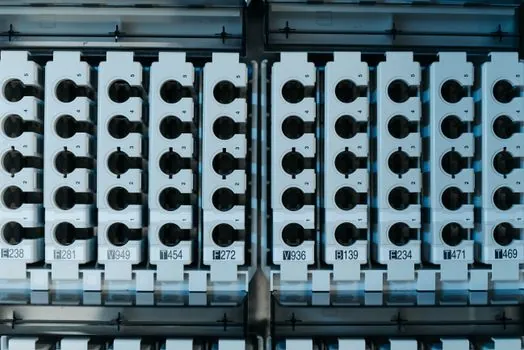
IP65 is the standard baseline; IP67 or higher is now a baseline for any transmitter mounted in a washdown, outdoor, or marine environment, and the OMEGA M12TX ships with a moulded M12 connector rated IP67 that replaces the legacy conduit entry to save panel space [S3][S4]. GW1's industrial head ships in IP65/IP67 over an operating temperature of -40 to +85 °C, with 9-30 VDC loop power, vibration resistance of 4000 g (≤5 times), and an RF immunity rating above 10 V/m from 80 MHz to 1000 MHz [S1].
Form factor splits into three families: DIN B head-mount units that fit inside a standard connection head and are the cheapest to calibrate against a dry-block, field-mount remote enclosures with conduit entries for hazardous-area or substation panels, and integrated probe-with-transmitter heads where the M12 connector at the probe tip is the only field interface [S3]. A field-mount remote enclosure is specified when the sensor head has no room for a head-mount unit, or where hazardous-area housing rules call for a dedicated enclosure; a dual-input redundant head is the answer when two sensors feed one transmitter for voting or backup [S2]. The selection logic for a process skid is DIN B head-mount for lowest cost and easiest re-calibration, and a stainless IP68 head with surge protection on the loop for wet or corrosive outdoor sites [S3].
Hazardous Area Approval and Failure Detection
Explosion-proof or ATEX/IECEx-certified housings are non-negotiable in hazardous areas, and they sit on top of the IP65 baseline along with SIL ratings for safety loops, NIST-traceable calibration certificates, CE, and RoHS compliance, each adding a small but measurable premium [S4]. A 4-20 mA loop is proportional and self-checking: a broken RTD or open thermocouple usually drives the output to a defined failure state (commonly low, around 3.9 mA, or high, depending on configuration) rather than failing silently, giving the DCS a binary health flag without any extra wiring [S2].
Range redundancy matters as much as approval. For a regular duty cycle with a 100 °C maximum, a 0-120 °C range (1.2× the maximum) avoids overload and keeps accuracy tight, while a 0-500 °C transmitter on a 10 °C differential will struggle with resolution; liquid-nitrogen storage at -196 °C needs an input rated below -200 °C, and steel-smelting furnace work above 1200 °C requires a transmitter capable of handling up to 1500 °C, because standard heads will not survive those conditions [S5].
Price Tiers and the Real Cost of a Bad Spec

The 2026 market splits into three observable price bands: generic/OEM units at 10 to 80 USD with roughly ±0.5% full-scale accuracy on basic 4-20 mA RTD/TC for HVAC and large fleets, branded industrial units at 100 to 400 USD at ±0.1 to 0.25% full-scale with optional HART for general process and water treatment, and premium process units at 400 to 1,200 USD with HART/FF/PA and full diagnostics for refinery and safety loops [S4]. A documented batch-reactor case in 2026 saw a project save 28 USD per transmitter on the hardware line only to lose 18,000 USD on a single out-of-spec batch from drift-induced error, more than sixty times the upfront saving [S4].
A 2-wire loop carrying HART also allows a single 4-wire RTD head to push both real-time temperature and a secondary diagnostic variable, and to trim calibration remotely without opening the connection head [S2]. For an ovenview of how a transmitter sits in the wider measurement chain, the Temperature Sensor Sizing and Selection spec map covers the sensor side, while the How to Choose a Temperature Transmitter: Spec-by-Spec Selection Map breaks the same decision into a tighter per-attribute checklist. Buyers weighing RTD-versus-thermocouple economics should also factor in the failure-state behaviour above 20 mA and below 4 mA, because the choice of high-side or low-side failure drive must match what the DCS safety logic expects on a given loop.
For the relevant spec sheets and selection criteria, see temperature transmitter, linear guide, and crossed roller guide.