Industrial temperature transmitters in 2026 still pivot on a tight supplier set, with Endress+Hauser, ABB, OMEGA, E+E Elektronik, West Control Solutions, and COMET SYSTEM anchoring the global catalog [S1][S2][S3][S6][S7][S8]. Output choices across that cohort split cleanly into 4-20 mA analog, HART, PROFIBUS PA, FOUNDATION Fieldbus, and RS485, while input coverage spans Pt100/Pt1000 RTDs, type S/R thermocouples, and generic analog voltages [S2][S3][S6].
The breadth of the spec envelope is what defines this category: a single PC-programmable head-mount unit can accept any of 7 RTD types or 13 thermocouple types, and field-mount dual-input units cover -328 to 4172°F ranges with NAMUR NE 89/NE 107 diagnostics [S5][S6]. For a deeper dive on transmitter categories and signal types, the temperature transmitter encyclopedia entry is the baseline reference, while the level transmitter and differential pressure transmitter pages cover the sibling instrumentation disciplines.
Input Side: RTD vs Thermocouple vs Analog
RTD input remains the default for hygienic and laboratory service, with 316L stainless steel 3-A sanitary probes, IP67/IP68/IP69K protection, and 4-20 mA analog output, per the OMEGA PRS-TMM12 and Endress+Hauser iTHERM TM311 lines [S1][S2]. Reference resistance spans 0-450 ohm on platinum, nickel, and copper elements, with 2-wire, 3-wire, and 4-wire lead compensation available [S2][S4]. For higher-temperature service above the RTD envelope, type S and type R thermocouples reach -346 to 3308°F (or -328 to 4172°F in some catalogs) and pair with multi-loop controllers like the West Control Solutions KS 816 that double as freely configurable field-bus transmitters [S3][S6].
For comparison, a working selection matrix looks like this:
- Pt100/Pt1000 RTD: best accuracy class around 0.1°C near 0°C, limited to roughly -200 to 850°C on the sensor, ideal for hygienic and HVAC service [S1][S2][S4].<br>- Type K/J/N/T/E thermocouples: cover -200 to 1300°C in sheathed mineral-insulated construction, lower cost per probe, weaker drift performance above 800°C [S3][S9].<br>- Type S/R/B thermocouples: span up to 1800°C for furnace and molten-metal service, used with noble-metal extension wire and cold-junction compensation [S3][S9].<br>- Generic analog voltage input: used when the front-end is a non-standard sensor or strain-gauge bridge, supported on field-mount units like the ABB TTH300 [S6].
Output Side: 4-20 mA, HART, Fieldbus, RS485
The 4-20 mA analog output is still the universal fallback, present on the Endress+Hauser iTEMP TMT127 DIN-rail head-mount, the iTHERM TM311, the OMEGA PRS-TMM12 sanitary probe, and the COMET SYSTEM T3110Ex intrinsically safe humidity/temperature unit [S1][S2][S4][S8]. HART overlays ride on that 4-20 mA loop and are specified for legacy plant retrofits where two-wire wiring is fixed. For new builds, PROFIBUS PA and FOUNDATION Fieldbus are wired as digital segments, not as analog loops, and the West Control Solutions KS 816 exposes both bus interfaces in a single multi-loop package [S3]. RS485 with Modbus RTU is the workhorse for HVAC, building automation, and the E+E Elektronik EE160 humidity/temperature transmitter [S5].
On the safety-rated side, explosion-proof and intrinsically safe variants are common: HMK-TECH catalogs explosion-proof thermocouples and RTDs covering -200 to 1800°C, and COMET SYSTEM ships the T3110Ex with built-in humidity and temperature sensors that also derive dew-point and absolute humidity outputs [S8][S9]. These models typically carry IP65/IP66 housings and stainless steel 316L wetted parts for washdown environments.
Form Factors: Head-Mount, DIN-Rail, Field-Mount
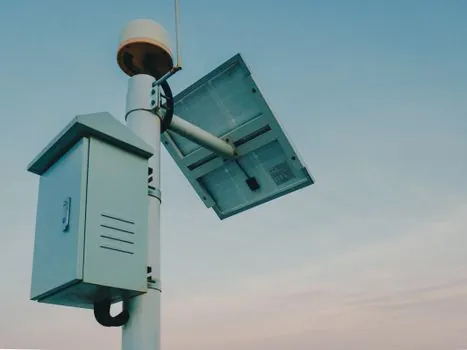
Three mechanical formats dominate the 2026 catalog. Head-mount units fit inside a DIN B connection head, draw roughly 4 mA, and convert one or two sensor inputs to 4-20 mA with HART, exemplified by the iTEMP TMT127 (fixed range) and the iTEMP TMT31 (programmable, 36V supply, -40 to 85°C ambient) [S4][S7]. DIN-rail modules clip into a control cabinet and tend to add galvanic isolation plus multi-channel capability, common in skid builders and OEMs [S5]. Field-mount units like the ABB TTH300 add a two-compartment aluminum or stainless housing, an optional LCD with operating buttons, dual sensor inputs for sensor redundancy and drift monitoring, and full NAMUR NE 89 and NE 107 compliance [S6].
Protection ratings are a real procurement gate: IP67 is the minimum for outdoor enclosures, IP68 is required for direct immersion probes, and IP69K is the standard for high-pressure, high-temperature washdown in food, dairy, and pharmaceutical service [S1][S2]. For a full spec walkthrough of the selection workflow, the How to Choose a Temperature Transmitter: Spec-by-Spec Selection Map and the Temperature Sensor Sizing and Selection: Range, Accuracy, Materials companion piece are the right next reads.
Suppliers, Sourcing Channels, and Lead-Time Reality
Distributor catalogs in 2026 carry 500+ active temperature transmitter SKUs, with Endress+Hauser, ABB, WIKA, OMEGA, E+E Elektronik, and COMET SYSTEM the most frequently stocked lines, per the RS Online and GlobalSpec indices [S7][S1][S2][S6]. EU buyers tend to source through RS Online (UK stock in days), Automation24 (EU stock), and direct OEM channels; North American buyers route through GlobalSpec-listed distributors and OEM reps; APAC buyers (including HMK-TECH's China-based production) ship ex-works with 4-6 week lead times on configured units [S9]. Sanitary 3-A units with full material traceability tend to carry the longest lead times because 316L certification, surface finish (typically Ra ≤0.8 µm), and weld documentation are validated per lot [S1].
For a cross-disciplinary read on adjacent industrial selection workflows, the EPS Board Selection for Cold Storage Warehouses: Density, λ, and Thickness Spec Map and the Dry-type transformer sizing and selection: 2026 field guide are useful analogies in the spec-driven procurement genre. For lighting-control and HVAC transmitter cross-references, the lamps and light fittings and lighting equipment and electric lamps encyclopedia pages round out the building-automation context.
Failure Modes and Sourcing Pitfalls
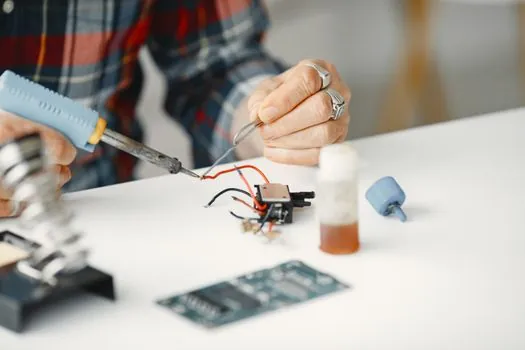
The three most common field failures are sensor break detection mis-wiring, ground-loop induced drift on unisolated 4-20 mA loops, and moisture ingress in IP65-rated housings installed in washdown zones [S4][S5]. A NAMUR NE 43-compliant fault signal on sensor break (typically 3.6 mA or 21 mA) is the safe default and is offered on the iTEMP TMT127 and TMT31 lines [S4][S7].
Common sourcing pitfalls include confusing HART (FSK on 4-20 mA) with PROFIBUS PA or FOUNDATION Fieldbus (digital segment cabling); mismatching a 2-wire RTD input to a 3-wire or 4-wire probe; and over-specifying thermocouple grade where a Pt100 would deliver better accuracy at lower cost. Specifying dual-input transmitters (like the TTH300) for sensor redundancy is now standard in high-availability service because it cuts mean-time-to-repair on the loop [S6].
Track these signals next: (a) the rollout of Ethernet-APL two-wire industrial Ethernet to field instruments, which is migrating onto new temperature transmitter SKUs through 2026; (b) extended IO-Link profile adoption on lower-cost RTD heads, particularly for HVAC and factory-automation retrofits; and (c) the NAMUR NE 179 update on cybersecurity for field devices, which is now showing up in tender documents for European chemical-plant builds. Each of these will reshape the supplier shortlist within the next 12 to 18 months.