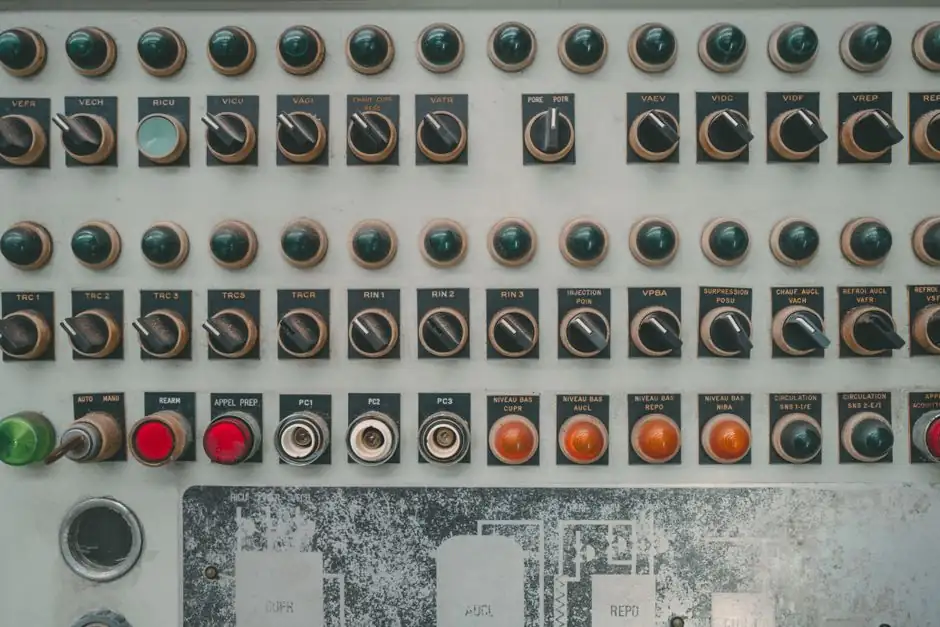
Terminal blocks are classified by connection method, wire-securing method, function, structure, and mounting, with screw, push-button, and push-in housings forming the three common termination families [S1][S3][S4].
These modular connectors join two or more conductors for wire-to-wire, wire-to-board, grounding, fusing, thermocouple, and other panel applications, using a current-carrying bar or strip inside an insulating housing [S1][S3].
Terminal Block Classification by Structure and Mounting
Terminal blocks can be single-level, dual-level, or triple-level structures, with stacked designs used when several connection levels must fit within a limited panel footprint [S4]. PCB-mount blocks, also called Euro-style or wire-to-board blocks, place bare wires into a housing secured by a clamp before the module is soldered to a printed circuit board [S1][S3].
DIN-rail blocks are mounted on standard rails within industrial panels or enclosures, and their connection method may be screw-in, push-in, or spring clamp [S4]. Feed-through blocks provide one input and one output connection, making them suitable for repeated wire-to-wire distribution, while pluggable blocks add a plug-and-socket interface [S2][S3].
Barrier strips place each conductor in a separate section divided by an insulating barrier and generally use a screw, ring terminal, or spade terminal to clamp the wire [S1][S3]. Their independent termination points suit power distribution, industrial control, vibration-prone installations, and higher-voltage environments [S1].
Specialized classifications include ground, fuse, thermocouple, barrier-style, high-voltage, single-stud, PCB, and Euro-style blocks [S2][S5]. A DIN-rail ground block may resemble a feed-through product, but it connects the incoming conductors to the rail or panel rather than joining them as a conventional wire-to-wire link [S3].
These distinctions are functional rather than cosmetic. A PCB terminal block is defined by its board interface, a DIN-rail block by its mounting system, and a feed-through block by the way conductors pass between opposite sides of the housing [S1][S3].
Screw, Spring, Push-In, and IDC Connection Methods
The termination family changes installation time, tooling, conductor preparation, and maintenance access. Screw-type blocks clamp a conductor by tightening a screw, spring-cage blocks secure the conductor with a spring mechanism, and push-in blocks retain the conductor in a spring-loaded passage [S1][S2][S4].
Spring-cage and push-fit connections are commonly prepared with a ferrule, although spring-loaded products may also use a dedicated release tool or a small screwdriver. Push-in blocks place the release mechanism beside the wire insertion point [S2]. Push-button blocks open a spring-loaded clamp for conductor insertion and are suited to single-core wire; push-in blocks follow a similar spring principle but require the wire to be pushed into the terminal [S4].
Insulation-displacement connectors, or IDCs, use two sharp blades to penetrate the wire insulation and contact the conductor without requiring prior stripping. The design entered telecommunications use and is available for solid and stranded conductors [S2]. Pluggable terminal blocks clamp the incoming wire, commonly by screw, and then connect it through a plug-and-socket arrangement [S2].
The practical comparison is straightforward: screw terminals support broad conductor preparation practices but require tightening and can be damaged by excessive torque; spring and push-in systems reduce tool dependence; IDC systems eliminate stripping but impose a different conductor-geometry requirement; pluggable systems add a separable interface [S2][S4].
Selection Criteria: Current, Voltage, Wire, Poles, and Pitch
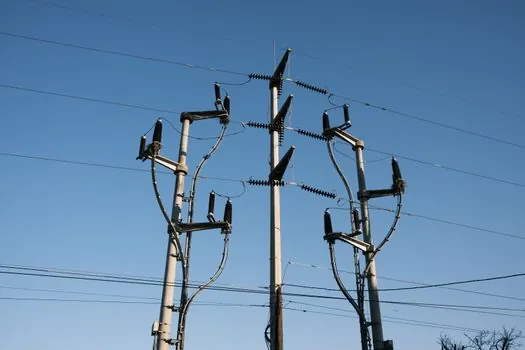
Current rating is the primary electrical selection parameter because terminal conductivity, conductor cross-sectional area, and associated heat rise determine safe loading [S3].
Voltage rating depends partly on the dielectric strength of the housing and the pitch between poles. The applied system voltage must remain below the block rating, and transient or surge voltages must also be assessed before selection [S3].
Pitch is the center-to-center distance between adjacent poles and affects both wiring density and the electrical rating of the housing [S3]. Product comparisons should also include voltage, current, supported wire size and type, pole count, and pitch rather than classifying blocks by a generic product-family label alone [S1].
For maintenance and documentation, the terminal block specification should capture every one of those variables. A housing that supports the right wire range but lacks current, voltage, or surge capacity is not an equivalent substitute for the approved device.
Terminal Blocks by Function and Electrical Role
Function-based terminal blocks extend beyond general wire connection. Ground blocks provide a defined chassis or rail bonding point, fuse blocks combine a terminal connection with a replaceable protective device, and thermocouple blocks provide connection points intended for thermocouple wiring [S2][S3].
These functional blocks should not be confused with ordinary feed-through terminals. A ground block bonds conductors to the DIN rail or panel, a fuse block creates a controlled interruption point, and a thermocouple block is selected for the measurement connection and its associated wiring arrangement [S2][S3].
Specialized product families also include high-voltage and high-current blocks, single-stud terminals, and barrier products arranged in single-row or dual-row configurations [S5]. High-voltage blocks address applications where the rating and insulation of the terminal assembly differ from ordinary low-voltage signal connections, while high-current versions target conductor loads beyond the capacity of standard control terminals [S5].
For a new panel, the practical sequence is to define the circuit role first, then select the termination method, mounting format, and electrical rating. That avoids treating a fuse or ground terminal as an interchangeable version of a basic feed-through block.
Mechanical Fit, Wire Preparation, and Installation
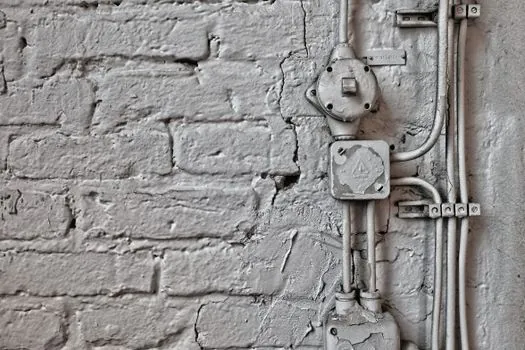
Wire entry geometry is a mechanical selection criterion, not a cosmetic preference. Terminal blocks are offered with 45-degree, 90-degree, and 180-degree entry angles, allowing the installer to align wiring with cabinet access and cable-routing direction [S5]. Entry orientation must be checked together with conductor diameter, bend radius, ferrule geometry, and the space needed for tools and maintenance access.
Screw terminals work with stranded and single-core conductors and are often used with ring or spade connectors on barrier strips [S4]. Screw-clamp barrier connections require the wire to be stripped to a length that allows the clamp to contact the conductor; over-tightening can damage the wire and produce a poor or potentially dangerous connection [S2].
Push-button and push-in mechanisms are best matched to single-core wire in the cited selection guidance, and push-in housings are identified as effective for harsh industrial environments [S4]. The spring-cage and push-fit options commonly use ferrules, which means ferrule size and crimp quality become part of the installation specification [S2].
Terminal blocks support organized panel layouts, rapid wire changes, and easier inspection, but the benefit depends on correct termination. For field work, ferrule crimping, controlled screw torque, conductor stripping, and documented entry orientation are more useful selection constraints than the marketing family name.
Comparison of the Main Terminal Block Families
No single terminal block family dominates every criterion. Screw terminals offer broad familiarity and conductor flexibility, push-in systems reduce installation steps, IDCs eliminate stripping, and pluggable blocks provide a separable connection [S2][S4].
Barrier strips add physical separation between circuits and suit higher-current, higher-voltage, or vibration-sensitive applications, while DIN-rail feed-through blocks favor compact panel distribution [S1][S3][S4]. The right choice depends on current margin, voltage and surge exposure, conductor format, installation tooling, maintenance method, and available panel space.
Standards, Ratings, and Procurement Controls
Terminal-block selection requires documented electrical and mechanical ratings rather than a general certification claim. The comparison record should cover rated voltage, current, wire range, pole count, pitch, mounting method, connection method, and the applicable product approval [S1][S3][S5].
Supplier documentation is particularly important for specialized products. One manufacturer states that its terminal-block connectors are ISO- and CSA-certified and meet Underwriters Laboratories standards, but that statement applies to the specified product family and cannot be transferred automatically to an unrelated terminal block [S5].
UL, CSA, and ISO references describe different certification scopes, so procurement staff should verify the exact catalog part, rating table, and approval marking rather than assuming that all blocks carry the same compliance status [S5]. The same control applies to markings such as IEC 60079-related approvals where an approved product is required, but no hazardous-area classification should be assigned without an exact product and project basis.
For procurement, request the datasheet, drawing, conductor-size table, tightening instruction where applicable, and test or certification information for each selected block. A useful cross-check against related circuit breaker installations is the conductor and protection coordination, because a correctly rated terminal still needs a compatible protective device and wire installation.
Track two signals during equipment review: the calculated maximum current against the terminal rating, including the 150% selection margin described in [S3], and the proposed termination method against the exact conductor and ferrule specification.