
Theodolites still hold the angular-accuracy crown — optical and digital total stations routinely resolve to 1″ (≈0.3 mgon) and 5″ respectively — but rotary and line laser levels now cover 80% of everyday interior and slab-flatness work because one operator can do the whole layout [S2][S4].
The wrong pick shows up fast: a 0.1 mm/m (≈1 mm @ 10 m) line laser cannot replace a theodolite on a 300 m traverse, and a 5″ theodolite is a waste of an hour on a 6 m suspended-ceiling grid. This 2026-06-29 cut lines the two families up against range, accuracy, crew size, indoor/outdoor behaviour, and price band so a foreman or a procurement officer can stop guessing.
Core definitions and where each instrument earns its keep
A theodolite measures horizontal and vertical angles between a sighted target and a reference; with an integrated EDM and on-board software it becomes a total station, and the same family of mounts accepts GNSS receivers and prisms [S4]. Working range is line-of-sight to the prism — typically 1,000 m on a prism and several kilometres in reflectorless mode on modern robotic stations.
A laser level projects a fixed horizontal, vertical, or plumb reference plane (line lasers) or a 360° rotating plane (rotary lasers) detected either visually on the target card or electronically with a receiver. Rotary units with a red 635 nm or green 515–520 nm diode typically cover 30–50 m indoors without a receiver and 300–600 m diameter with one, while line-laser reach is more commonly 15–30 m [S2][S4].
Accuracy, range and crew-size comparison
On a real decision, accuracy is usually the first cut. Theodolite angular readouts come in 1″, 2″, 5″ and 10″ tiers; total-station distance accuracy lands around ±(2 mm + 2 ppm) on the prismatic EDM and ±(3 mm + 2 ppm) reflectorless. Rotary laser levels on the construction grade level at ±0.5 mm/10 m (±0.05 mm/m, ≈±10″ arc) for high-end units, and consumer-grade line lasers drift to ±0.2–0.3 mm/m [S2][S4].
Range is the second cut. A rotary laser with a detector reliably holds its plane at 300 m radius on a clear site; a line laser with green beam is more comfortable at 20–30 m for interior fit-out, and drops off fast in direct sun. The theodolite keeps working where the laser plane fades, but needs two operators (instrument man + prism/rod man) unless it is a robotic total station with tracking [S4].
Crew and speed tend to decide the purchase. Laser levels are a one-person tool: set, walk, mark. A theodolite/total station needs line-of-sight clearing and either a second crew member or a $15k+ robotic instrument with lock-and-track on a 360° prism. For a 4,000 m² slab pour, a rotary laser is the standard pick; for a 2 km cadastral boundary, the theodolite family is the only one in the running [S2].
Selection criteria that drive the actual PO
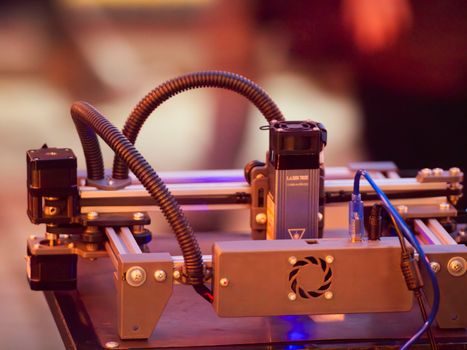
Five specs do most of the work. (1) Working environment: green-beam line lasers are 4× more visible to the human eye than red indoors, but theodolite optics don't care about beam colour — they only need a visible target [S4]. (2) Tolerance demanded: floor flatness numbers (FF/FL per ACI 117, ACI Fmin) are read directly off a rotating laser with a receiver, while deformation monitoring demands the 1″ angle class [S2]. (3) Single-person vs two-person: any instrument that locks onto a prism cuts headcount. (4) Tripod and mount: heavy rotary lasers and theodolites share the same 5/8″-11 survey tripod pattern — aluminium units for survey sit in the $39–44/piece OEM band, so the mount is not the differentiator [S3]. (5) Power and weather: most rotary lasers are IP54–IP66 and run 20–60 hours on a charge; theodolites are IP66 on the survey grade and run 18–36 hours, so neither tool is the weak link outdoors.
Main product families and what they actually cost in 2026
Buying paths cluster into four families. Manual optical theodolites (20″ glass, no EDM) are the budget pick and still used for setting-out classes; digital theodolites add an encoder and a 2″–10″ angle readout with no distance; mechanical total stations add an EDM and onboard coordinate storage; robotic total stations add motorised servo, lock and tracking on a 360° prism, and Bluetooth/CPU control. Leica, Topcon, Trimble, Sokkia and Stonex dominate the survey-grade line, while Spectra and Leica Lino lead rotary and line-laser categories at the A1-equipment distribution tier [S2][S4].
Price bands line up with capability. A handheld distance meter / bubble-level combo opens around the consumer band; entry rotary lasers start in the low-hundreds USD; green-beam 3D 12-line lasers run mid-hundreds to low-thousands; a 5″ total station sits in the low-to-mid thousands; a 1″ robotic total station lives in the $15,000–$40,000+ band. A 2026-06-28 OEM/ODM list confirms that rotary lasers, line lasers, theodolites, total stations and auto levels are all quoted from the same Taiwan/China factory stack (GPI Laser and similar), with tripods and detectors bundled as accessories [S1][S4]. For cross-instrument cost context on adjacent survey kit, the Automatic Level Price and Cost Guide 2026 breaks the same optical/laser/digital split for auto levels.
Who should buy a theodolite — and who should not

Pick a theodolite or total station when angle or traverse accuracy under ±5 mm at 100 m is on the spec, when the line of sight goes further than a rotary laser's working radius, or when the deliverable is coordinates (X/Y/Z) rather than a mark on a wall. That covers cadastral surveys, road alignment, structural monitoring, bridge pier set-out, piling cap location, and rail sleeper set-out [S4].
Skip it when the job is a concrete pour, drywall track, suspended-ceiling grid, façade panel alignment, cabinet install, or floor flatness reporting — a rotary or multi-line laser does the work in a fraction of the setup time. For a 4,000 m² slab at FF35/FL25, the rotary laser with receiver is the correct tool; a total station is overkill, and a manual theodolite is a step backwards from the laser for that specific job [S2].
Failure modes, limits and common site mistakes
Laser levels fail in four predictable ways: tripod settling on a fresh pour, sun glare killing the visible beam (use a detector outdoors), beam bounce off shiny steel producing a false level, and alkaline batteries dying mid-shift. Theodolites and total stations fail differently: mis-levelling the tribrach (compensator range only ±3′ on most instruments), line-of-sight error from heat shimmer at >100 m, prism constant entered wrong (typically 0 mm or −30 mm — wrong value gives a constant offset on every shot), and atmospheric pressure/temperature not set on long shots [S2][S4].
One more constraint worth pinning: optical theodolites without an encoder cannot record angles digitally, so a manual unit is fine for setting-out classes but disqualifies itself for any modern CAD-driven workflow. Robotic total stations need a clear, unobstructed radio/data link back to the operator; dust storms, dense rebar, and multi-storey concrete decks will break lock and force fallback to manual [S4].
Standards, calibration and sourcing signals worth tracking
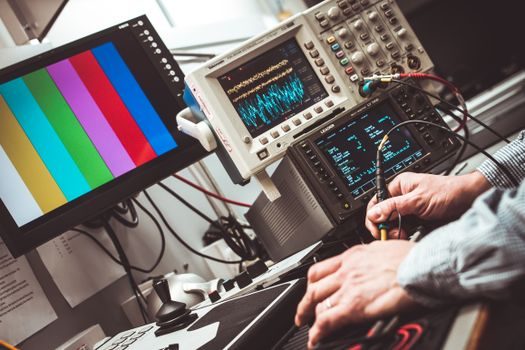
Survey instruments used in commercial construction are usually specified to ISO 17123 (field procedures for testing geodetic instruments), with angular accuracy and EDM accuracy tested per part 3 / part 4; flatness work on concrete slabs reports against ACI 117 flatness/levelness numbers read with a rotary laser. A reputable supplier ships a calibration certificate traceable to a national metrology institute and an instrument-specific IP rating [S2][S4].
On the sourcing side, the 2026-06-28 supplier landscape is concentrated: a handful of Taiwan- and China-based OEM/ODM factories quote the full stack (theodolite, total station, auto level, rotary laser, line laser, detector, tripod), and downstream distributors in the UK and EU — including A1 Equipment, which stocks Leica, Spectra and Leica Lino rotary/line-laser lines plus 25 dedicated laser-receiver SKUs as of 2026-06-17 — carry the branded goods with calibration support [S2][S4]. Two trackable signals: OEM unit prices on aluminium 5/8″ survey tripods holding at $39–44/piece FOB through mid-2026 [S3], and the distributor count of dedicated laser-receiver models (25 at A1 Equipment on 2026-06-17, with line/rotary laser families sitting in the low- to mid-tens of SKUs) being a useful proxy for how fast line-laser and rotary-laser adoption is still growing versus legacy theodolite inventory [S2].
For component-level specifications, see laser marker.