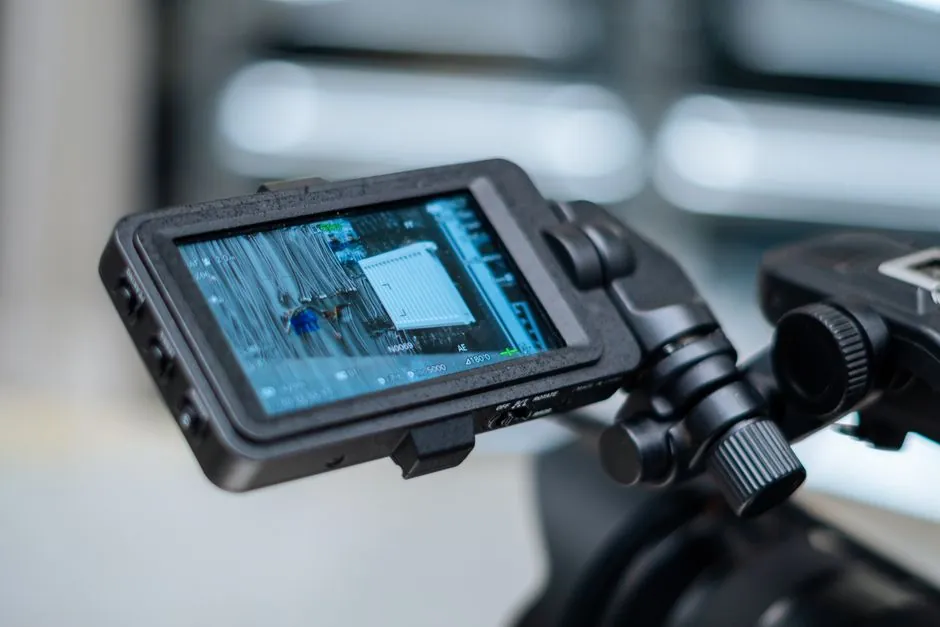
Thermal imaging cameras and temperature recorders solve different measurement problems: the camera converts infrared radiation from a full scene into a visible thermogram at video frame rates, while the recorder logs one or more fixed-point sensor channels to memory for later audit. Specifiers should treat them as complementary rather than interchangeable, because their output, calibration chain, and integration cost diverge sharply [S1][S2].
On a 2026-08-13 review of public product pages and reference material, handheld firefighting cameras ship with three auto-switching ranges, for example 20°C to 150°C / 0°C to 410°C / 300°C to 2000°C on the THERCAM SV-HF3S, while compact imager cores like the Omega OSXL-E pair a 320 x 240 (76,800 pixel) sensor with Wi-Fi, scalable picture-in-picture, and 4-hour battery life [S1][S9].
Detector architecture and what each instrument actually outputs
A thermal imaging camera uses an uncooled or cooled focal-plane array (microbolometer or photon detector) to sample infrared radiance across thousands of pixels per frame, then maps the result through a calibrated radiometric model to a color or grayscale thermogram [S1][S5][S6]. The output is a 2-D temperature distribution refreshed at 9 Hz, 30 Hz, or 60 Hz depending on detector and export compliance, and each pixel can carry an independent temperature value if radiometric mode is enabled.
A temperature recorder, by contrast, accepts inputs from discrete sensors (thermocouples, RTDs, thermistors, or 4-20 mA loops) on a small fixed channel count, samples them at 1 Hz or slower, and writes timestamped values to internal flash or SD media for compliance archives [S2]. For a deeper comparison of point-instrument architectures and HART integration tradeoffs, see the temperature transmitter selection guide.
Calibration chain, accuracy, and the radiometric gap
Camera accuracy is typically quoted as a percentage of reading plus a fixed offset; the SV-HF3S specifies ±2°C or ±2% of reading across its three ranges, with alumina and PPSU silicone rubber housing rated for 260°C ambient exposure [S1]. FLIR's calibration reference notes that the radiometric model behind every thermal camera must compensate for emissivity, reflected ambient temperature, atmospheric path, and window transmission, and that drift compensation is built into periodic shutter events on microbolometer cores [S5].
Recorder accuracy is set by the sensor, not the display: a J/K/T thermocouple channel on a paperless recorder is usually ±0.1% of full scale plus cold-junction error, while a 4-wire Pt100 input can reach ±0.05°C. For a 2-D spatial instrument versus a 1-D point logger, the engineering tradeoff is resolution of position against resolution of time. For a primer on the camera side of that tradeoff, the thermal imaging camera buyer's guide maps detector pitch, NETD, and form-factor choices.
Use cases the two tools serve well, and where they fail
Handheld thermal cameras dominate fire and rescue, electrical inspection, building diagnostics, and roadside pedestrian detection. FLIR's traffic application note shows intersection-mounted thermal imagers cutting unnecessary green-phase time and improving vehicle flow by 30% through call cancellation, while a typical 3-lane push-button cycle still costs 31 seconds of clearance time when no detection is used [S3]. Cameras also work in veterinary diagnostics, where the eye region of a calf has been validated as the best single-spot proxy for core body temperature [S4].
Temperature recorders dominate FDA/EMA-regulated sterilization, retort cooking, pharmaceutical stability, heat-treatment furnaces, and tank farms where one or two dozen points must be logged continuously for years. Cameras fail in these roles because a thermogram is a snapshot, not a citable time series, and because a single handheld unit cannot stay optically aligned to a process point without permanent mounting. For reference on how related point-instrument families fit the same plant-floor slot, the manometer vs pressure sensor spec map applies the same criteria-based logic to a different physics domain.
Side-by-side decision matrix for the specifier
Four criteria usually decide the choice. (1) Spatial coverage: a 320 x 240 focal-plane array covers 76,800 points per frame, while a 16-channel recorder covers 16 fixed points for the lifetime of the installation [S9]. (2) Sample rate: cameras refresh at video rates, recorders at 0.1-10 Hz typical. (3) Compliance evidence: recorders produce signed, time-stamped CSV or binary logs that survive 21 CFR Part 11 and EU Annex 11 audits; camera JPEGs and radiometric sequences can be archived but are not the native form for retention rules. (4) Ruggedization: a firefighting camera must survive IP67, 2 m drop, 260°C ambient, and explosive atmospheres with explosion-proof batteries; a panel-mount recorder sits in an IP65 cabinet with no thermal shock requirement [S1].
Price and lead time track the same split. A 256 x 192 USB thermal imager module like the UNI-T UTi550 is listed around GBP 309.90 on consumer channels, while a 16-channel paperless recorder with touch screen, Modbus TCP, and FDA-compliant audit trail typically lists 3-8x that figure with longer calibration cycles. The two instrument classes coexist in most plants: cameras for survey, troubleshooting, and R&D, recorders for permanent process evidence.
Integration with plant systems and the data they expose
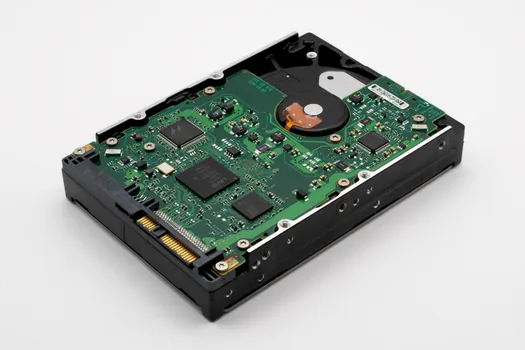
Modern recorders expose Modbus RTU/TCP, Ethernet/IP, PROFINET, MQTT, and REST alongside local archive, and the data structure is one value per channel per timestamp, which maps directly to historian tables [S2]. Thermal cameras have started adopting the same protocols: the OSXL-E ships with Wi-Fi, PDF report generation, and thermal fusion to a 3.1 MP visible-light camera, and developer kits like the MLX90640 Raspberry-Pi reference make 32 x 24 radiometric frames accessible as numeric arrays for SCADA or edge analytics [S8][S9].
For the specifier, the practical question is which instrument supplies the input to the historian. A recorder feeds it natively; a camera must be paired with a software layer (FLIR Research Studio, Atlas SDK, or a custom pipeline) to emit point-equivalent data. When the audit case demands both, the common pattern is a permanent recorder array for the 21 CFR points plus a periodic thermal survey for hot-spot trending.
Standards, ruggedization, and what to verify before purchase
For hazardous-area firefighting use, IP67 and a 2 m drop rating are baseline on handheld TICs, and the SV-HF3S explicitly cites compliance with the GA/T 635-2006 national standard for fire-rescue thermal imagers, plus a detachable explosion-proof rechargeable lithium battery [S1]. For recorders in pharmaceutical or food lines, the right baseline is 21 CFR Part 11, EU GMP Annex 11, and a documented NIST-traceable calibration cycle, but those requirements belong to the recorder family and not to handheld cameras.
Before signing a PO, ask three verifiable questions. What is the radiometric accuracy across the actual operating range, with a written certificate traceable to a national lab? Does the recorder keep a cryptographic audit trail with operator IDs and electronic signatures, or only a flat CSV? And does the camera have a field-replaceable, explosion-proof battery if it is destined for a hazardous-area plant, or is the unit sealed for service-center swap only [S1][S5]?
Trackable next signals and engineering follow-ups
Watch for two product-roadmap signals: radiometric-over-Ethernet thermal cameras that emit per-pixel Modbus registers, and recorders with on-board OPC UA Pub/Sub and built-in IR array inputs. Either development would blur the line between survey camera and compliance logger, and would force a re-read of the cost-of-ownership math in 2026-2027 plant retrofits. For related cross-domain decision maps, the absolute pressure transmitter vs vacuum gauge and ultrasonic vs turbine flowmeter liner selection articles use the same criteria-based approach for adjacent process instruments. [S1]
Detailed specification references: thermal imaging camera, temperature recorder, and temperature humidity recorder.