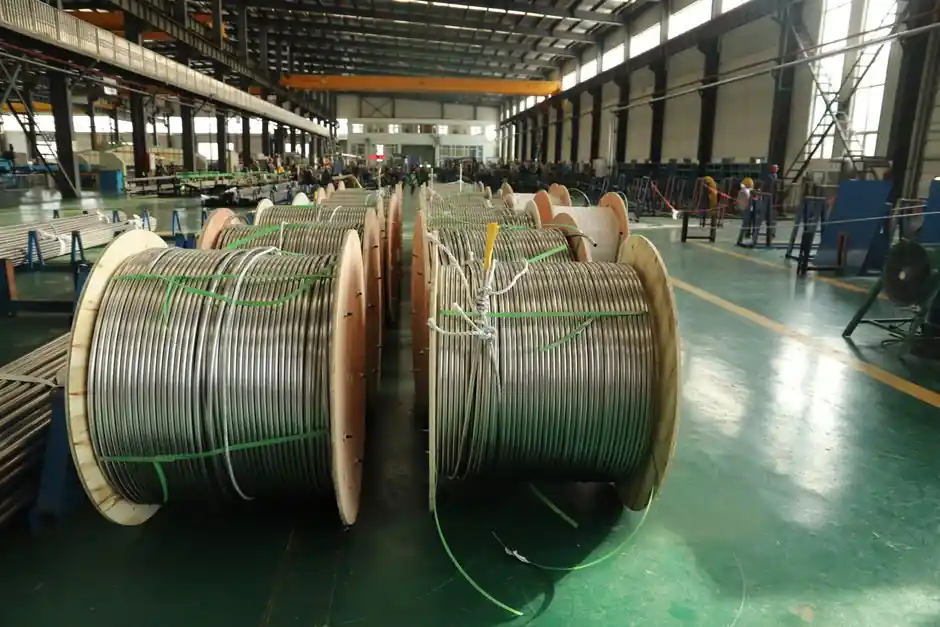
Thermocouple supply in mid-2026 is split between custom-engineered houses (Cleveland Electric Labs, Value Tool & Engineering), broad industrial catalogs carrying Type K/J/T/E plus platinum Types S/R/B, and OEM shops serving aerospace and turbine-engine test stands [S2][S3][S4].
Across the four supplier directories reviewed on 2026-05-30, 2026-06-16, and 2026-07-23, accredited calibration, sheath material choice, and a stated temperature range of roughly -200 to 2000 °C are the three filters that separate the shortlists [S1][S2][S3].
Supplier tiers and what each one actually delivers
Custom-engineered houses publish both the probe and the calibration certificate under one roof: Cleveland Electric Labs lists ISO/IEC 17025 plus ANSI/NCSL Z540 accredited calibration covering -320 °F to 2800 °F, with vacuum-sealed VFT, MgO-insulated, ceramic, and platinum constructions delivered as one assembly [S2]. Value Tool & Engineering focuses on multi-point averaging, quadrant assemblies, and turbine-engine probes, then offers a documented pre-shipment verification of off-the-shelf sensors as a value-add rather than a product line [S4].
Broad industrial catalogs (Spectec, Thermo Sensors Corporation, Thermocouple Technology LLC, Kelvin Technologies, Temperature Specialists) sell standard Type K, J, T, and E probes alongside RTDs and NTC thermistors, and act as the route for buyers who need a catalog part number rather than a drawing revision [S1][S3]. For context on how the sensor side interfaces with control loops, the thermocouple fundamentals entry covers the Seebeck principle and reference (cold) junction compensation that every catalog datasheet inherits.
Selection criteria that actually move the shortlist
Four criteria separate the three tiers: temperature range, environment (oxidizing, reducing, vacuum, vibrating), required accuracy class, and response time [S3]. Cleveland Electric Labs publishes a working envelope of -200 °C to above 2000 °C for its general industrial line, with noble-metal Types S/R/B held back for aerospace, metallurgy, and petrochemical service where base-metal types would fail by corrosion or oxidation [S2].
Buyers specifying into turbine test stands or process heaters should pin the calibration range, sheath material (typically 304/316 stainless steel or Inconel for high temperature), and probe diameter on the RFQ; a 1.5 to 3.0 mm sheath gives the fastest time constant but sacrifices mechanical survival in abrasive service, which is why multi-point averaging probes are preferred in furnace and boiler zones [S3][S4]. Pairing the right probe with the right temperature transmitter sizing and selection decision is what closes the loop on measurement uncertainty.
Comparison: custom house vs catalog distributor vs OEM shop
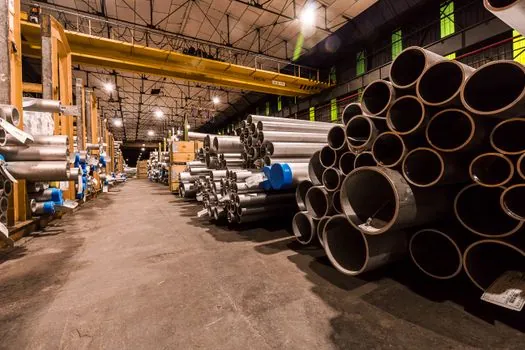
On calibration depth, custom houses win: only Cleveland Electric Labs in the source set publishes an accredited range of -320 °F to 2800 °F with both ISO/IEC 17025 and ANSI/NCSL Z540 listed together [S2]. On lead time and breadth, catalog distributors win: Spectec, Thermo Sensors, Thermocouple Technology, Kelvin, and Temperature Specialists all stock the four base-metal types and ship against a part number [S1][S3]. On application specificity, OEM shops win: Value Tool & Engineering's quadrant and multi-point assemblies are built for turbine-engine zoning, and CEL's vacuum-sealed VFT is built for vacuum-furnace profiles that a catalog probe will not survive [S2][S4].
On cost, the order inverts: catalog base-metal Type K probes are the cheapest per piece, custom noble-metal Type S/R/B the most expensive, and OEM turbine assemblies priced per drawing rather than per part number [S1][S2][S3][S4]. Buyers should match the tier to the consequence of a bad reading, not to the line item, because the published cost of a failed heat-treatment batch dwarfs the sensor price differential in every case the sources describe [S3][S4].
Standards, calibration, and the audit trail
ISO/IEC 17025 is the common calibration accreditation cited across the custom tier, and ANSI/NCSL Z540 extends that to calibration with measurement uncertainty appropriate for aerospace and defense supply chains [S2]. AS9100D appears in the Cleveland Electric Labs quality certifications block, signalling that their QMS is set up for aerospace serial production rather than one-off lab use [S2]. These three credentials together are the practical gate most procurement auditors will check before a thermocouple drawing can be released on a build-to-print aerospace program.
Buyers should ask for the calibration report and the lot-level traceability document with every delivery, not just on the first article, because noble-metal and platinum thermocouples drift with thermal cycling and the only defence is documented re-verification [S2][S4]. Standardization of the EMF tables themselves sits in the IEC 60584 series (Type K, J, T, E, N, S, R, B), which is the reference every supplier datasheet inherits even when it is not reprinted on the catalog page.
Who this map is for, and where it stops

This map is for process engineers and procurement staff who have to write a thermocouple spec line on a P&ID and need to know which of the three tiers can actually honour the calibration range, environment, and audit trail in one purchase order [S1][S2][S3][S4]. It is not a price list, and it does not cover wireless or IoT-native smart sensors, intrinsically safe head transmitters, or fiber-optic temperature probes, none of which appear in the four 2026 supplier sources reviewed [S1][S2][S3][S4].
Two signals to watch through the rest of 2026: whether more catalog distributors add on-site pre-shipment verification as a standard service (Value Tool & Engineering already does it on request [S4]), and whether noble-metal Type S/R/B pricing stabilizes as platinum-group metal supply normalizes, since that is the line item that currently drives custom-tier quotes above catalog-tier by a factor of three to ten [S2][S3].
For component-level specifications, see construction machinery and equipment, and lamps and light fittings.