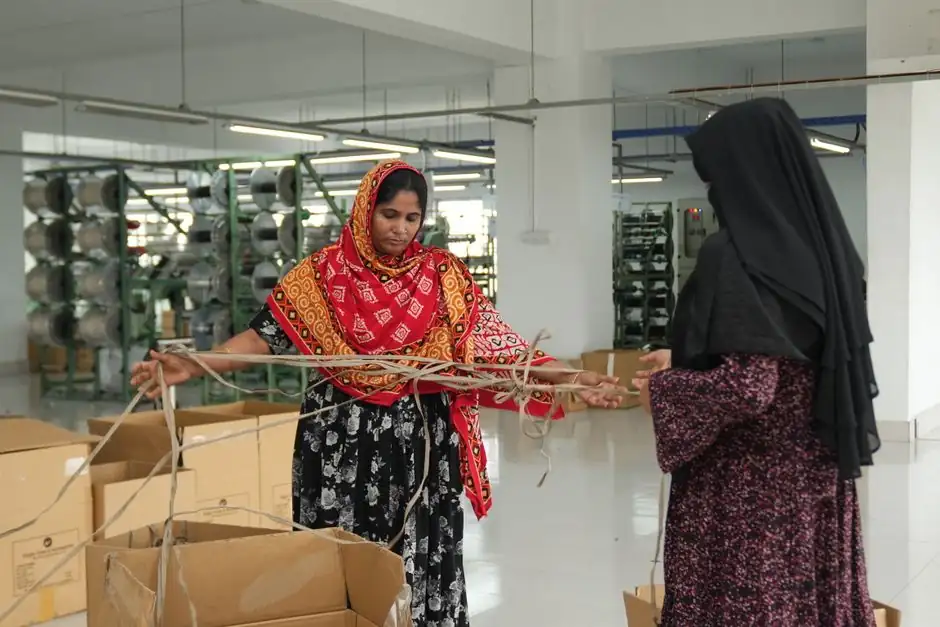
Textile machinery is overwhelmingly built around European metric and HTD curvilinear timing belt profiles, with T5, T10, AT5, AT10, 5M, and 8M covering the majority of spinning, weaving, knitting, and finishing drives [S2].
The selection driver is rarely pitch alone; it is the combination of machine class (rapier loom vs. stenter frame), ambient stress (heat, lint, dye chemistry), and the speed/torque envelope of the specific drive station. Specifying the wrong profile on a textile line, even at the same nominal pitch, produces synchronization drift, fabric defects, and accelerated pulley wear [S3].
Profile-to-Machine Mapping That Drives the Decision
European metric trapezoidal (T) and AT profiles dominate OEM builds from Picanol, Dornier, Sulzer, Rieter, Mayer, and Stoll, with HTD curvilinear 5M and 8M as the global secondary family [S2]. Air-jet looms run main-drive and take-up stations on 8M, T10, or 14M at 600-1200 RPM, rapier looms use T10, AT10, or 8M for rapier and shed drives, and spinning frames typically use T5, 5M, or XL on spindle, drafting, and bobbin drives where uniform twist tension matters more than peak torque [S2].
Knitting, embroidery, and printing equipment shift toward finer pitches: T5, 5M, AT5 on circular knitting cylinder/dial drives, GT2/T2.5/AT3 on embroidery X/Y frames where backlash and stitch positioning govern accuracy, and T5/5M/AT5 on rotary screen printers for registration alignment [S2]. For tufting, nonwoven calenders, and stenters, the drive moves to 8M/14M/H profiles to handle reciprocating needle bars, wide web spans, and 150-220°C chain-track heat [S2]. The practical rule: pick the profile family the OEM specified, then size belt width and tooth count to the design power.
Design Power and Overload Factor Math for Textile Loads
Design power is transmission power multiplied by an overload factor Ks that aggregates load, idler, speed-ratio, and operating-time corrections, and textile machines sit in a specific band of that table [S4]. For normal AC or DC shunt motors, the load correction factor Ko for textile warpers and winders is 1.5-1.7 under regular 8-12 hr/day use and rises to 1.7-1.9 under continuous duty, putting the full Ks for these machines in the 1.7-2.1 range once idler and ratio factors are added [S4].
Conveyors, fans, and reciprocating compressors share the same Ko band as textile warpers and winders (1.5-1.7 regular, 1.7-1.9 continuous, peaking at 1.9-2.1 under high-torque motor duty), which is why mill engineers can borrow Ks values from bulk-material handling references but must verify the machine subtype [S4]. Sizing belt width against design torque, not against the small-pulley rpm alone, is the step most often skipped on the shop floor, and the one that drives premature tooth shear [S6].
Material and Construction Choices Under Mill Conditions
Rubber timing belts remain the default for most textile drives because the elastomer body absorbs vibration, runs quieter, and tolerates the dynamic load changes inherent to loom start-stop cycles [S3]. Polyurethane (PU) timing belts enter the picture where dimensional stability, lower abrasion (critical in clean-room or yarn-handling zones), or special backings/holes are required, and are commonly machined with custom profiles for feeder and embroidery stations [S3].
For stenter frames running 150-220°C, chloroprene rubber compounds rated for sustained heat are the baseline, while H-profile or 14M reinforced rubber/polychain constructions handle the chain-track load; PU generally loses out above 80-90°C continuous [S2]. Dyeing machine rollers and pumps push the requirement toward chemical and moisture resistance, where neoprene/rubber with stainless or coated pulleys is the field-proven combination rather than a standard PU stock belt [S2]. Hybrid, GT3/GT4, Twinpower, and Poly Chain Carbon constructions appear in retrofit and high-torque stations where the original trapezoidal belt had chronic life issues [S7].
Pulley Matching, Width, and the Pitch-Differential Trap
Pulley profile, pitch, width, and tooth count must match the belt exactly, because two T5-class belts from different makers can differ in tooth profile geometry and produce uneven wear even at identical pitch [S3]. The 5mm-pitch example is sharpest: a T5 trapezoidal tooth and a 5M HTD curvilinear tooth look similar but will not mesh correctly with the mating pulley, and on a circular knitting cylinder that mismatch shows up as stitch irregularity long before the belt fails [S2].
For design torque, the system width is whichever is greater between the belt's rated width and the pulley's rated width, so undersized flanges will shear belt teeth even when the belt itself is correctly rated [S6]. Where multi-pitch conversions occur, tooth-count changes shift the effective pitch differential between driver and driven pulleys, and that gap (commonly 0.3-1.4 mm across common conversions) is what ultimately decides registration accuracy on printing and embroidery stations, see Pitch Differential in Timing Pulleys. For tensioning hardware on these drives, an eccentric or fixed belt tensioner sized to the belt's static tension keeps mesh depth stable as the belt elongates over its first 24-72 hours of run-in.
Synchronous Drives on Looms: Speed, Slip, and Cost Data

Synchronous toothed drives reduce slip versus friction belts and hold speed ratios under variable load, which is why they have displaced chain and flat belts on most modern loom main drives [S3]. Field data from a 2022 production-line retrofit study found that converting from chain to timing-belt drive increased production parameters and lowered operational costs, with the timing-belt system scoring as the best option on combined output-and-cost criteria [S5].
The cost win is mechanical: timing belts need no lubrication, generate less particulate (important around yarn), and absorb shock loads that would otherwise stretch a chain [S5]. The trade-off is finite belt life: rubber timing belts in 24/7 loom service typically run 12-24 months before tooth profile wear forces replacement, and a skipped replacement costs far more in fabric defects and picker/rapier damage than the belt itself [S3]. This is also why mills standardize on the timing belt profile rather than the cheapest equivalent, and pre-stock timing pulleys for the high-failure stations.
Selection Criteria Comparison: T vs. AT vs. HTD vs. GT vs. PU
Comparing the five common textile-mill families on the criteria that matter on the shop floor: T-profile (T5/T10) is the lowest-cost trapezoidal stock with broad OEM fit and adequate speed stability up to mid-range loom RPM, but it has the lowest tooth-shear strength and the highest noise at high speed [S2]. AT-profile (AT5/AT10) is the higher-torque trapezoidal variant with a modified tooth shape that improves engagement and load distribution, common on rapier and flat-knitting drives where synchronization and pattern accuracy dominate [S2]. HTD curvilinear (5M/8M/14M) shifts the load to a curved tooth profile that reduces stress concentration, runs quieter at high speed, and is the default for air-jet main drives and stenter chain tracks [S2]. GT2/GT3 modified curvilinear profiles are used where positioning accuracy and low backlash matter, especially on embroidery X/Y frames and some printing registrations, and accept finer pitch at the cost of narrower belt width for the same torque [S2]. PU timing belts trade rubber's vibration damping for cleaner operation, better dimensional stability, and easier custom machining (backings, holes, profiles), but lose out above roughly 80-90°C continuous and in high-shock loom stations [S3]. For shock-loaded mill environments, pairing the belt with the correct timing pulley and tensioner assembly is as important as the belt material choice itself.
Failure Modes and Sourcing Signals to Track
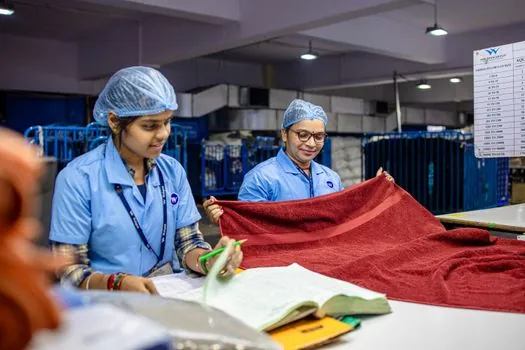
The three recurring failure modes in mill audits are tooth shear from undersized belt width, tooth jump from low static tension or worn pulleys, and premature cover wear from lint/dye contamination when the belt material is mismatched to the station [S3][S6]. On stenters, additional failure modes include tensile elongation and tooth cracking from sustained 150-220°C exposure when a non-heat-rated rubber or any PU is specified [S2]. On dyeing machines, swelling and loss of modulus from chemical/moisture exposure is the dominant wear mode and rules out standard chloroprene in highly alkaline baths [S2].
Trackable signals for the next planning cycle: OEM part-number cross-references from Gates, Continental, Bando, Diesel Belting, and Megadyne stocked for same-day shipping on T5/T10/AT5/AT10/5M/8M [S2]; rising use of GT3/GT4 and Poly Chain Carbon retrofit belts on legacy European looms where the original trapezoidal belts had chronic life issues [S7]; and wider adoption of HTD 14M on nonwoven and stenter chain drives as line widths and speeds increase. Sizing the tensioning hardware, especially eccentric units, is the step most often under-specified on retrofit drives, see shock absorber selection for textile mills for the related dynamic-load math on rapid-stop stations.